


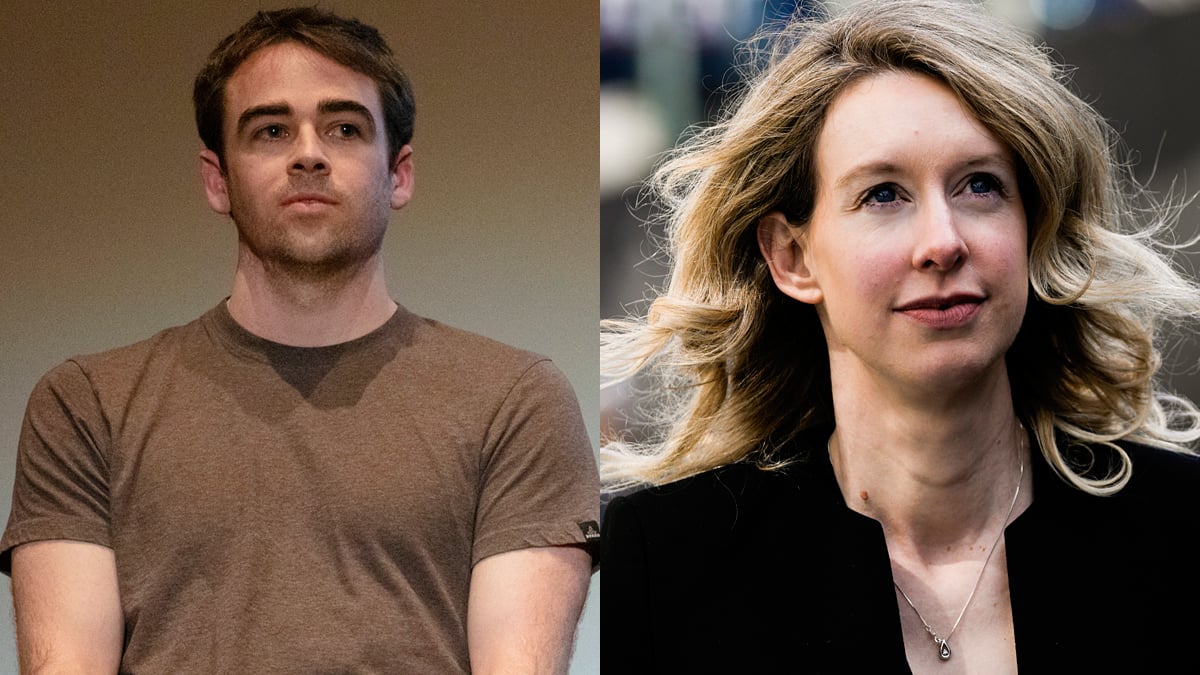
Theranos whistleblower Tyler Shultz has accused Elizabeth Holmes of misleading filmmaker Nathan Fielder in the documentary You Can See Everything.
Shultz, who worked as an intern at Holmes’s company in 2013, said the device she presented to Fielder was not the equipment he had used during his time at Theranos.
Speaking to Gayle King on CBS Mornings, he said: “She brings out the Theranos device, and she lays it across the table and all of its components, so you know you can see everything. But my problem was: that was not the device that I worked with 12 hours a day.”
He added: “That was not the device that we hid from regulators. That was not the device that failed quality controls. That was not the device that we used to knowingly give patients incorrect medical information, and she completely misled [Fielder] down this completely different rabbit hole.”
Tyler Shultz challenges Elizabeth Holmes’s account
Shultz also rejected Holmes’s claim in the film that she had never lied, arguing that her actions had created what he called a “whole web of lies”.
“She knows that she was lying, because she created this whole web of lies that you would not have needed to create if you actually believed the lies,” he said.
Holmes had told prospective investors that Theranos generated $100 million in annual revenue, while the figure was actually $100,000.
Shultz was a key figure in exposing the company’s practices, which led to a 2015 Wall Street Journal investigation. He had joined Theranos two years after his grandfather, former US secretary of state George Shultz, became a member of the company’s board.
He said the Holmes depicted in the documentary appeared “frankly, like a broken woman”, contrasting her with the confident executive he remembered as capable of commanding a room filled with senior political and military figures.
Despite his criticism, Shultz said it had been painful to see Holmes leave her children to go to prison. He also suggested that she was still attempting to shape the public’s view of her.
“I think that was the goal that Elizabeth had, was for you to come away from the movie with you having sympathy for her,” he said. “And it’s tough to not have sympathy for her, actually, when you watch the movie.”
