


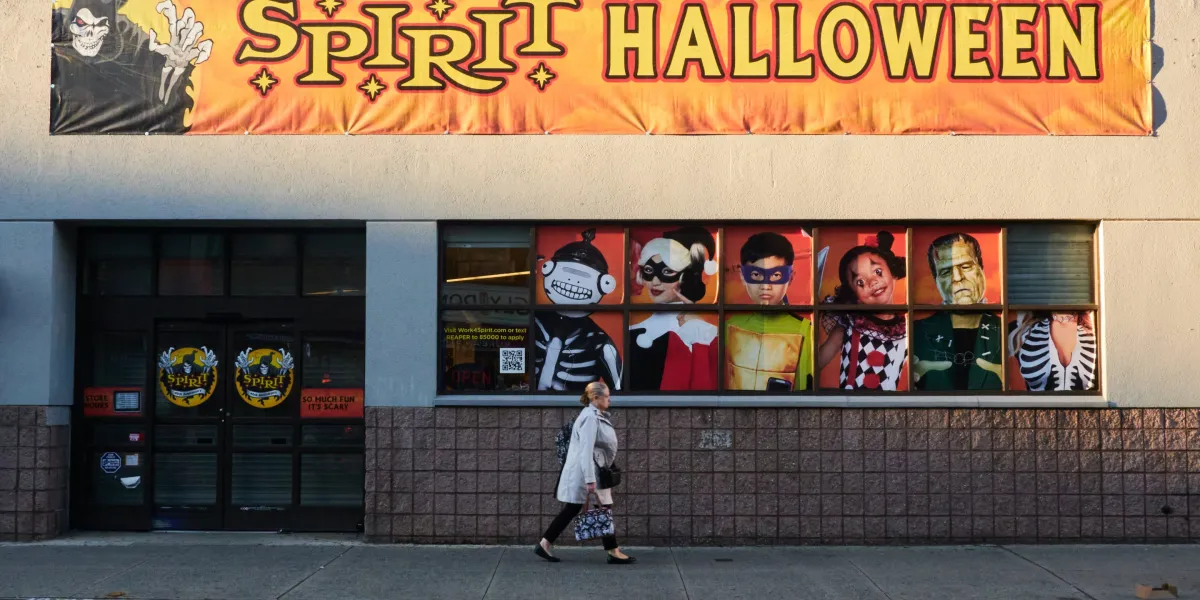
Spirit Halloween’s chief executive has said US tariffs imposed during the company’s busiest shipping period threatened to put the seasonal retailer out of business.
Steven Silverstein, chief executive of parent company Spencer Spirit Holdings, said the tariffs were more difficult to manage than the disruption caused by Covid-19, when every Spencer’s store closed just as the business was selecting locations and signing leases for the autumn.
“This was going to put us out of business,” Mr Silverstein said.
The crisis began after Donald Trump announced a sweeping programme of import tariffs on April 2, 2025, a date he called “Liberation Day”. After China retaliated, the tariff on Chinese goods rose to 145%, just as Spirit Halloween’s merchandise was beginning to leave Asia.
About 75% to 80% of Spirit’s products are designed and sourced by the company, mainly in Asia. They move through distribution centres and 63 third-party logistics sites before reaching more than 1,550 shops, in a year-round operation governed by tight deadlines.
“They were implemented immediately without giving business the opportunity to really react in any kind of logical way,” Mr Silverstein said. “We were being ripped around like a yo-yo.”
Spirit halted shipments and established what its chief executive described as a “war room”. The company suspended capital spending and cut costs across its teams as executives sought to preserve cash.
“You start burning the furniture,” Mr Silverstein said. “You have to preserve your cash.”
On May 12, the US and China agreed to reduce the tariff to 30%, allowing Spirit to restart its shipments. By then, its goods were six weeks behind schedule.
The company chose not to increase prices to compensate for the tariffs. Mr Silverstein said Spirit had instead absorbed the additional cost because raising prices without knowing how the situation would develop could have been dangerous for a business focused entirely on Halloween.
To recover lost time, Spirit hired more staff. Its shops opened around two to two and a half weeks late, but Mr Silverstein said the business still had its best year on record.
He said the company had more than doubled in size since 2019, despite the difficulties of the pandemic. In 2020, Spirit went ahead with its plans and opened all its shops in September after Spencer’s stores had closed in March.
The Spirit of Children charity programme
Mr Silverstein also rejected the view that Spirit Halloween simply takes over vacant shops for a few weeks before disappearing.
“They’re carpetbaggers,” he said of the criticism. “They just come in, they occupy and then they go away, and they take their circus on the road. We don’t think of ourselves that way at all.”
In 2006, three years after becoming chief executive, he launched a Halloween party programme for children in hospital. It began at eight hospitals in New Jersey, where the company remains based, with costumes, music and art supplies.
The programme later added fundraising at tills, allowing shoppers to round up their purchase or make a fixed donation. The money supports child life departments at local hospitals, including staff, playrooms and therapy beyond medical treatment.
Spirit of Children has raised more than $164 million since 2006, with donations averaging about $1.25, Mr Silverstein said. In its 20th anniversary year, the programme aims to raise $20 million.
