


Donald Trump’s promise of a $5,000 “dividend” for every adult American if Republicans retain control of Congress could add as much as $1.35 trillion to the US government’s borrowing, according to an estimate by a leading fiscal economist.
Kent Smetters, faculty director of the Penn Wharton Budget Model, said the cost would still be about $1.15 trillion if higher-income households were excluded under a possible $400,000 household income threshold.
That threshold has not been announced by the White House. It is a working assumption based on comments by Vice-President JD Vance, who indicated that the payments would not be made to “the wealthy”.
Trump dividend would require congressional approval
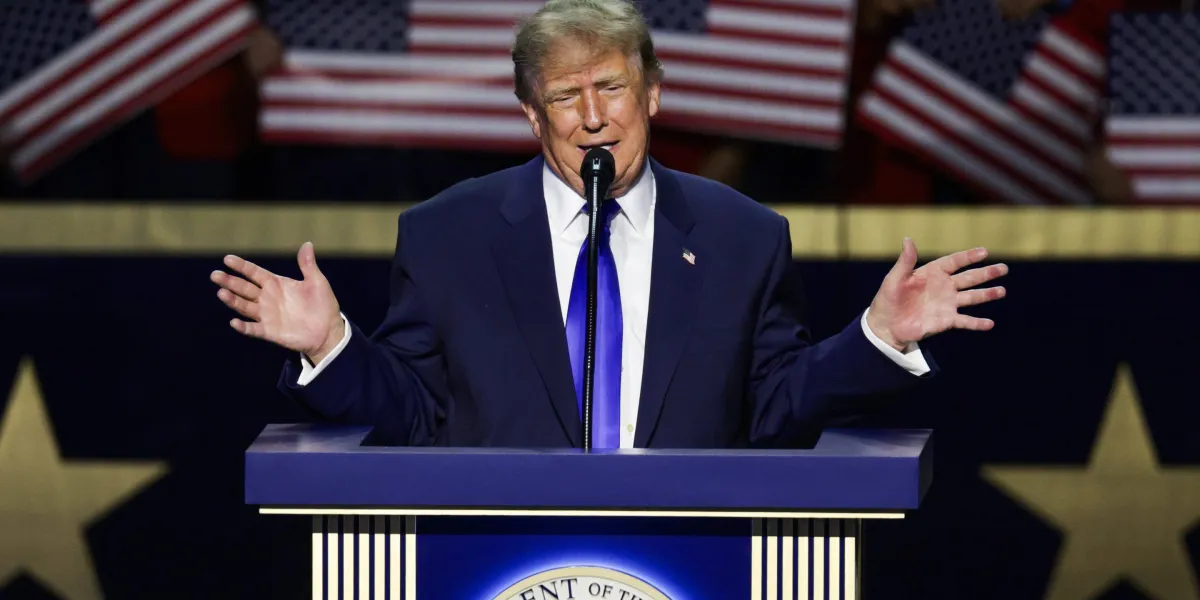
Trump made the pledge during a speech lasting almost two hours at the Republican Party’s midterm convention in Dallas on Wednesday night, as he urged voters to keep Republicans in charge of both the House of Representatives and the Senate after the November 3 election.
“If the Republicans win the House of Representatives and the United States Senate, I will issue a dividend to every adult citizen in the United States of America for $5,000,” he told supporters, naming it the “Trump Dividend”.
The president did not set out how the payments would be authorised, when they would be issued or which source of revenue would finance them. Congress would need to approve the spending, according to budget experts.
Within an hour of the announcement, Mr Vance appeared to qualify the promise by suggesting that wealthy Americans would be excluded. He also pointed to tariff revenue as a possible source of funding, although that income would fall well short of the projected cost.
The White House did not immediately provide further details. Republican senator Bernie Moreno of Ohio said he would prepare legislation after the election, but no bill or formal proposal has yet been published.
Economist warns of inflationary impact
Mr Smetters estimated that recipients would spend about $400 billion during the first two quarters after receiving the money. That surge in demand could increase headline and core inflation by between 0.3 and 0.5 percentage points over the following four quarters.
He declined to predict how the Federal Reserve might respond through interest rates, saying that would depend on how the Treasury and the central bank adjusted their market operations after the payments were made.
The warning comes as the US government faces a projected federal deficit of $1.9 trillion for the 2026 financial year, according to the Congressional Budget Office. The CBO has said that figure would equal 5.8 per cent of gross domestic product.
The national debt passed $40 trillion for the first time in August. Treasury figures also show that servicing existing borrowing has cost about $1.05 trillion during the first 11 months of the financial year, or roughly $95 billion a month.
Additional tariff receipts collected in 2025 were about $200 billion, while earlier projections for future annual collections put the total at between $300 billion and $350 billion. Those sums would cover only part of even the reduced estimate for the dividend and have also been earmarked by the administration for deficit reduction and defence spending.
Trump has previously floated similar proposals without them becoming law, including a $2,000 tariff-funded payment and a plan to distribute part of alleged savings from the Department of Government Efficiency.
Whether the latest promise reaches Congress, however, the immediate calculations point to the same problem: there is no identified revenue stream large enough to fund it. Without one, the proposed payment would be financed through additional borrowing, adding to an already expanding US debt burden.
