


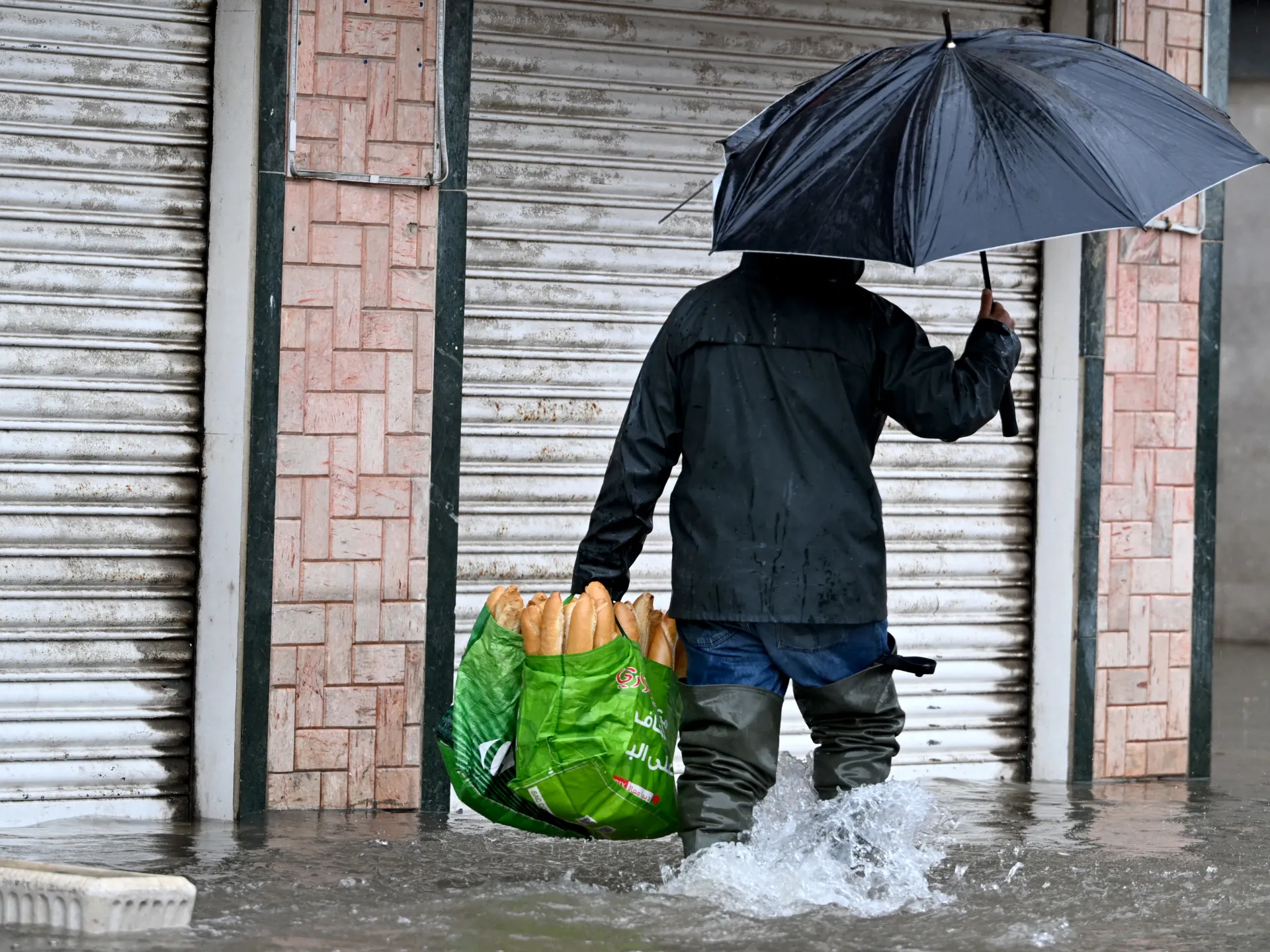
Tunisia floods brought parts of Tunis to a standstill on Thursday, with roads and homes submerged, motorists trapped and electricity and internet services disrupted across the capital.
The Greater Tunis region, home to nearly three million people, has experienced repeated flooding in recent years. The latest disruption follows severe January rains that caused deaths and extensive damage in Tunis and elsewhere in the country.
Warnings of locally heavy thunderstorms had been issued by the National Institute of Meteorology, which said intense rainfall over short periods could overwhelm drainage systems, interrupt transport and cause power cuts.
Classes in Tunis were suspended at short notice as the rain intensified, prompting parents to hurry to schools while traffic built up across the capital. Videos shared online appeared to show vehicles stranded in rising water and power lines catching fire, while residents reported outages and water entering homes.
Residents question flood preparedness
Fatma, a 35-year-old employee in Tunis, said the situation deteriorated rapidly during the afternoon commute.
“At about 4pm, the road became almost unrecognisable. The tunnel leading to Bab Saadoun was completely closed because of the rain,” she said.
“Most people were stranded by the roadside for hours, waiting for public transport that never came. I saw three cars that filled with water and broke down, and people carrying their children on their shoulders.”
She said the disruption had become a recurring feature of the rainy season. “Every season, the same thing happens. Roads close and traffic comes to a complete standstill. All the drains start overflowing with waste,” she said.
Intissar, 33, from the Lafayette area of Tunis, said the country had become accustomed to flooding even after relatively small amounts of rain. She blamed local authorities for failing to complete preventive work before the rainy season, while also acknowledging that residents contributed by dumping waste into drainage channels.
“This is work that should have been done during the summer,” she said.
At a government meeting in August, officials called for drainage networks and waterways to be cleared and flood-protection work to be accelerated. The government said 29 flood-protection projects were under way across Tunisia.
A struggle to get home
The flooding coincided with the return of pupils and university students, placing further pressure on roads and public transport. Fatma said the unreliable transport network and repeated inundation were encouraging people to seek alternatives.
“The problem makes people look for their own solutions. That is why most people are trying to find a way to buy a car, because it has become difficult to live without one with these recurring problems,” she said.
“This shows that the state has no vision. It is caught off-guard just like citizens are,” she added.
Rain is forecast to continue through Saturday, when organisers are due to hold a national march in Tunis calling for the release of four activists detained in connection with the Al-Soumoud Flotilla. The demonstration is scheduled to begin at 5pm.
