


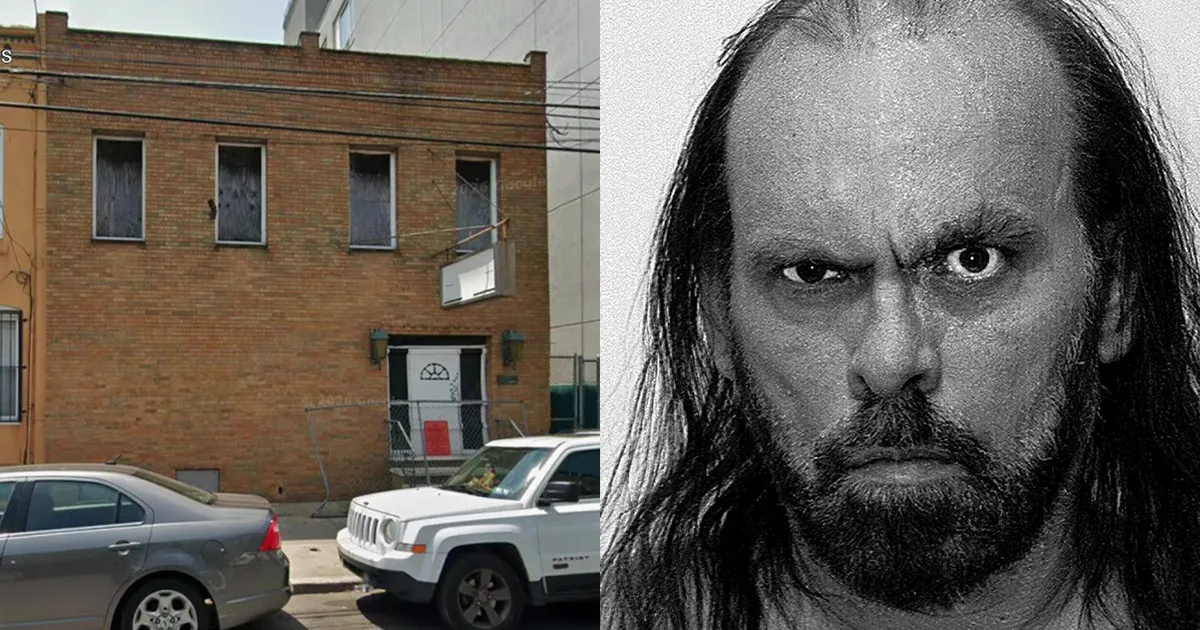
Newly unsealed federal court documents show that Raymond Horsch avoided a mandatory 20-year prison sentence after agreeing to provide information to US prosecutors — a deal that has come under renewed scrutiny as investigators examine his possible links to at least seven missing women in Philadelphia.
Horsch was arrested in 2009 after police found a large marijuana-growing operation and firearms at his home in Chalfont, Bucks County. Court records say officers recovered 455 cannabis plants weighing about 89lb, two sawn-off shotguns, an M1 carbine and ammunition.
As a convicted felon in possession of firearms, Horsch faced a statutory minimum sentence of two decades. Instead, he served roughly four and a half years after entering into a co-operation agreement with federal prosecutors in 2012.
The newly released records state that Horsch supplied information about child prostitution, cocaine trafficking, drug offences and fraud. Prosecutors described his account as “truthful and reliable”, but said it was not sufficient to support the prosecution of anyone else.
The extent of the information he provided remains unclear. An assistant US attorney said the substance of Horsch’s co-operation was not subject to public disclosure, according to KYW Newsradio. Horsch died last year, aged 82. ([audacy.com](https://www.audacy.com/kywnewsradio/news/local/olney-house-rc-horsch-federal-informant))
Raymond Horsch plea deal faces renewed scrutiny
Rocco Cipparone, a defence lawyer and former federal prosecutor, said co-operation agreements were common in the US system, where defendants may provide information in return for a reduced sentence.
But he said the scale of Horsch’s reduction was striking, describing the fall from 240 months to just over 50 months as greater than might normally be expected where no further prosecutions resulted.
Relatives of Nicole Fusaro, one of the women now connected to the investigation, have questioned whether Horsch’s time outside prison had tragic consequences. Police believe video recovered from his former home shows him strangling Fusaro, who disappeared from Philadelphia’s Kensington neighbourhood in 2018.
Her cousin, Jonathan Halloran-Koren, said it was “troubling” to think Horsch might have been in prison when Fusaro was still alive.
“It’s something that’s making me angry and sad at the same time to know that he could’ve been in jail — he could’ve been serving his time and my cousin could still be alive,” he said.
Fusaro’s body has not been found, and authorities have not brought a homicide charge in connection with her disappearance. Police have said the investigation remains active and that they are continuing to review evidence from the property on West Chew Avenue in Olney. ([inquirer.com](https://www.inquirer.com/crime/raymond-horsch-olney-nicole-fusaro-missing-20260911.html))
Investigators have recovered more than one million digital files from the house, including over 600,000 images, 70,000 videos and 10,000 pages of written material. Police and the FBI have said the material has so far connected the property to several missing women, while only about 30 per cent of the files had been examined by September. ([fox29.com](https://www.fox29.com/news/horsch-investigation-police-provide-update-evidence-recovered-from-olney-home))
Authorities have also said images and videos appear to show two other missing women, Maribel Fresses and Gabrielle Amarando, dead inside the home. No human remains have been recovered, and Eugene Horsch, Raymond’s son, has not been charged over any of the disappearances or suspected deaths. ([inquirer.com](https://www.inquirer.com/news/eugene-horsch-murder-missing-women-20260812.html))
The unsealed documents do not explain why Horsch’s information failed to produce further prosecutions, nor whether he told investigators anything about the women now linked to the Olney property. Those questions are likely to remain central as the FBI and Philadelphia police continue their review.
