


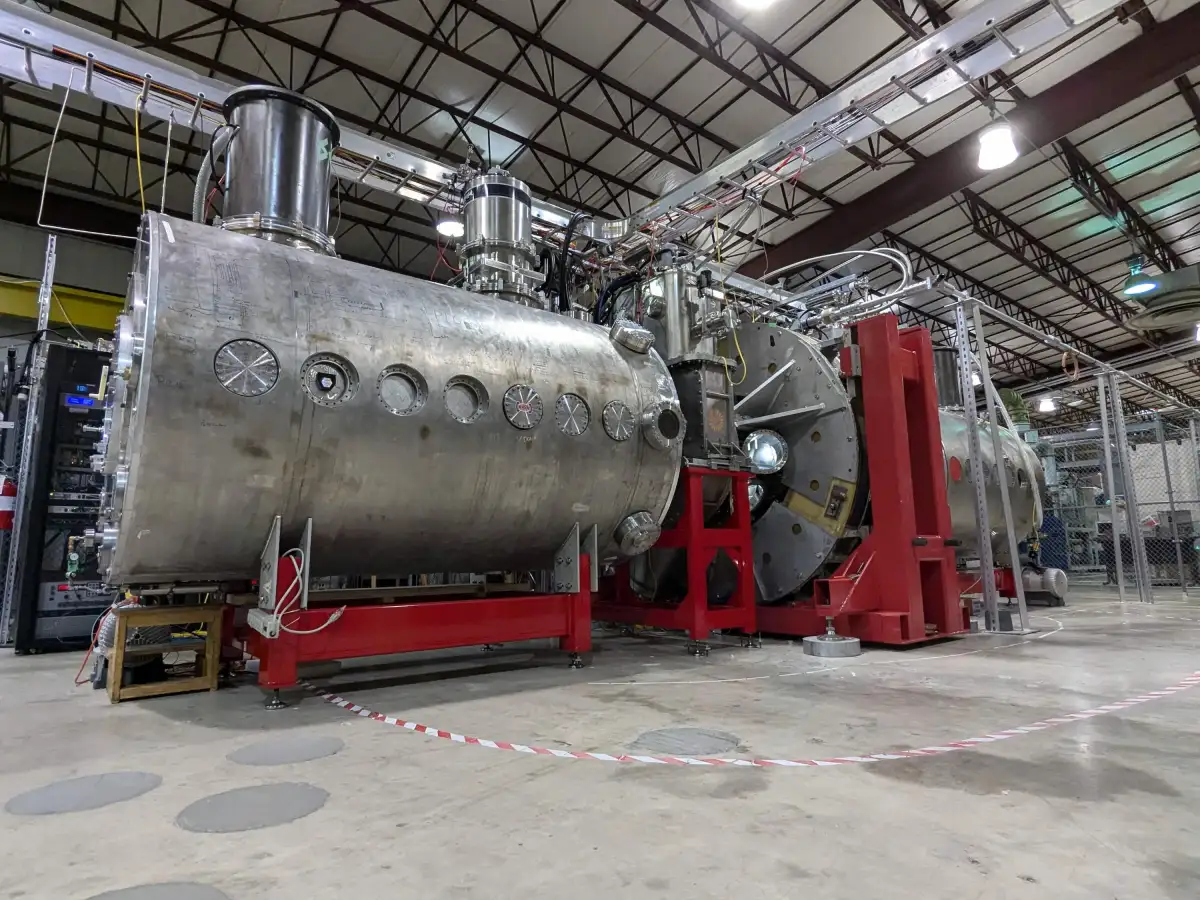
Realta Fusion is to explore building a 200-megawatt fusion power plant in partnership with Madison Gas and Electric, in what could become one of the first grid-connected fusion facilities in the US.
The Wisconsin utility has also taken an undisclosed equity stake in the start-up as part of the agreement, which is expected to support a potential project in the mid-2030s. A 200MW plant would have enough generating capacity to supply a small city.
The deal reflects a growing effort by energy companies to secure access to fusion technology as electricity demand rises, particularly from artificial intelligence data centres. For fusion developers, agreements with utilities can provide access to land, engineers, financing and the complex process of connecting new generation to the grid.
Realta is converting a former Oscar Mayer factory in Madison into a research and development centre. Under the partnership, Madison Gas and Electric will provide engineering and technical support, help identify suitable interconnection sites and assist with financing for a future power plant.
Fusion has long been presented as a potential source of plentiful, low-carbon electricity, but commercial power generation has remained out of reach despite decades of research. Recent progress in the science and engineering of fusion, combined with pressure on utilities to find reliable alternatives to fossil fuels, has renewed interest in the technology.
Utilities turn to fusion for dependable power
Wind and solar power can generate electricity cheaply without producing direct carbon emissions, but their output varies with weather conditions. Batteries can help balance those fluctuations, while fusion developers are designing plants intended to operate continuously.
That prospect is particularly attractive to utilities seeking dependable, around-the-clock electricity without relying on coal or gas. However, fusion plants remain unproven at commercial scale and are likely to require many years of development before they can supply power to consumers.
Only a small number of fusion start-ups have announced formal partnerships with utilities. Commonwealth Fusion Systems has agreed to lease land from Dominion Energy for Arc, a planned 400MW plant near Richmond, Virginia. The facility is expected to begin operating in the early 2030s, with Google and Italian energy company Eni among those agreeing to buy its electricity.
Helion is working with the Chelan County Public Utility District in Washington state on Polaris, a proposed 50MW facility. The start-up aims to bring the plant online in 2028 under an agreement to supply Microsoft.
Type One Energy is planning a 350MW plant, Infinity Two, at the site of a former coal station near Oak Ridge, Tennessee. The project forms part of a wider agreement with the Tennessee Valley Authority, with electricity production targeted for the mid-2030s.
In Germany, Proxima Fusion plans to develop its first commercial plant, Stellaris, on the site of a former fission power station being decommissioned by utility RWE. RWE is an investor in the company, and Proxima is aiming for the plant to begin operating in the late 2030s.
For utilities, the immediate return from such arrangements is uncertain, while the technical and financial risks remain substantial. For start-ups, however, access to utility-owned land, expertise and grid infrastructure can reduce the cost and difficulty of developing a notoriously capital-intensive technology.
Energy companies are accustomed to planning infrastructure projects over long timeframes, but are generally cautious about backing untested technologies. With demand for electricity increasing and grid capacity under pressure, securing a possible source of future supply is increasingly being viewed as a risk worth taking.
