


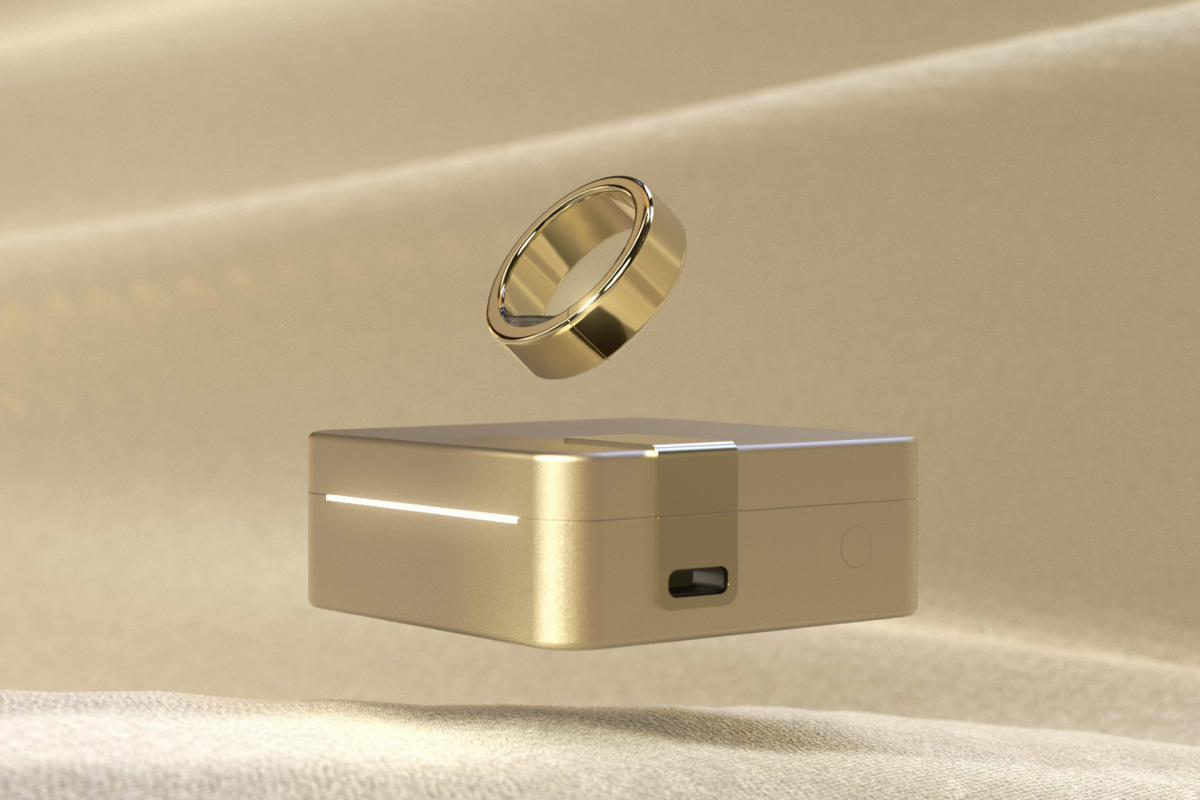
Ultrahuman has raised $70 million in a funding round led in part by Qualcomm Ventures as the Indian smart-ring maker seeks to turn its devices from health monitors into wearable computers.
The investment values the Bengaluru-based company at $365 million, roughly three times its valuation in 2023. The round comprises $65 million in equity and $5 million in debt, according to founder and chief executive Mohit Kumar.
Qualcomm Ventures invested alongside Labcorp, Alpha Wave, Blume Ventures, Nexus Venture Partners and Alteria Capital. Ultrahuman is also developing a new ring using Qualcomm technology, while continuing to work with chips supplied by Nordic Semiconductor.
The additional processing power is intended to allow more software and algorithms to run on the ring itself, rather than depending so heavily on a smartphone or cloud services.
“All ring devices today are like trackers,” Mr Kumar said. “You put on the ring, it measures your heart rate, your movement, your sleep.”
Ultrahuman wants developers eventually to be able to create applications for its hardware. Possible uses include controlling games, acting as a computer pointer or mouse, unlocking a car and providing an interface for AI services.
Quinn Li, global head of Qualcomm Ventures, said the company was working towards a new generation of “personal AI devices”, describing the future of AI as “personal, ambient and always on”.
Ultrahuman’s smart-ring expansion
The company plans to begin testing the concept on its existing Ring Air and Ring Pro models. A software update expected by the end of September is due to add features including game-controller functions, interactions with AI applications and tools allowing third-party developers to build new capabilities.
Mr Kumar said a ring’s position on the finger could make it a more precise interaction device than a smartwatch, while also providing physiological information such as heart rate, temperature and movement.
“A game controller never reads your heart rate and your temperature, but this one does,” he said, suggesting that games could respond to both a user’s movements and their physical signals.
Ultrahuman’s existing business has continued to grow. The company says it has sold about 800,000 rings and is generating revenue at an annualised rate of $140 million, with that figure expected to reach $200 million by January 2027. About 12% of users pay for its PowerPlugs subscription features.
Founded in 2019 by Mr Kumar and Vatsal Singhal, the start-up began with continuous glucose monitors before making smart rings the centre of its business. It has since added blood testing and environmental sensing to its health offering.
The United States remains its biggest market, accounting for about 45% of revenue this quarter, while India contributes approximately 11%. Ultrahuman paused sales of the Ring Air in the US for much of the past year during a patent dispute with rival Oura, but returned with the redesigned Ring Pro.
Mr Kumar said demand for the Ring Pro was currently 18 to 20 times greater than available US supply. The company expects to restore previous sales volumes next quarter and aims to triple them over the following four quarters as production increases.
Some of the new funding will be used to expand in India and the United Arab Emirates, including through physical retail locations. The spending, alongside investment in clinical research, product development and the brand, means Ultrahuman may not be profitable this year.
The company is also exploring a partnership with Labcorp to combine wearable data with blood-test results. Mr Kumar said the work could help investigate risks linked to cardiovascular health, fertility and ageing, although he did not provide details of any planned product integration.
Ultrahuman is not yet preparing for an immediate stock-market flotation. Mr Kumar said it wanted to establish about eight quarters of profitability first, putting the earliest possible initial public offering window in 2028.
