


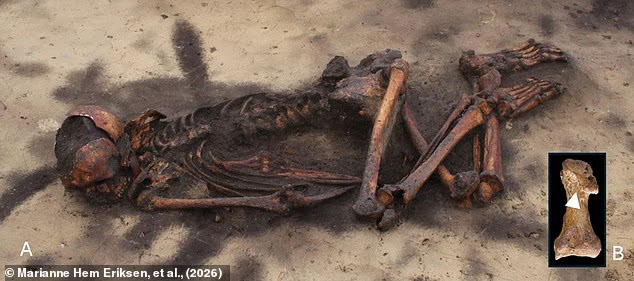
Viking skeletons found outside conventional burial grounds have revealed evidence of repeated violence, dismemberment and possible ritual killing, according to a study of Scandinavian remains.
Researchers from the BODY-POLITICS Project examined 12 bodies with traumatic injuries dating from the Iron Age and Viking Age, between 500BC and AD1050. Eight had been subjected to deliberate, sometimes fatal violence, while some showed signs of having suffered multiple injuries over time.
The remains were discovered in unusual locations, including wells, beneath the foundations of feasting halls and under the floors of homes. Others had been left exposed, cut apart or buried in public spaces rather than placed in cemeteries.
The researchers said the injuries could have resulted from domestic abuse, local disputes or warfare. But the way some of the bodies were treated after death also raises the possibility of ritual violence and human sacrifice.
Most archaeological studies of Viking-era violence focus on people given a formal burial. A recent study of Viking Age cemeteries in Sweden found evidence of physical trauma in between 0.7 and 6 per cent of remains.
However, those figures do not include people who were deliberately denied the normal funerary rites of their communities. The newly examined remains suggest that cemetery evidence may provide only a partial picture of violence during the period.
Professor Marianne Hem Eriksen, lead author of the study and a researcher at the National Museum of Denmark, said: “We know that, today, societies that celebrate outward violence and aggression also tend to experience high rates of volatility within the home and everyday communities.”
“We may be getting glimpses of how violence saturated the Iron Age and Viking worlds, as well as how people made sense of, coped with, or more darkly, perhaps, celebrated that,” she said.
Injuries found beneath homes and in cooking pits
One man in his early 30s was found at Gammel Lejre in Denmark, in a royal feasting hall potentially linked to the setting associated with the Anglo-Saxon poem Beowulf. He had sustained three serious injuries to his skull, including a large radiating fracture which appeared to have been survived for several weeks.
He also had fractures to his forearms known as “parry fractures”. Such injuries are commonly caused when a person raises their arms to protect their head from blows.
At an Iron Age village in Jutland, archaeologists found part of the skull of a male child aged between two and four. The injury on the right side of the skull may have been caused by a sword or another heavy-bladed weapon.
Rather than being cremated, as was customary at the time, part of the child’s skull was placed beneath the floor of a house. The occupants would have walked over it during their daily lives.
At Lindved in Denmark, the remains of a woman aged between 17 and 25 were found in a cooking pit. Her left shin had been cut completely in two by a sharp weapon, alongside numerous other cut marks and signs of burning.
It is unclear whether the injury caused her death or formed part of the later treatment of her body. Archaeologists say they do not yet know why these individuals were selected for such treatment.
Professor Eriksen said: “We can never fully understand their thinking, but we can reasonably argue that they may have wanted the bones of specific dead individuals at close hand; or that the bones themselves or the spectacle of violence may have produced some power or essence.”
Possible signs of human sacrifice
Some of the remains also contain features that could indicate human sacrifice. Dr Kevin Kay, a co-author from the University of Leicester, said: “In some cases, that seems possible, even likely.”
One person who died around AD400 had two fatal stab wounds between the ribs, probably inflicted by a long, narrow bladed weapon such as a spear or dagger. The body was placed in a shallow pit, left exposed for a period and later covered when a house was built above it.
The person’s wrists had been positioned together beneath the ribcage, suggesting they may have been bound before being killed. The researchers also noted that a toddler bearing injuries more usually associated with battle might point to a ritual purpose, although they stressed that each case was distinctive.
Dr Kay said: “But every case is also highly distinctive, so if you think of ritual as something repeated or choreographed, then this seems more improvised.”
He added: “We argue that what holds them together is using the act of burial in houses to make sense of violence, whether that violence itself was done for ritual purposes or not.”
