


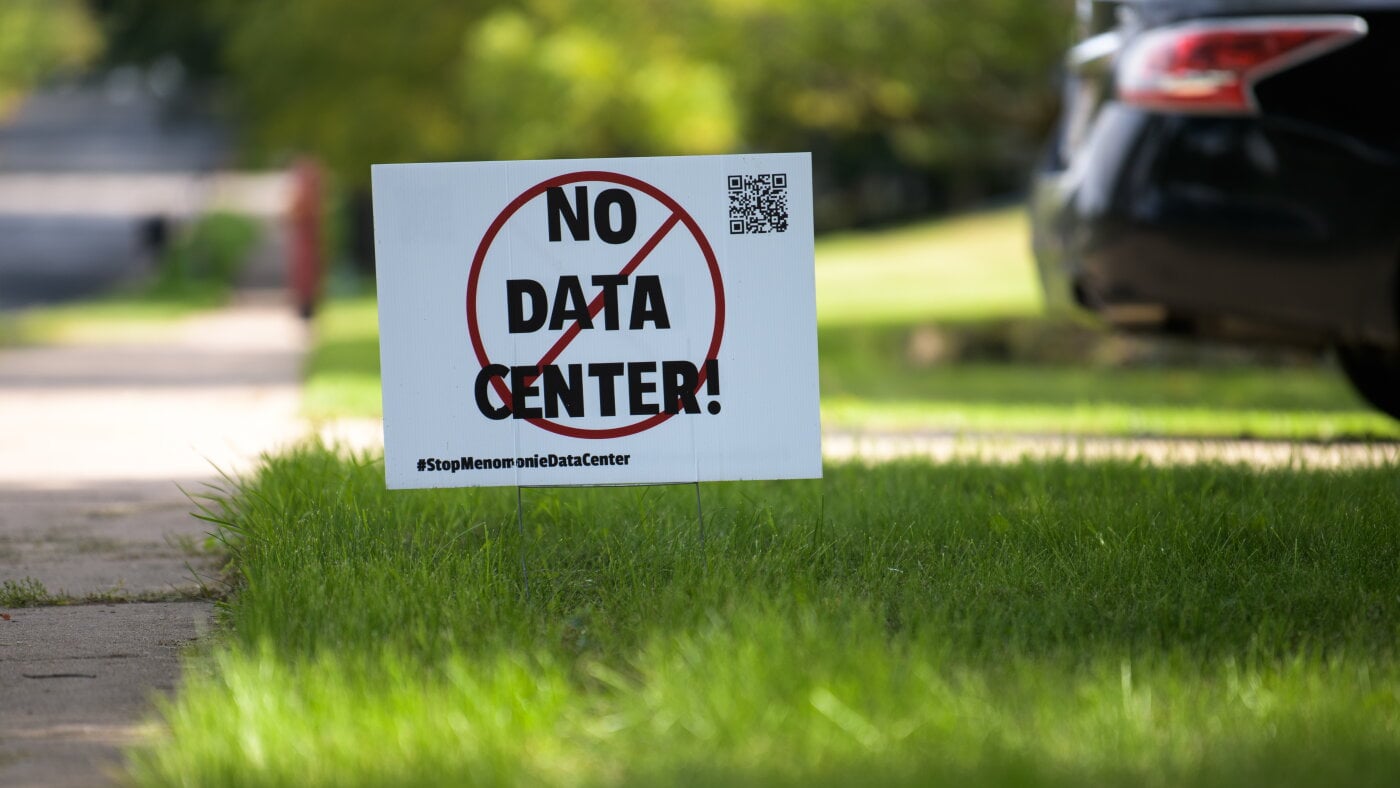
US lawmakers are racing to address concerns that the rapid expansion of AI data centres will push up household electricity bills, but Congress faces difficulty establishing how much of the cost should fall on residential ratepayers.
The dispute has intensified ahead of the midterm elections, with competing proposals seeking to make large electricity users pay more for the grid infrastructure and power supplies they require.
Republicans this week have been pressing the Ratepayer Protection Act, sponsored by Ohio senator Jon Husted. The measure would require state utilities to consider making “large-load” customers responsible for increased costs and passed the House in September with strong bipartisan support.
Senate minority leader Chuck Schumer opposes the bill, arguing that its protections are voluntary. He is backing the GRID Savings Act, introduced by New Mexico Democrat Martin Heinrich, which he says would provide stronger safeguards.
The legislation has become a campaign issue for Mr Husted, who is facing a heated re-election contest against Democrat Sherrod Brown. Mr Brown, who lost his Senate seat in 2024, has highlighted Mr Husted’s previous support for data centres in Ohio.
Why data centre costs are difficult to calculate
Experts say there is no nationwide figure for the effect of data centre growth on household bills. The amount passed to residential customers depends on individual utilities, state regulation, power-purchasing contracts and decisions over which customers should pay for new infrastructure.
In Maryland, households may be paying between $168 and $216 more each year on their electricity bills, primarily because of the data centre boom, according to one estimate.
Connor Waldoch, co-founder and chief strategy officer at Grid Status, said local utilities were building infrastructure worth “tens to hundreds of millions of dollars”. In many cases, he added, “it is just ultimately going to end up in customers’ bills”.
The regional grid operator PJM serves 13 states and the District of Columbia, including Northern Virginia, the world’s largest concentration of data centres. Its independent market monitor estimates that data centres have cost the region’s 67 million ratepayers about $29 billion over roughly the past two years.
Ari Peskoe, director of the Harvard Electricity Law Initiative, said the costs were spread across the region. “Everyone pays those costs,” he said. “They’re spread across the region to every business and resident that has an electricity meter.”
However, Professor Lucy Qiu of the University of Maryland said it was difficult to determine precisely how much of any increase was being passed to homes. New substations, transmission lines and other upgrades may serve data centres exclusively, or benefit a wider group of electricity users.
“It really depends on the scale of the upgrade and also how utilities are doing the accounting of that different share,” Professor Qiu said.
Mr Peskoe said a “single, clean number” was impossible because information about the costs paid by individual data centres was often protected by non-disclosure agreements.
Those agreements have fuelled opposition in communities considering new developments. A University of Mary Washington study found that non-disclosure agreements had been signed in 80% of Virginia localities with existing, approved or proposed data centres.
Dominion Energy, which serves Loudoun County in Virginia, said it recovered the cost of distribution and transmission infrastructure from customers. Jeremy L Slayton, a company spokesman, said the assets were necessary for reliable electricity service and that all costs recovered from customers were reviewed and approved by the Virginia State Corporation Commission.
The potential benefits of the AI buildout
Data centre expansion can raise wholesale electricity prices by increasing demand and forcing utilities and regional grid operators to secure more generating capacity. The speed of the buildout may also mean utilities rely on less efficient power plants while waiting for newer forms of generation.
Large industrial customers generally pay less per unit of electricity than households because of the volume of power they consume. Mr Waldoch said that disparity was increasingly difficult to explain when many Americans feared data centres would increase their bills.
Not all recent increases in electricity prices are linked to data centres, Professor Qiu said. Fuel costs have also played an important part, while some power lines and substations would have needed replacing because of extreme weather and other pressures.
She said the AI boom could accelerate upgrades already needed to support rising demand from electric vehicles and improve the resilience of the power network. In areas hosting data centres, stronger infrastructure could help reduce outages and improve the grid’s ability to withstand extreme heat and other high-impact events.
