


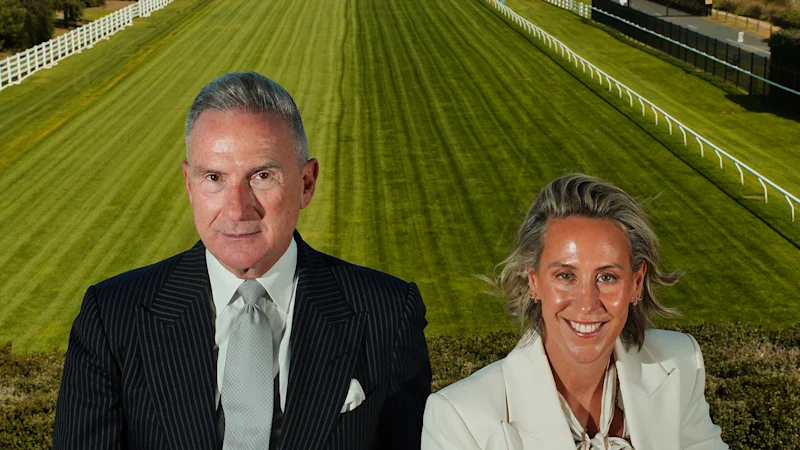
Neil Wilson is to step down as chairman of the Victoria Racing Club after six years, saying a $5.4 million profit and a $12.6 million year-on-year turnaround showed the organisation had recovered from the financial damage caused by Covid-19.
Wilson, who has been involved with the club for 14 years, will leave after the annual general meeting in December. Vin Cox has been elected chairman-designate and is due to take over later this year.
The decision to name Cox before the AGM has prompted claims of a split among the VRC board. An anonymous source alleged that the 11 directors voted 6-5, after an initial contest involving three candidates was narrowed to Cox and vice-chairman Michael Ramsden.
Wilson rejected suggestions that the process exposed a damaging division, saying it followed the club’s established governance arrangements. He also defended the participation of chief executive Kylie Rogers in the vote, pointing out that the VRC’s chief executive is also a director.
“The CEO in our club is a director, so they’re entitled to vote,” Wilson said. “When I was the CEO, I voted [on board matters], and there was never an issue.”
He said the board had chosen to announce Cox immediately so that the two men could work together on the transition before the December meeting, rather than leave members and the racing industry uncertain about the club’s future leadership.
“We felt the right decision was to be clear and to not have a period of unknown,” Wilson said, adding that the arrangement would allow the transition to be completed before the new chairman formally took over.
Victoria Racing Club reports financial recovery
Wilson said his decision to retire was made after he became satisfied that the club had emerged from the financial pressure that followed the pandemic. The VRC lost $78 million over the five years from 2020 to 2025, including revenue lost during Melbourne Cup week and debt linked to the construction of the $128 million Club Stand.
The club recorded earnings before interest, tax, depreciation and amortisation of $23.9 million in the past financial year, alongside its $5.4 million net profit. Wilson said debt, including $10 million owed to Racing Victoria, had fallen from $67.5 million to $52 million.
“I’m leaving with the view that this momentum and this growth and this strong performance will continue,” he said.
Wilson said the club had chosen to keep investing in the Melbourne Cup carnival during the pandemic, rather than significantly reduce its scale. He credited that approach with helping the VRC secure new commercial agreements, including what he described as the world’s biggest racing media rights deal, and increase membership to record levels.
He said managing the club through Covid-19 had been the achievement of which he was most proud. Wilson was chief executive in 2020 and chairman the following year, when he said the crisis had consumed his working life.
Wilson, who turned 65 this year, said he also wanted to devote more time to opportunities in the technology, data and artificial intelligence sectors. He became the only person in the VRC’s history to serve as both chief executive and chairman.
Four board positions will be contested at the forthcoming elections, including the vacancy created by Wilson’s departure. Cox, Carmody and Michael Saadie are also seeking re-election after serving three-year terms, with nominations expected to open in late October or early November and close on Oaks Day.
