


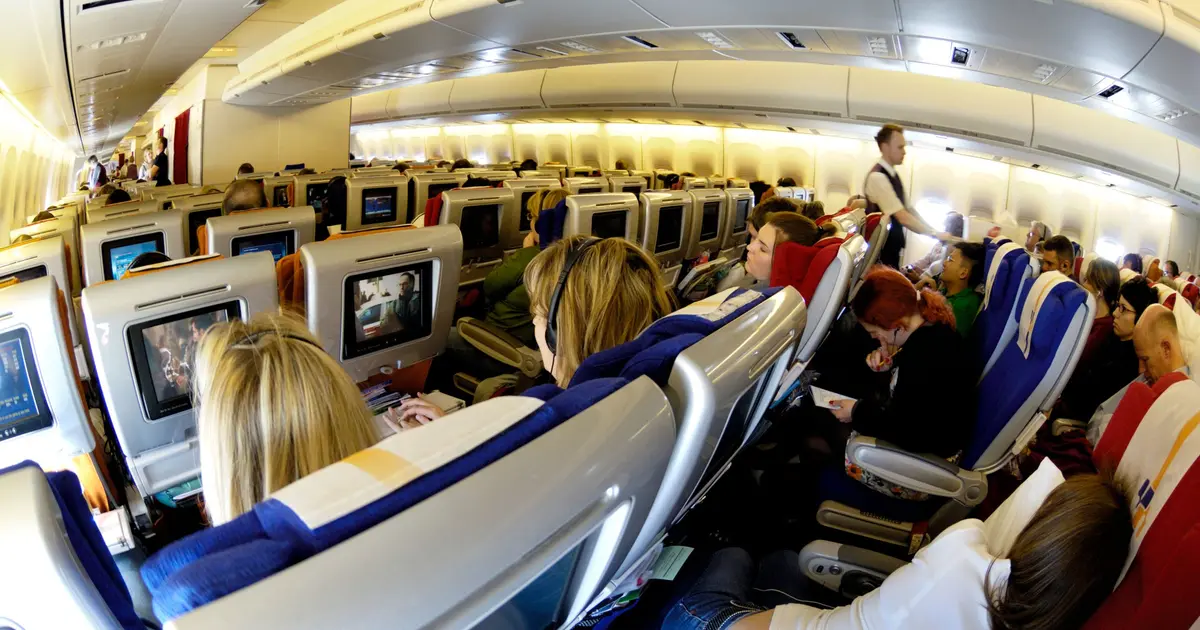
A traveller has described temporarily losing vision in one eye after wearing contact lenses for an 11-hour flight from Greece and much of the surrounding journey, highlighting the risks of sleeping, swimming and showering while wearing them.
The woman reportedly kept the lenses in for about 24 hours while travelling. Within days of arriving home, she developed eye pain and sensitivity to light before her vision deteriorated significantly.
Doctors diagnosed her with a corneal ulcer, an open sore on the surface of the eye. She required weeks of treatment with eye drops and was left with a small scar that continues to blur part of her vision, according to the New York Post.
Valerie Kattouf, an optometrist in Illinois, said long flights can worsen dry-eye symptoms because cabin air has very low humidity. Contact lenses may lose moisture, causing irritation, a gritty sensation and intermittent blurred vision.
“The cabin air has significantly reduced humidity that can actually remove moisture from the contact lens and create more dryness,” Kattouf told Fox News Digital.
She said falling asleep while wearing lenses could add to the risk, as a lens that has dried out may move less freely across the eye. Removing it can potentially disturb the epithelium, the outer layer of the cornea, leading to severe irritation and affecting vision.
Health authorities also warn against exposing contact lenses to water. The US Centers for Disease Control and Prevention advises people to remove them before sleeping, showering or swimming, while the Food and Drug Administration says contact lens-related infections and corneal ulcers can develop quickly and, in rare cases, threaten sight. ([archive.cdc.gov](https://archive.cdc.gov/www_cdc_gov/contactlenses/traveler-tips.html))
The CDC has separately warned that wearing lenses while swimming or showering can increase the risk of Acanthamoeba entering the eye. The rare infection can cause severe pain and permanent vision loss if left untreated. ([cdc.gov](https://www.cdc.gov/acanthamoeba/about/about-acanthamoeba-keratitis.html))
Kattouf recommends that people taking long flights bring an up-to-date pair of prescription glasses and switch to them before sleeping or partway through the journey. Travellers who continue wearing lenses may consider single-use vials of artificial tears intended for contact lens use.
Anyone experiencing pain, redness, unusual sensitivity to light, blurred vision or a gritty feeling should remove their lenses and seek urgent advice from an eye-care professional, the FDA says. ([fda.gov](https://www.fda.gov/medical-devices/contact-lenses/contact-lens-risks/))
