


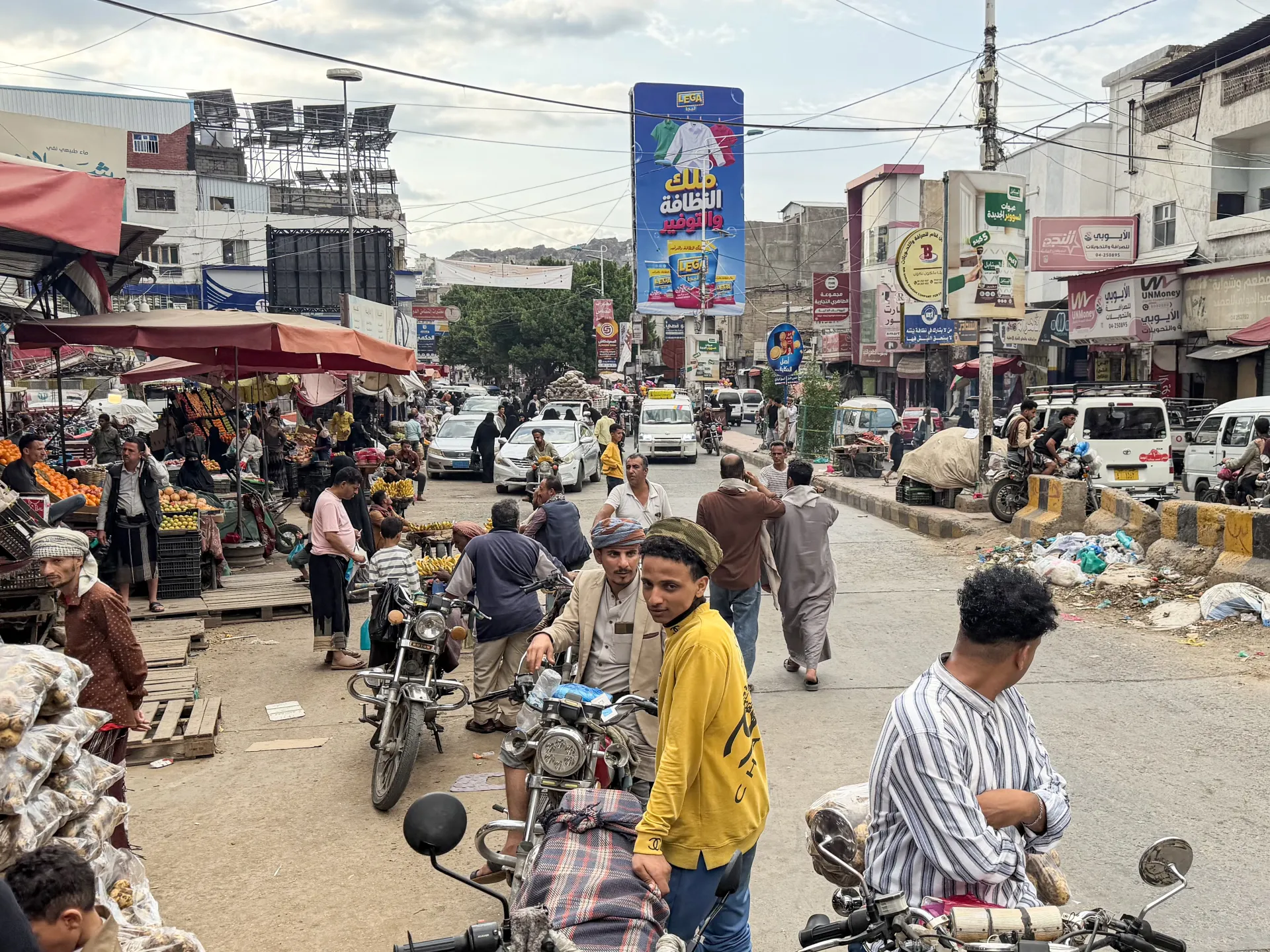
Medical services in Taiz are at risk of shutting down as fuel, medicines and other essential supplies run dangerously low during a renewed Houthi siege, Yemen’s internationally recognised government has warned.
The Ministry of Public Health and Population said medicines, intravenous fluids, medical equipment and fuel at health facilities in the south-western city were “nearing depletion”.
It warned that emergency treatment, surgery, intensive care, dialysis and neonatal services could be forced to stop, placing patients, injured people, pregnant women and newborn babies “at immediate risk”.
Fuel shortages are also threatening hospital generators, ambulances and refrigeration systems needed to keep medicines and vaccines usable. The ministry said a prolonged shortfall could lead to “severe complications and preventable deaths”.
It called for the siege to be lifted immediately and for supply routes to be reopened, with safe passage for patients, ambulances, health workers and humanitarian aid.
The ministry also appealed to the United Nations and aid organisations to deliver medicines, intravenous fluids, oxygen, medical supplies and fuel to Taiz hospitals.
“Every delay increases the risk of service interruption and loss of life,” it said.
Renewed Houthi siege cuts Taiz supply routes
The Houthis, an armed group backed by Iran and also known as Ansar Allah, seized Yemen’s capital, Sanaa, in 2014 and control much of the country’s north and north-east.
Taiz experienced a severe Houthi siege between 2015 and 2016, when government forces were confined to an enclave in the city centre. Although the siege was broken in 2016, other access points remained partly blocked.
A route into Taiz from the east was reopened in 2024 after an agreement with the Houthis, but it has since been closed following a return to fighting.
The latest siege began to take shape in early October. Houthi forces launched an offensive along the Red Sea coast of Taiz governorate in September, capturing the port city of Mocha and taking At Turbah by October 4. The move cut the last main road linking Taiz city with other government-held areas.
Government forces, backed by Saudi Arabia, launched a counteroffensive in early October.
Nabil Jamil, director-general of the Yemeni government’s planning and development office in Taiz governorate, said the current restrictions were “more comprehensive and its impact more severe than in 2015”.
About 2.8 million people live in government-held parts of the governorate, alongside 200,000 people who have recently been displaced, he said.
Fuel prices have surged as supplies have dwindled. A 20-litre container of petrol, previously costing 30,000 Yemeni riyals, is now selling for 90,000 riyals on the black market.
“We are still waiting for a response or intervention on the ground,” Mr Jamil said.
The UN refugee agency and the World Health Organisation have warned that the fighting is placing Yemen’s already fragile health system under further strain.
Nabil Sharyan, a lawyer and head of the Justice for Rights and Development Organisation, said: “Civilians must never be turned into a means of exerting pressure in any conflict.”
