


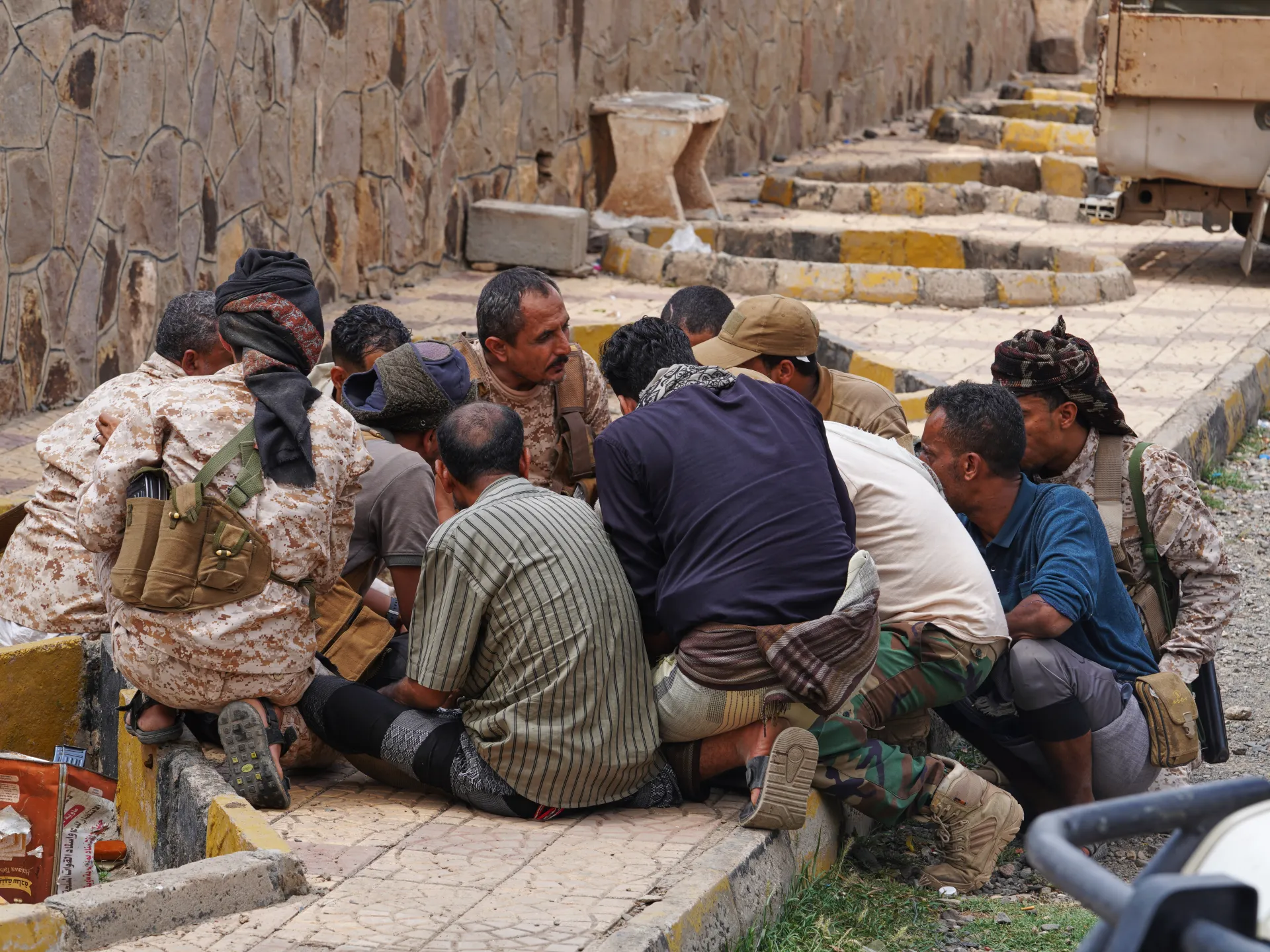
The siege of Taiz has cut off humanitarian supplies to the Yemeni city, leaving residents without food and other essentials, the United Nations has warned.
UN human rights chief Volker Türk said the Houthis, also known as Ansar Allah, must allow aid into Taiz immediately and permit civilians to leave safely.
“The Houthis’ closure of the only supply route linking Taiz to Aden is placing civilians at grave risk, blocking humanitarian aid and cutting off essential supplies,” Mr Türk said.
“Humanitarian aid must be immediately allowed to enter the city and its passage must be facilitated. Civilians wishing to leave must be allowed to do so freely and safely.”
Taiz siege pushes civilians towards breaking point
Taiz has been repeatedly besieged during Yemen’s war and has been encircled again after Houthi forces captured a major road connecting the city with southern Yemen.
Prices of basic commodities have soared amid shortages, while continued fighting in Taiz governorate killed at least 32 civilians between August 1 and October 19. Fourteen of those killed were children.
Mr Türk urged all sides to avoid using explosive weapons with wide-area effects in populated areas and to take every possible step to protect civilians and civilian infrastructure.
Yemen’s internationally recognised government has appealed to the UN to intervene and lift the blockade, warning that the siege threatens more than four million people.
The World Food Programme has said shifting front lines and road closures have cut 800,000 people off from life-saving assistance, most of them in Taiz. Across Yemen, more than 18 million people are facing severe food insecurity.
Government-aligned forces launched air strikes in Taiz governorate on Monday, destroying Houthi reinforcements in Najd Qasim and a weapons depot in Jabal Habashi, according to the material reported.
Death toll rises after Shabwah missile attack
The death toll from a Houthi attack on a military base in Shabwah governorate rose to 73 on Tuesday, local authorities said.
Monday’s ballistic missile strikes on al-Alam camp were condemned by Yemen’s government as a “treacherous bloody assault” and a war crime.
Rashad al-Alimi, president of Yemen’s Presidential Leadership Council, formally asked the United Nations to designate the Houthis as a terrorist organisation.
The United Kingdom said it would deploy Typhoon fighter jets to help protect Saudi Arabia after cities and infrastructure were targeted in rocket and drone attacks by the Houthis.
The Ministry of Defence said the aircraft would have a defensive role only and would not conduct attacks in Yemen.
Egypt’s parliament meanwhile delayed a vote on whether to authorise military support for Saudi Arabia in its conflict with the Houthis.
Fighting intensifies across Yemen
The escalation follows a Yemeni military offensive, named “Dawn of Yemen”, launched on October 5 to reverse recent Houthi advances.
The campaign initially recorded successes, with hundreds of Houthi fighters reportedly killed in air strikes. However, questions remain over whether the government’s counter-offensive has lost momentum.
Ali al-Dahab, a military and security strategic affairs expert, said greater international support for the anti-Houthi alliance was unlikely to result in foreign ground forces entering Yemen.
“The probability of international ground forces engaging to confront the Houthis seems slim; expected participation will be limited to air and naval support,” he said.
He said the shift from defence to offence remained limited and that government forces had yet to expand their influence in the energy-rich central region of al-Marib as far as the operation’s name suggested.
Mr al-Dahab said government forces should use the disruption caused by air strikes and drone attacks to launch a broader operation, particularly towards the north-west and Sanaa.
The ground fighting has also prompted cross-border attacks between the Houthis and Saudi Arabia. The Saudi-led coalition said on Tuesday that it had intercepted and destroyed a ballistic missile fired towards Riyadh, prompting the activation of early warning systems across the capital.
The coalition has carried out waves of strikes against Houthi positions across Yemen over the past week.
Mr al-Dahab said sustained air attacks could damage Houthi military infrastructure, equipment and vehicles, but questioned whether government forces had sufficient strength to exploit those strikes on the western coast.
