


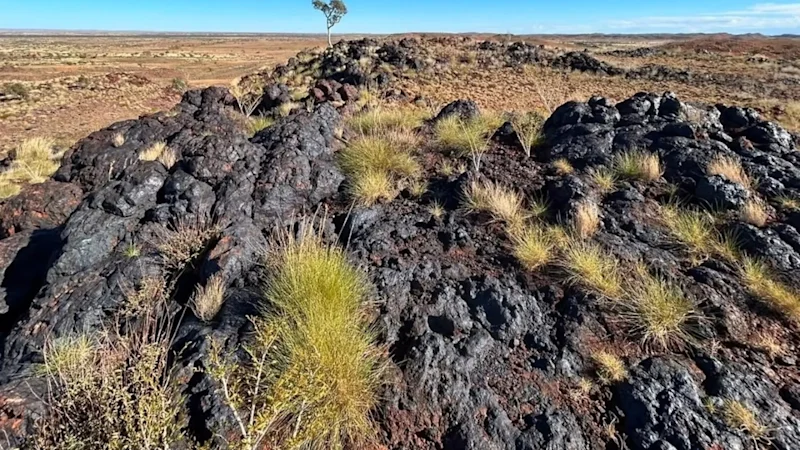
Accelerate Resources has reported high-grade manganese rock chips of up to 59.6 per cent at its Woodie Woodie North project in Western Australia, alongside a new discovery that extends a mineralised corridor for 12 kilometres.
The results from the Faris and Sea Turtle prospects have highlighted an area that has been tested only by shallow drilling carried out about 30 years ago. The project is located in the East Pilbara, 55km north of Consolidated Minerals’ Woodie Woodie manganese mine.
At Faris, four rock-chip samples returned manganese grades between 53.9 per cent and 59.6 per cent. Iron levels in the samples were between 0.7 per cent and 1 per cent.
The high-grade outcrop lies about 2km south-east of Accelerate’s Area 42 deposit and sits above historic drilling that recorded 11 metres at 28.4 per cent manganese from one metre downhole, as well as a three-metre intersection grading 39.1 per cent from surface.
Field mapping has also identified a previously untested iron and manganese alteration system at Sea Turtle, measuring about 650 metres by 400 metres. Two new outcrops produced rock-chip grades of up to 31.4 per cent manganese.
Luke Meter, Accelerate’s chief executive, said the findings supported continuity of mineralisation across the 12km trend between the company’s Area 42 deposit and the Gingarrigan and El Largo prospects.
“The ongoing discovery of high-grade manganese along this exciting 12km trend continues to support the continuity of mineralisation through this extensive belt,” Mr Meter said.
He added: “The more we map new targets on the ground, the more we find. Faris has delivered rock chips all above 53 per cent manganese with very low iron, sitting directly over high-grade historic drilling. At Sea Turtle, our geology team has found two new manganese outcrops inside a large alteration system that has not previously been drilled.”
Drilling plans for Pilbara manganese prospects
Accelerate plans to begin a 3,000-metre discovery drilling programme at Gingarrigan in the coming days. Recent mapping at Gingarrigan and El Largo identified more than 200 outcrops across a combined manganese footprint of almost 10 hectares.
Rock-chip sampling at those prospects has returned grades of up to 59.4 per cent manganese. Further mapping and sampling will now be carried out at Faris and Sea Turtle to help determine their priority for drilling.
Woodie Woodie North has a maiden inferred mineral resource of 1.2 million tonnes grading 19.1 per cent manganese, alongside an exploration target of between 5.3 million and 10.7 million tonnes at grades of 10 per cent to 19 per cent.
Area 42, which is being assessed as a potential development project, has a resource of 700,000 tonnes grading 20.7 per cent manganese. Recent large-diameter drilling for metallurgical testing encountered a 72-metre zone of visual mineralisation from 5.6 metres below surface in one hole.
Last month, Accelerate completed a scrip-based deal to take full ownership of Woodie Woodie North, removing legacy payments and royalties from the project. The company said the simplified ownership structure could assist future funding, offtake or partnership discussions.
The exploration programme comes as Australia increases its focus on critical-minerals supply chains through a proposed strategic reserve backed by a 5 billion Australian dollar funding facility. Manganese is used in steelmaking and battery production.
Accelerate is also pursuing the Balagundi gold project near Kalgoorlie and plans to rebrand as Mango Metals, reflecting its focus on manganese and gold.
