


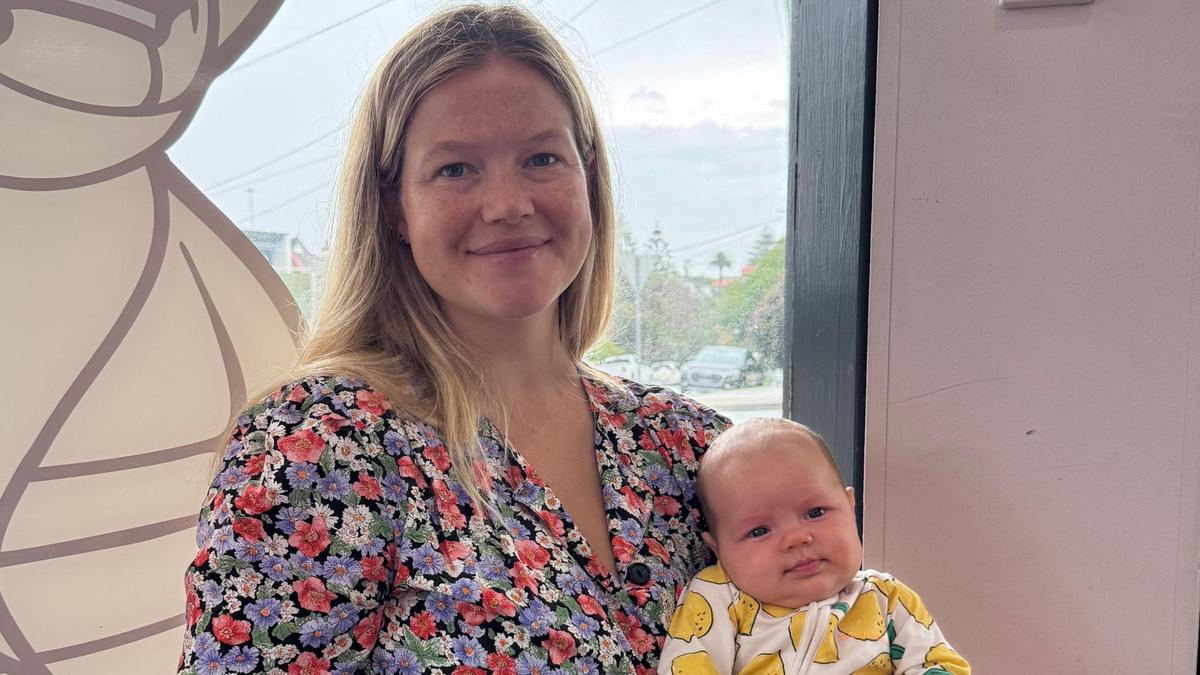
Coogee shark attack survivor Leah Stewart has celebrated a major milestone in her recovery after learning to plait her hair with one hand, four months after losing her arm in the mauling.
The 34-year-old mother shared a video on Instagram showing her smiling before turning to reveal the plait. She said styling her hair had been among the most frustrating challenges since the attack.
“Can you see this? I just did that on my own, I didn’t think I’d be able to do this,” Ms Stewart said in the video. “I honestly had given up on doing hair.”
She added: “I have managed a plait. I am so happy – and I tied it myself.”
Ms Stewart said she had attempted the style hundreds of times before finally succeeding. “If I’m honest, doing hair has been one of the most frustrating parts of my disability,” she wrote.
“I have tried to tie up my hair hundreds of times and failed but luckily I’m very stubborn and look where it’s gotten me.”
She encouraged viewers to try tying a plait with one hand, saying it had seemed “really lame” before the attack but now made her feel “really clever”.
Ms Stewart was swimming between the flags at Sydney’s Coogee Beach when she was mauled by what is believed to have been a great white shark. Beachgoers, surf lifesavers, police and medical teams rushed to her aid.
Her arm was amputated below the elbow. She spent 10 days in an induced coma and underwent 11 surgeries during her recovery.
Before mastering the plait, Ms Stewart relied on her partner, Fernando, to help with her morning hair routine. She previously said she had been unable even to brush her teeth earlier in her recovery.
Fundraising for St Vincent’s Hospital
The breakthrough comes as Ms Stewart becomes an ambassador for the St Vincent’s Curran Foundation’s eight-week Gift of Care campaign, which aims to raise $100,000 for new lifesaving equipment in the intensive care unit.
She spent two weeks as an inpatient at St Vincent’s Hospital in Sydney and continues her recovery as an outpatient. The fundraising drive is her way of thanking the doctors, nurses and other health workers who treated her during her first 12 days in intensive care.
“The dedicated team at St Vincent’s supported me through the toughest period of my life, and I’ll always be grateful,” Ms Stewart said.
“Fundraising is a way for me to turn that gratitude into action and help ensure future patients have access to the same exceptional care that I did.”
Hergen Buscher, head of the hospital’s Department of Intensive Care, said the money would help provide specialised equipment and technology.
“Leah’s efforts send a powerful message of hope and solidarity to those facing some of the most challenging moments of their lives,” he said.
