


Companies are preparing for sweeping workforce changes as spending on artificial intelligence is expected to exceed $730 billion this year, with some considering AI agents as part of their formal organisational structures.
Amrita Ahuja, chief financial officer and chief operating officer at Block, said employees could increasingly be responsible for training and deploying those agents, as businesses seek to justify their investment in the technology.
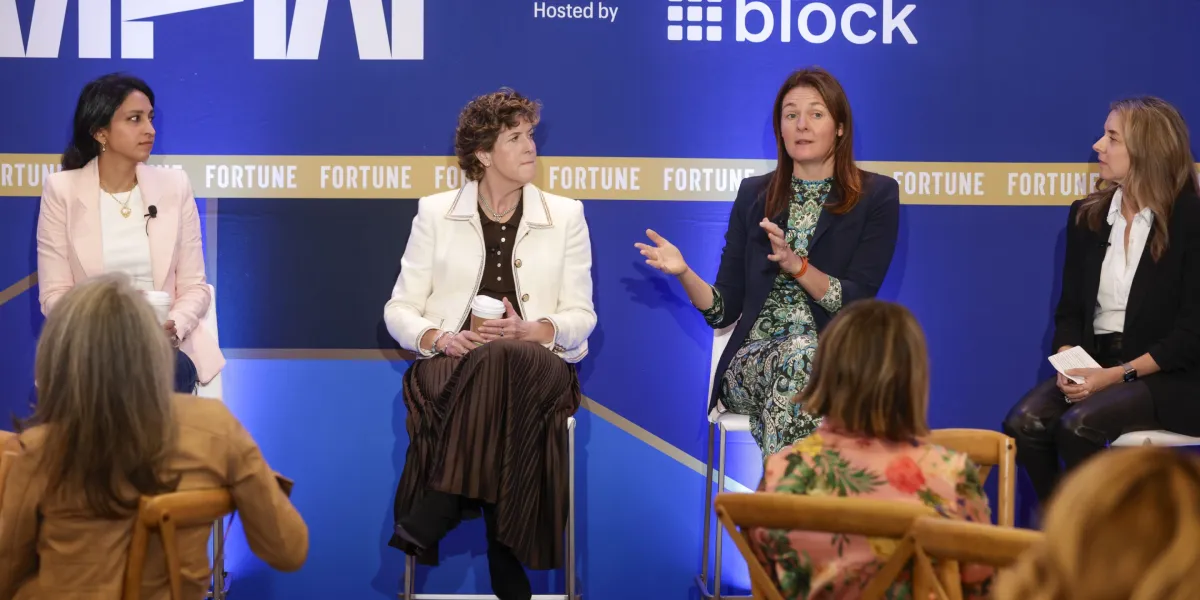
“Where things are headed—and I’ve already heard about a couple companies doing this, so we’re on the frontier—is you look at your work chart that your company publishes, and it will have not only units, but agents,” she said at the Fortune Most Powerful Women Summit in Santa Barbara, California.
Block chief executive Jack Dorsey laid off 40 per cent of the company’s staff earlier this year as part of a structural overhaul linked to the wider adoption of AI to automate workflows.
Ahuja said AI agents would require continuing development as their responsibilities evolved. “They need more context. They need more information,” she said. “They need to understand their goals, and those may change.”
Shelagh Glaser, chief financial officer of Synopsys, said AI deployment needed to be deliberate if companies were to demonstrate that the spending was justified. She compared the technology with snacks in a workplace break room, where some customers might need premium products while others could use internal models.
“We are investing in AI. It is an important investment. We want our team to have the latest greatest tools, but just along with everything else, is being super intentional about what that investment is,” Glaser said.
Michelle Zatlyn, co-founder, president and co-chair of Cloudflare’s board, said AI agents had become “an extension of our team”. She added that software made available to thousands of employees had enabled more people to become “builders” and identify new uses for AI.
“It’s been amazing to see where the best builders come from,” Zatlyn said. “It’s not where you’d expect.”
Amazon measures the workplace return from AI by tracking adoption, engagement and outcomes such as time saved, according to Heather Zorn, the company’s vice-president of customer experience products and services.
But Zorn said the most important measure was the money generated by the technology. “The ultimate KPI is revenue growth,” she said. “That is the ultimate KPI. We don’t need another KPI.”
