


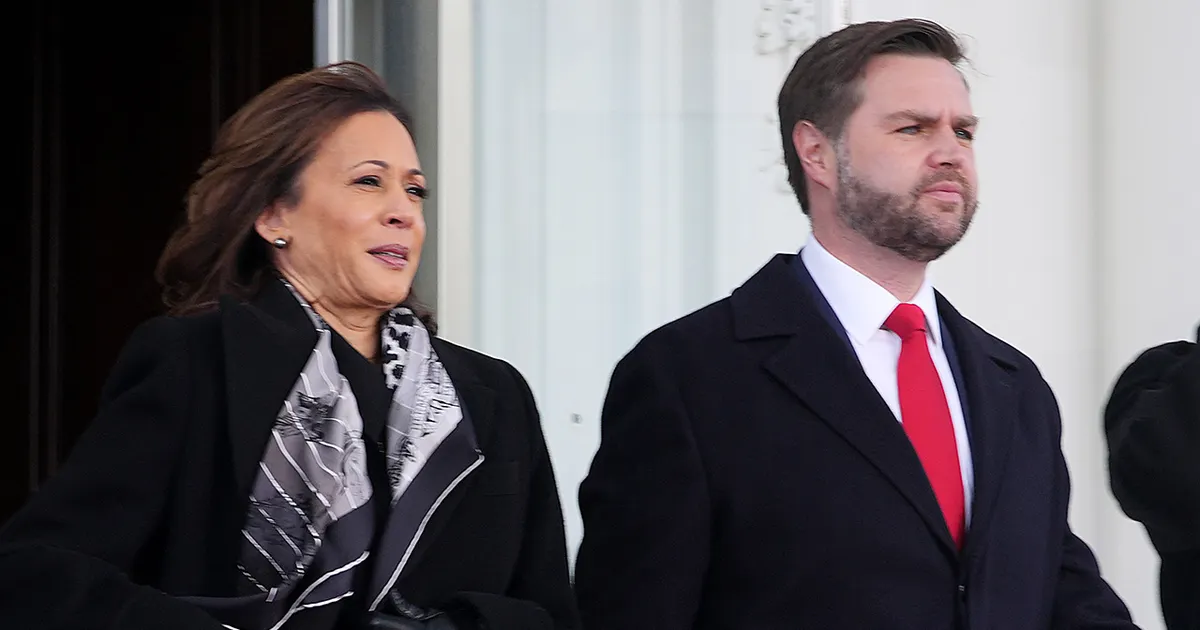
Kamala Harris and JD Vance have emerged as the early front-runners for their parties’ 2028 presidential nominations, according to a new national poll conducted ahead of next month’s US midterm elections.
Harris, the former vice-president and Democrats’ 2024 nominee, was backed by 32% of respondents who said they were considering voting in a Democratic primary. California governor Gavin Newsom was her nearest rival on 15%.
Harris leads early Democratic field
Alexandria Ocasio-Cortez and Pete Buttigieg each received 9%, while Georgia senator Jon Ossoff was chosen by 8%. Fourteen per cent of those questioned said they were unsure which Democrat they would support.
Harris’s position gives her a substantial early advantage, although the poll measures name recognition and current preference more than a settled primary contest. The first votes in the 2028 nomination race remain more than two years away.
On the Republican side, Vice-President JD Vance led with 38% support. Secretary of State Marco Rubio was second on 24%, followed by Florida governor Ron DeSantis on 9%.
Vance ahead in Republican contest
Donald Trump Jr and Health and Human Services Secretary Robert F Kennedy Jr each recorded 7%, while 12% of Republican primary voters were undecided.
The poll places Vance at the head of a field shaped by his position as Donald Trump’s vice-president. Vance has said he is concentrating on the 2026 midterm elections, while Rubio has been reported as telling allies that he does not intend to run against him in 2028.
The survey also found that Trump’s approval rating stood at 33%, with 58% disapproving of his performance as president. Thirteen per cent said they strongly approved of his record and 20% somewhat approved.
In a hypothetical contest between generic party candidates, Democrats led Republicans by 47% to 41% among all respondents. The Democratic advantage increased to six points among registered voters and eight points among likely voters, who backed a generic Democrat by 52% to 44%.
The FocalData poll was conducted between October 2 and October 5 among 2,553 US adults. Its findings offer an early indication of the political landscape rather than a forecast of the 2028 election, with potential candidates yet to declare their intentions and the 2026 midterms still to be contested.
