


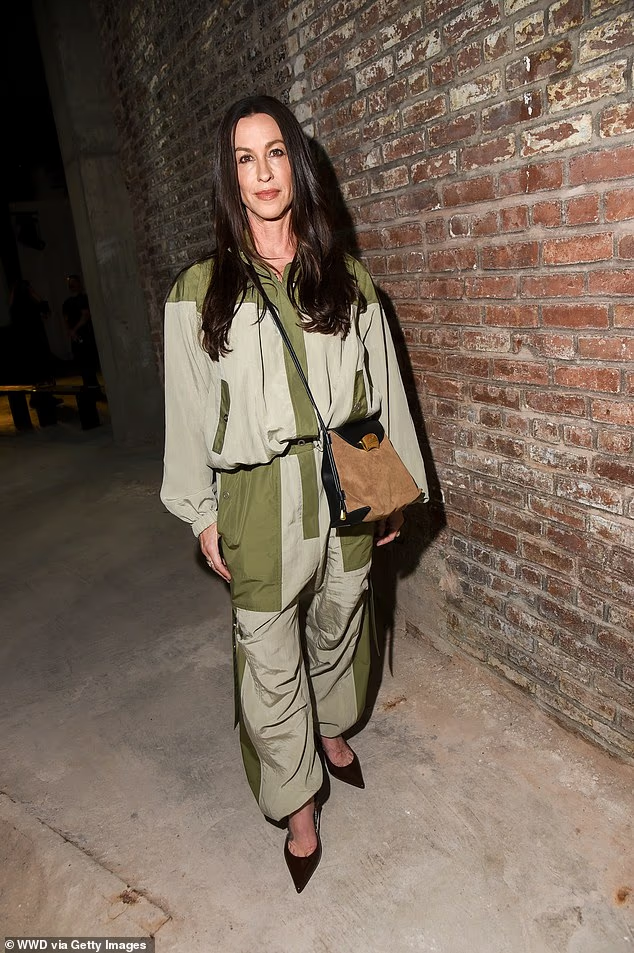
Alanis Morissette has spoken about experiencing terrifying intrusive thoughts and “dipping into psychosis” during a worsening battle with postpartum depression after the birth of her third child.
The Canadian singer, 52, described feeling as though she had become “another person” during an interview with Alex Cooper on the Call Her Daddy podcast, saying the condition involved far more than depression alone.
“The depression piece inside PPD, unfortunately and fortunately I was familiar with it. It was all the other stuff,” Morissette said. “It was the invasive thoughts and the terror. All I could picture was death and terrible things.”
Morissette said she experienced postpartum depression after each of her three pregnancies, but found that the symptoms became progressively more difficult to manage.
“From my experience, each postpartum depression gets increasingly harder,” she said. “I just wanted to meet my kids, though, so badly, so I kept going.”
Her first child, Ever, was born on Christmas Day in 2010. She and her husband, musician Mario “Souleye” Treadaway, also have a daughter, Onyx, and a son, Winter, who was born in August 2019.
Morissette said she recognised the problem more quickly with each child. She waited a year and two months before seeking help after her first pregnancy, eight months after her second and just three days following the arrival of her youngest.
“I was just like, ‘Oh no, I’m not doing this again.’ And I did it again,” she recalled.
The singer said hormones, depression and relentless intrusive thoughts left her feeling “completely out of control”, even as she continued working, managing finances and performing on tour during the Covid pandemic.
“I still showed up. I dipped into psychosis. It was a wild ride,” she said.
Morissette also spoke about the effect the episode had on her relationships, saying it was upsetting to feel that people no longer trusted her judgement.
“They looked at me like I maybe couldn’t be trusted or was going to fly off the handle,” she said. “And that’s not my thing.”
Although she said she is now happy, Morissette suggested that the term postpartum depression did not fully capture the range of symptoms she experienced, describing it instead as “postpartum activity”.
