


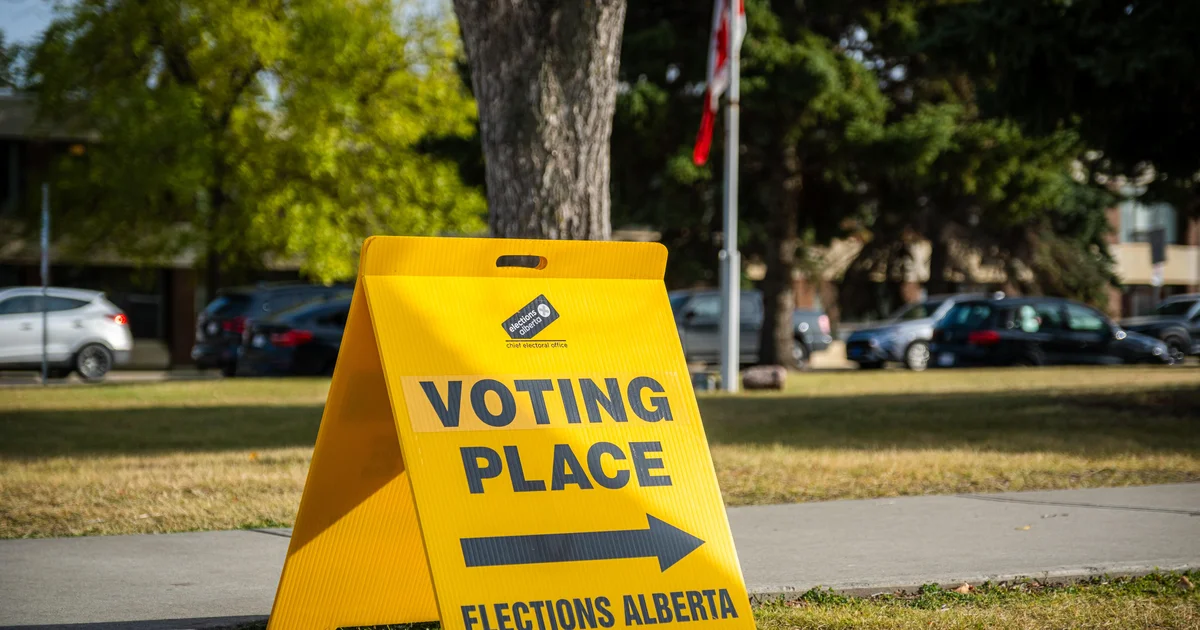
Voters in Alberta have rejected a proposal to begin the process that could eventually lead to the province leaving Canada, in a result that handed Prime Minister Mark Carney and supporters of Canadian unity a decisive victory.
With more than one million ballots counted, about 76% backed remaining part of Canada, while 23% supported starting the legal process towards a future separation vote.
The Alberta independence referendum was not itself a vote on independence. Instead, residents were being asked whether to begin a process that could have led to a second ballot on separation.
More than 1.35 million Albertans, or 43% of eligible voters, cast advance or special ballots. The final count was delayed after late openings led more than 100 polling stations to extend their hours on Monday.
Thomas Lukaszuk, a former Alberta deputy premier who led the Forever Canadian campaign, told supporters: “We are a solid country that’s united from coast to coast to coast.”
Alberta is a conservative stronghold and home to the world’s fourth-largest proven oil reserves. Resentment towards Ottawa has long been present in the province, whose political culture has often been associated more closely with the American West than with other parts of Canada, but that discontent has not traditionally produced broad support for independence.
Dustin Degenhardt, who voted in Wainwright, said Alberta had been treated unfairly by the federal government. “Alberta has essentially been treated as, you know, a colony,” he said. “They want to take and take and take from us and not return anything.”
Taylor MacIsaac, also from Wainwright, supported separation, saying: “I think it’ll be good for Alberta to separate personally, as a very conservative individual that grew up in rural Alberta.”
Dave Malka, 59, from Edmonton, questioned the decision to spend money on what he called a “referendum on a referendum” instead of health care.
Mr Carney had urged Albertans to deliver a clear vote for unity during a rally in Edmonton, where he grew up. “Vote like Canada’s future depends on it because it does,” he said on Friday.
Although the proposal has failed, separatist leaders have said they have transformed what was once a fringe cause into a movement that will continue.
