


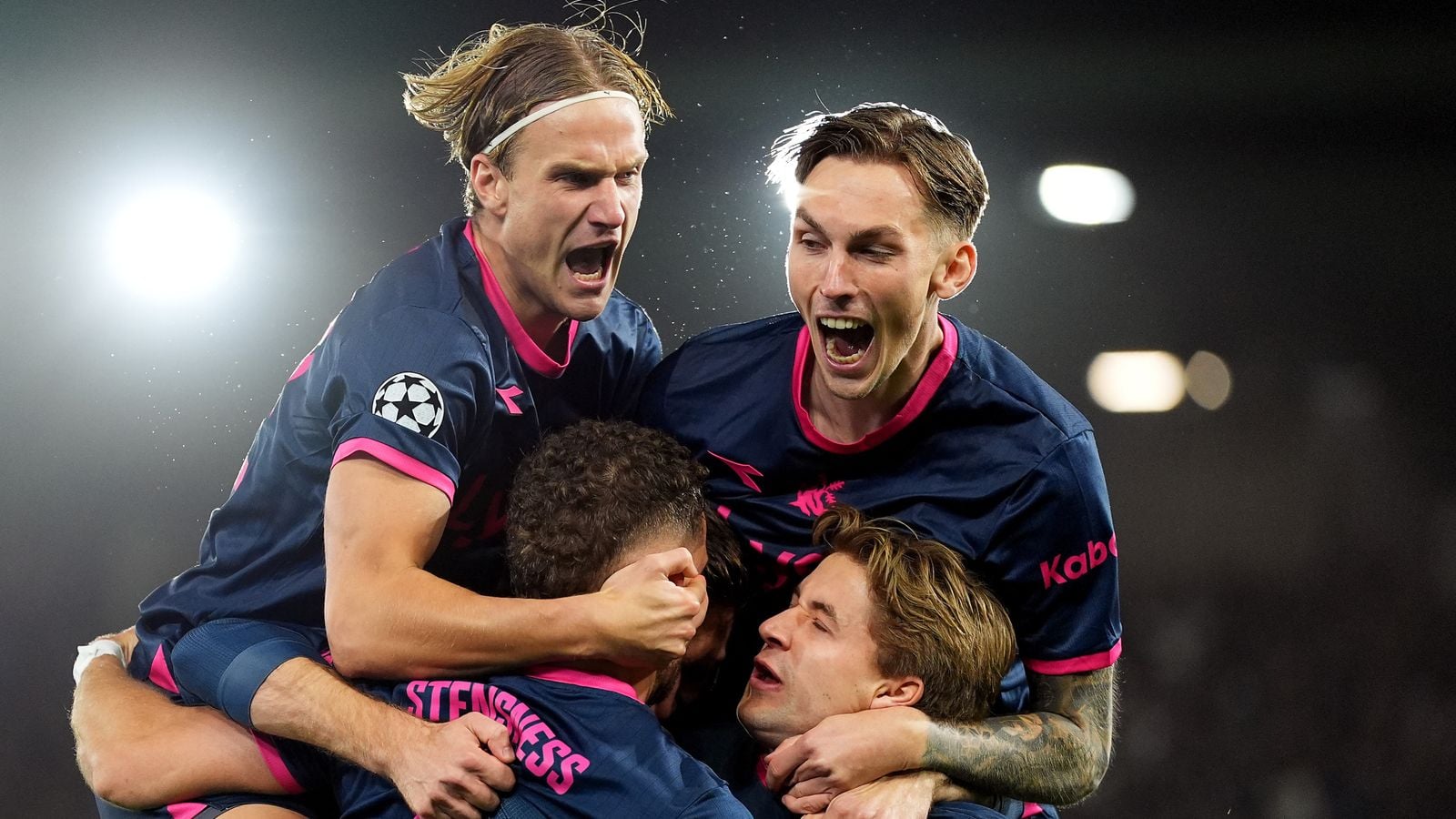
Viking’s Champions League adventure has taken the Norwegian club from a humiliating second-tier defeat in front of 274 spectators to a historic draw with Bayern Munich in Stavanger.
The 3-3 result against the Bundesliga champions marked the biggest night in the club’s history. Chief executive Eirik Bjorno said the most significant lesson was that Viking could “actually compete” and cope with the speed of elite European football.
Viking struck first from a corner, a moment Bjorno remembered as the point when the team’s preparations for “wave after wave” of Bayern attacks suddenly changed.
For sporting director Erik Nevland, the defining moment came later. Bayern had scored three times to turn the match around, but Michael Olise was sent off before Viking took advantage to claim a draw.
“That was something that we had never dreamed of,” said Nevland. “It was crazy. More than we could expect. It was just a night for the history books.”
The match also produced an extraordinary sideshow when Bayern board member Max Eberl criticised Viking captain Zlatko Tripic over his role in Olise’s dismissal, describing him as a “scumbag”. Nevland’s response was affectionate rather than defensive: “But he is our scumbag. We love him.”
Viking’s rise from the second tier
The scale of the achievement is best understood through Viking’s recent history. In June 2018, the club suffered a 5-0 defeat by Nest-Sotra in Norway’s second tier, with only 274 people present.
“That was the absolute low point,” Bjorno said. Viking appeared unlikely to win promotion, but recovered to go up by a single point.
There was further progress despite a setback in 2022, before Viking won the Norwegian title in 2025 for the first time in 34 years. Nevland believes the turnaround began with an honest assessment of the club’s situation.
“We realised that we were bad. Something needed to change,” he said.
Bjorno credited the wider improvement in Norwegian football and efforts by the national federation to develop players. Nevland, however, pointed to Viking’s local identity, academy and long-serving figures in key positions.
“Players can come and go. But the culture that we have created is massive,” said Nevland, who played for Viking, Manchester United and Fulham and has remained closely connected to his hometown club.
The 48-year-old joined Viking’s youth set-up at seven and said he had dreamed of representing the club in the Champions League since he was five. “This is my hometown club and it means everything,” he said. “It is the proudest time of my life.”
A different approach in Stavanger
Viking have also chosen to operate differently by appointing joint head coaches. Bjarte Lunde Aarsheim and Morten Jensen both have long-standing links with the club, having played for Viking or been involved in its youth system.
Bjorno said the arrangement was based on doing what was best for Viking rather than following convention. Nevland described the decision as a gamble, but said the club had been certain it needed to try something unlike its rivals.
The club’s success is now being tested both at home and in Europe. Viking are level on points with Bodo/Glimt in the Norwegian title race with seven matches remaining, while both clubs have reached the Champions League this season.
That shared European involvement could help prevent the financial gap from widening in Norway, where access to Champions League revenue can leave one club far ahead of the rest.
Viking intend to use the increased income to strengthen their training facilities, stadium and long-term foundations rather than chase immediate success. Bjorno said the ambition was to make the club strong “100 years from now”.
For now, the next stages of the journey include matches against Aston Villa, Atletico Madrid and Napoli. Nevland said the club’s priority was to enjoy the achievement without losing sight of its identity.
“The biggest danger in football is that you lose yourself very quickly because you are looking for success all the time,” he said.
