


Australian households are becoming increasingly exposed to the fortunes of artificial intelligence companies, with more than 5 per cent of their financial wealth now invested in AI-related shares, mainly through superannuation.
Reserve Bank of Australia staff estimate that the proportion rose from 2 per cent at the end of 2022 to 5.3 per cent in June 2026, as companies including Nvidia and SpaceX surged in value.
The central bank warned that the shift could make household wealth, and potentially consumer spending, more vulnerable to a fall in AI-related share prices.
“AI is likely to be one of the most significant technological developments of our time,” RBA chief economist Sarah Hunter said in a speech.
“It’s already starting to reshape the economy, affecting businesses investment and the patterns of demand across the economy.”
Households exposed to AI share prices
RBA researchers estimated that a 30 per cent decline in AI-related equities would reduce household wealth by 1.6 per cent.
Higher share values could encourage households to spend more, the researchers said, but Australians could also face losses if the expected benefits of AI fail to justify the companies’ high valuations.
Dr Hunter said the financial returns from the technology had so far been concentrated among a relatively small number of people. There is also limited evidence yet that AI has lifted productivity, while some of its effects are contributing to inflation.
Prices for DRAM, a type of memory chip made in South Korea, rose by more than 200 per cent in the year to September amid strong demand for goods used in AI systems, according to separate RBA research.
Australia does not import the chips directly, but the higher prices are being passed through wider technology costs. The impact is expected to extend to computer servers for data centres, as well as smartphones and games consoles.
Data centre investment adds to pressure
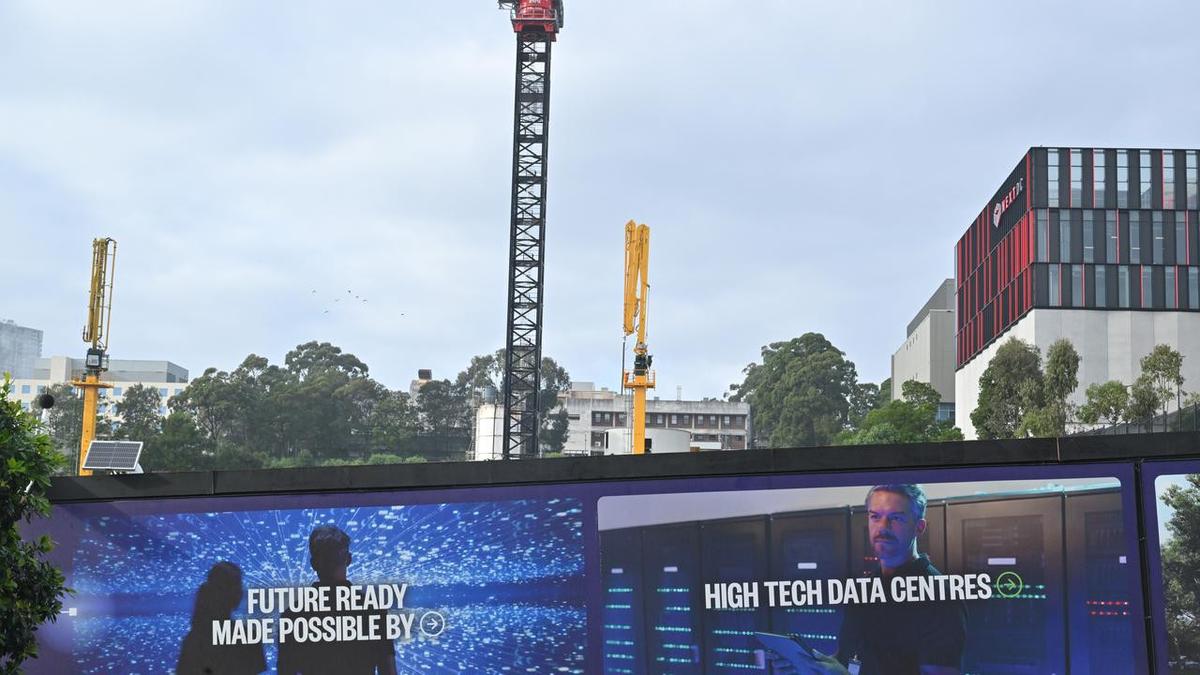
RBA staff estimate that investment in data centres has increased tenfold over the past three years. A further 115 billion Australian dollars of investment is projected by the end of 2028, equivalent to about 2 per cent of the country’s gross domestic product.
The expansion is taking place while the economy is already operating above capacity, drawing labour, materials and land away from other uses, including efforts to address Australia’s housing shortage.
The projection could be reduced by constraints on access to electricity and water, shortages of construction resources, or the cancellation of projects that have been announced but do not proceed.
Stockland shelved plans on Saturday for a data centre at a major industrial and logistics development in Kogarah, near Sydney Airport. Other projects have also faced community opposition, including NextDC’s M3 expansion in Melbourne and Goodman’s Project Mars development in Sydney’s north-west.
