


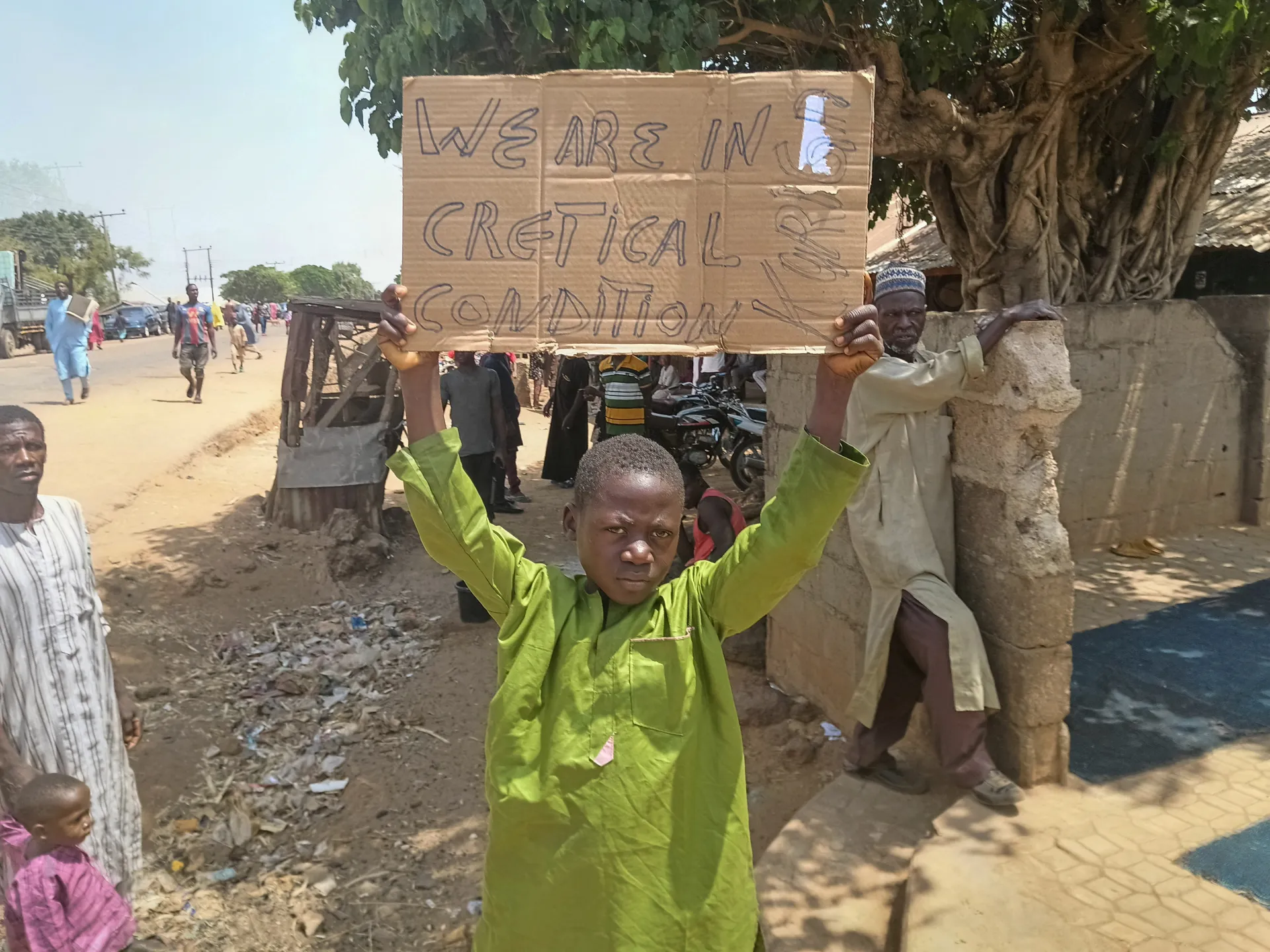
Kidnapping in Nigeria is leaving families in Borno State facing ransom demands, prolonged uncertainty and the loss of access to education, as relatives sell livestock, borrow money and dispose of property to secure the release of loved ones.
Musa Abdullahi Wakawa was confronted with the crisis when his wife and seven-year-old son were abducted. His initial disbelief soon gave way to the practical question of how he could raise the money demanded by their captors.
Families across north-eastern Nigeria are exhausting their savings and taking on debt in attempts to bring relatives home. In some communities, fear of further abductions is also keeping children away from school.
Families left waiting for relatives
Laraba Dauda, 45, has not heard from her younger sister since she was abducted on January 13 along the Biu–Buratai road, according to the family.
A short time after the abduction, her sister telephoned from the bush. “Aunty, unknown people have kidnapped us and taken us somewhere in the bush. We don’t know where they are taking us. At this moment, Aunty, please just help me with your prayers,” she said, according to Laraba.
The call ended in tears. More than six months later, Laraba said the family still did not know where her sister was being held or whether she was safe.
She called on the Nigerian government to intensify efforts to rescue people who remain in captivity. “We need the government to come to our aid and help rescue our relatives who have spent more than six months in captivity,” she said.
Anjikwi Hena said his son was abducted on March 30, as he prepared to travel to Maiduguri to look for work after completing his education.
Hena had encouraged him and prayed for his success. The close relationship between father and son, he said, had made the uncertainty particularly painful.
Kidnapping crisis threatens schools in Borno
In Askira-Uba Local Government Area, just 56 of 113 primary schools are currently operating, according to Fasuma Askira, the local government education secretary.
Before an attack on Mussa in May, 76 primary schools were open. A further 20 were closed after the violence, leaving fewer than half of the area’s schools functioning.
Suspected rebel fighters attacked Mussa on May 15 and abducted dozens of children. A register identified 40 missing children, although figures given by the community and government have differed. The Borno State government has since referred to about 44 children still missing.
On June 29, armed rebels attacked Government Day Secondary School in Lassa while students were sitting National Examinations Council examinations. Some pupils were recovered soon afterwards, but 36 students and a teacher have been reported to remain in captivity.
The education authority transferred junior secondary pupils from Mussa to a government boarding school in Uba and advised the local government to deploy community vigilantes around schools.
Soldiers have also been sent to Mussa and Lassa alongside local vigilantes, according to Askira. Parents and teachers must now weigh the need for education against the risk of further attacks.
A national ransom economy
The situation in Borno forms part of a wider kidnapping crisis across Nigeria. Amnesty International Nigeria said at least 1,100 people were abducted across the country between January and April 2026, while warning that the true figure could be higher because incidents in remote communities often go unreported.
Isa Sanusi, the organisation’s director, said gunmen were carrying out abductions largely for ransom. “Some stay months at the mercy of gunmen in punishing situations,” he said.
Amnesty said victims could face torture, starvation and sexual violence, while their families were placed under intense pressure to find money. It also warned that fear of abduction was driving children out of school, particularly in rural areas.
Professor Khalifa Dikwa, a security analyst, described the situation as “pathetic” and said there were no clear signs that it would end soon.
He said kidnapping for ransom had “metamorphosed into a profit-making venture”, with armed groups competing for territory and sometimes fighting for control of forest areas.
According to Dikwa, ransom payments help criminal networks buy weapons and recruit younger members. Families can be forced to sell possessions to free one relative, only to face another demand when someone else is abducted.
He called for intelligence-led and technology-driven operations to locate armed groups and disrupt the movement of ransom money. Security agencies, he said, also needed modern weapons, night-vision equipment and tracking technology, alongside better welfare for personnel working on the front lines.
Government promises security and support
Usman Tar, Borno’s commissioner for information and internal security, said the state government was using military and non-military measures to tackle insecurity.
He acknowledged several security hotspots, including the Biu–Buratai axis and the Biu–Damboa–Sabon Gari area. The government was providing logistical support and civilian volunteers to assist the armed forces, he said.
“This has enabled us to dominate the hotspot axis,” Tar said, adding that attacks had fallen in some affected areas.
He said authorities were also using drones equipped with thermal capabilities to monitor the movement of criminals. Commuters were being advised to avoid dangerous routes where necessary, while efforts were under way to ensure that people involved in kidnapping and other criminal activity were prosecuted.
Tar said the government recognised the humanitarian and psychological impact on families. Senior officials had visited affected relatives to offer condolences and reassurance, while financial assistance was being provided through the State Emergency Management Agency and the state humanitarian agency.
“There are fixed sums that are provided through the State Emergency Management Agency and the State Humanitarian Agency,” he said, adding that other legitimate mechanisms were also used to make funding available.
Tar said terrorism and criminality could not be addressed through military action alone. He pointed to poverty, unemployment and illiteracy as factors that could contribute to insecurity, and said federal and state governments were working to improve access to basic necessities while ensuring criminals faced the law.
For Musa, Laraba and Hena, however, the immediate crisis remains the wait for relatives who have not come home. Laraba’s sister ended their last conversation with the words: “This is my last communication.”
