


China’s AI start-ups are closing the gap with the United States but face a growing obstacle in securing the money needed to sustain their progress, with venture funding and bank lending falling well short of American levels.
Moonshot’s Kimi K3, described as the world’s largest open-weight model, has approached the performance of leading US systems. Analysts estimate that China’s best models are now about four months behind the most advanced releases from OpenAI and Anthropic, compared with seven months at the start of 2026.
Chinese models accounted for more than half of global token traffic by the summer of 2026, up from 1.2 per cent in 2024. But between 2023 and 2026, US AI companies attracted more than $380 billion in venture funding, while Chinese start-ups received barely a tenth of that amount, according to Boston Consulting Group.
China’s AI start-ups face a funding squeeze
State guidance funds have traditionally supported Chinese entrepreneurs, while venture capital has provided backing for younger companies. Policy-driven funds, however, are known to favour later-stage businesses, and early-stage investment is only beginning to recover from a three-year fundraising downturn.
The cost of building AI businesses is also rising. Memory prices have been increasing for months, while competition for specialist staff has intensified. Job postings for AI-related roles rose roughly twelvefold year on year in early 2026, and engineers working on large language models command some of the highest salaries in China’s technology sector.
Start-up founders are competing not only with US rivals but also with well-funded former employers. More than half of the studies presented at the world’s leading AI conference had lead authors based in China, underlining the international demand for the country’s technical talent.
External investment remains limited. Venture funding in China totalled $20 billion in the first quarter of 2026, compared with $267 billion in the US. Newly registered Chinese venture capital funds had attracted 154 billion yuan, equivalent to $22.8 billion, in the first five months of the year, exceeding the total raised in 2025 but remaining far below the sums routinely deployed in the US.
Chinese state banks have been directed to give priority to technology lending, but rising non-performing loans in other parts of their businesses could weaken the overall supply of credit.
Profitability is likely to take time. Chinese enterprise software companies largely sell to domestic customers, limiting the size of their revenue base, while US competitors benefit from a global customer network, stronger brand recognition and larger research and development budgets.
Hong Kong offers an alternative route
Some newer AI companies may not require enormous sums to develop applications using existing models or to fill gaps in the technology supply chain. Enterprise customers can also help fund development, but narrowing the performance gap increasingly requires investment in computing capacity, where China still spends a fraction of the US.
Hong Kong’s financial markets are therefore expected to become more important as one of the few channels able to direct global capital towards Chinese businesses at scale. More than 430 companies were in the city’s initial public offering pipeline in the second half of 2026.
That pipeline also highlights the pressure facing the sector. Chinese technology start-ups are choosing to list earlier than previous generations because alternative sources of funding are harder to secure.
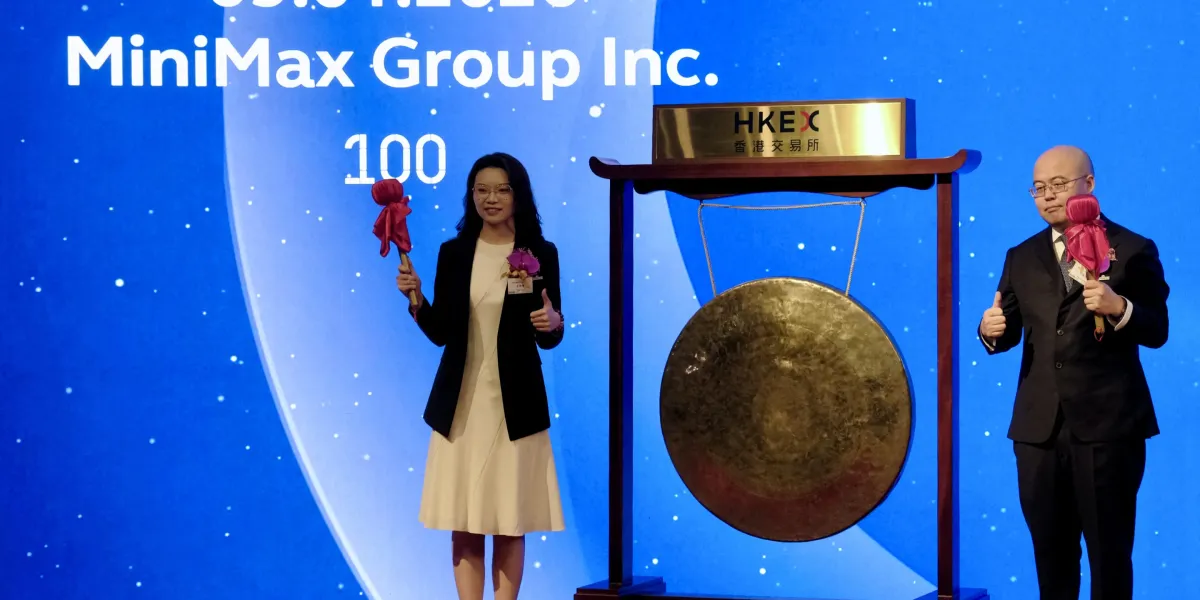
OpenAI and Anthropic have instead been able to grow to enormous scale through private fundraising. OpenAI raised more than $100 billion earlier this year, while Anthropic secured $65 billion in May. By contrast, Chinese model developers Zhipu AI and MiniMax reached Hong Kong’s public markets first, but raised $558 million and $620 million respectively in January, despite heavy oversubscription.
Private credit offers another possible source of capital. Assets in Asia-Pacific private credit are projected to rise from $59 billion in 2024 to $92 billion by 2027, with China accounting for a fifth of regional activity. Such lenders, however, generally favour larger or more established companies.
China’s open-weight strategy has helped its leading AI businesses gain a cost advantage, and the country’s start-ups have won growing international recognition and customer demand. Maintaining that position will require founders to look beyond traditional venture capital and bank loans, using public listings, private credit, customer revenue-sharing agreements or equity-backed borrowing where necessary.
