


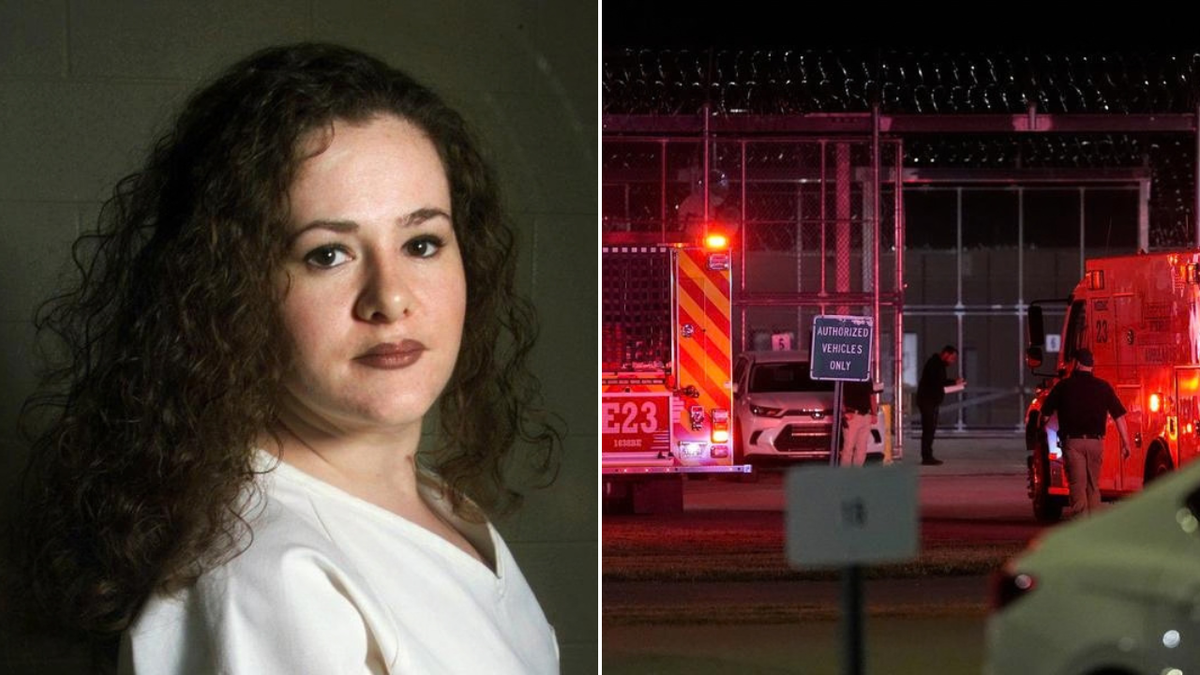
A Tennessee death-row inmate has regained consciousness after surviving a botched execution, telling lawyers she is “angry and confused” and aware that the state tried to kill her.
Christa Pike, 50, was taken from the execution chamber to a Nashville hospital last week after two injections of pentobarbital failed to end her life. She was unconscious, critically ill and suffering severe injuries to her arms.
Her lawyers had believed as recently as Monday that Pike was brain dead and that her life support would be withdrawn. But she woke on Tuesday and began speaking, in what her lawyer Randall Spivey described as a shock to her legal team and medical staff.
“She is angry and confused about everything right now,” Mr Spivey said. “She is very aware that the state tried to execute her.”
Lawyers seek evidence from botched execution
Pike remains seriously ill and is shackled to her hospital bed, her lawyers said. She cannot swallow or eat, has pneumonia and cannot move her severely swollen hands or arms.
It remains unclear whether she will regain her mobility. Although she is still experiencing cognitive confusion, she has been speaking with people around her and asking what has happened.
“She has wanted to know what’s happened and she’s asked about several people,” Mr Spivey said. “She’s asked about the victim’s family.”
Pike was sentenced to death for her role in the torture and murder of her 19-year-old schoolmate, Colleen Slemmer, in 1995. Her lawyers say she is the first person known to have survived a completed execution attempt in the United States.
They argue that the failed execution breached the US constitution’s prohibition on cruel and unusual punishment. They are also seeking greater disclosure about Tennessee’s execution procedures, which are normally kept secret.
At a hearing, Davidson County Chancery Court Judge I’Ashea Myles ordered state officials to preserve evidence from the attempt, including syringes, drug packaging and lot numbers, catheters, intravenous lines and gurney restraints.
Pike’s lawyers said the all-female execution team used at least seven needles during an ordeal lasting more than two hours. One needle was bent at a 90-degree angle when it was removed, they said.
Judge Myles also ordered the preservation of internal communications, incident reports, witness accounts and encrypted messages. She has yet to rule on a request to allow Pike’s lawyers to obtain any remaining traces of the execution drugs for chemical analysis.
The Tennessee Department of Correction opposed the request, describing it as “duplicative and unnecessary”. It said the state was already legally required to preserve evidence and was willing to share most, if not all, of the material sought.
“Today’s hearing was about transparency, about why Christa, the courts, the media and the public should not simply take the state’s word about what happened last Wednesday,” said Luke Ihnen, another of Pike’s lawyers.
He renewed the call for Tennessee Governor Bill Lee to commute Pike’s sentence to life in prison and never attempt to execute her again.
Mr Lee has suspended all executions in Tennessee for the rest of the year while investigators examine Pike’s case and the failed execution of Tony Carruthers in May, when prison officials were unable to establish intravenous lines.
