


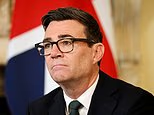
Lord Ashcroft has warned that Andy Burnham’s early success in Downing Street may prove temporary, arguing that a political reckoning will come when voters begin to focus on the cost of the new Prime Minister’s plans.
The Conservative peer and pollster said Mr Burnham had so far “steadied the ship” after taking office, but suggested his opponents would need to be ready to exploit any sign that the Government was struggling to pay for its promises.
Britain’s borrowing position is central to the warning. For years, the UK paid less to borrow than many other major economies. It now pays more, adding pressure to a government already facing difficult choices over tax, spending and public services.
Mr Ashcroft’s latest polling and focus groups suggest that many voters have welcomed the change in tone since Mr Burnham replaced Sir Keir Starmer. Labour has moved ahead in a number of surveys, while some former supporters who had drifted to other parties appear willing to look at the party again.
But the initial goodwill is accompanied by uncertainty. Voters may like Mr Burnham’s more direct style and his promise of a different kind of government, yet they are also asking how his policies will be financed and whether he has a detailed plan for improving their lives.
That leaves the Prime Minister facing a difficult balance between the expectations of Labour MPs and the demands of the wider electorate. Mr Ashcroft has highlighted welfare, migration, taxation, net zero and the scale of government borrowing as issues on which Mr Burnham could face pressure from both sides.
The political opportunity for his rivals may grow if Labour’s early recovery falters. Kemi Badenoch’s Conservatives will hope to present themselves as a more financially cautious alternative, while Nigel Farage’s Reform UK will seek to regain voters attracted by Mr Burnham’s initial appeal.
Mr Ashcroft’s assessment is that the new Prime Minister has bought himself time, rather than secured lasting support. The next test will be whether the Government can turn its early political momentum into credible results without allowing rising borrowing costs and difficult fiscal decisions to reopen the divisions that brought about the change in Downing Street.
