


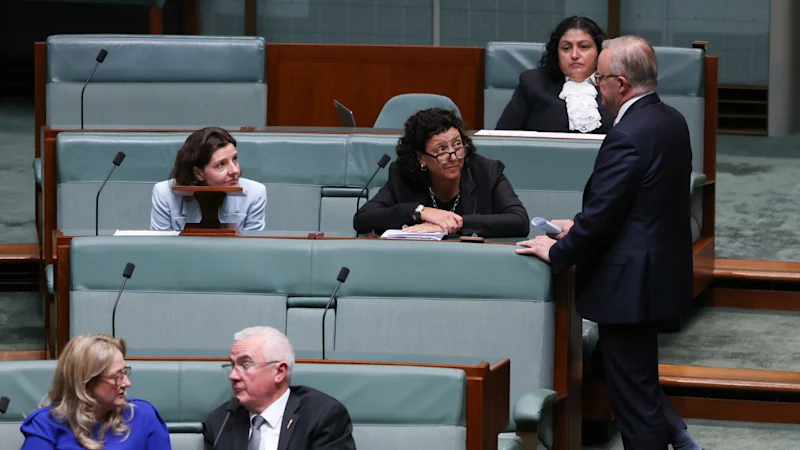
Crossbench MP Allegra Spender has joined forces with prominent business figures to oppose Treasurer Jim Chalmers’ changes to Australia’s capital gains tax system, warning they could leave investors facing one of the highest tax burdens of their kind in the world.
The Community Independents co-leader is urging Prime Minister Anthony Albanese and Chalmers to reconsider the proposed overhaul of the 50 per cent capital gains discount. She is also seeking support from the Greens for an alternative plan in the Senate.
Chalmers has attempted to ease criticism by proposing an exemption for innovative companies. But Spender argues the concession is too narrowly drawn because it would apply only to businesses creating new or “significantly improved” products.
“Australia doesn’t need to be the lowest taxing country but it can’t afford to have the highest capital gains tax in the world,” Spender said.
She said companies in fields including marketing, fashion and mining could miss out, while the changes risked discouraging investment and prompting people to establish businesses elsewhere.
“Productivity is the main game at the moment. It is critical that we build businesses of all shapes and sizes to drive our productivity,” she said. “The government’s [carve-out] does not address the major flaws of CGT indexation and I am hearing about real-world consequences on investment and for people who are looking elsewhere to start businesses.”
Business figures criticise capital gains tax proposal
Spender said Israel also used an inflation-adjusted model, but capped its capital gains tax rate at 30 per cent, compared with a possible rate in the 40s for Australian businesses.
She said she supported Labor’s decision to tackle tax reform and its proposed changes to negative gearing, but argued that the response to criticism had produced an overly complex system.
“I recognise it took real guts for the government to address tax in the budget and support the [negative gearing] changes in housing. But … trying to patch it up with carve-outs and definitions of innovation creates a system that is overcomplicated, unfair and a drag on prosperity,” she said.
Those backing Spender’s campaign include former Kevin Rudd adviser Lachlan Harris, Australian Investment Council chief executive Navleen Prasad, Airtree Ventures co-founder Daniel Petre, Seek co-founder Paul Bassatt and former Business Council of Australia president Tim Reed.
David Burt, director of entrepreneurship at the University of New South Wales, described Labor’s proposed exemption as “an unhelpful Kafkaesque maze”. Anna Fitzgerald, co-head of the University of Sydney’s Genesis start-up accelerator, said the tax office should not be responsible for deciding which businesses counted as innovative.
“You can’t always identify tomorrow’s successful businesses from today’s definitions. We need tax settings that reward genuine risk-taking, not businesses that happen to fit a government checklist,” Fitzgerald said.
Harris, who has warned that centre-left governments need to deliver prosperity, said defining innovative businesses was “a problem masquerading as a solution”.
“Governments should not decide which businesses are incentivised to grow,” he said. “I am a proud Labor voter but in this case the government has taken a wrong turn.”
Under the proposed system, some investors would pay less tax, but Spender is particularly concerned about people holding assets with a low cost base that rise sharply in value. She wants the inflation-adjusted approach to apply only to passive assets, while active business assets would retain a 40 per cent discount.
A Parliamentary Budget Office costing prepared for Spender found that proposal would have a small positive impact on the budget. It said the plan would preserve incentives for risk-taking and help keep Australia’s maximum capital gains tax rate internationally competitive.
Chalmers told parliament that his concessions meant innovative companies would still receive “a significant discount on a future capital gain”. Labor maintains that concerns about substantially higher taxes under the new model have been overstated.
“These reforms give the private sector the tools and the tax concessions to help them succeed in an increasingly competitive world,” Chalmers said. “The bill provides more certainty for investors and more incentives for innovation. Building on the $3.8 billion in new tax relief.”
Former treasurer Wayne Swan said the backlash had been excessive, arguing that reform of capital gains taxation was long overdue.
“Everybody says what the country needs is strong structural reform. Jim [Chalmers] does it and the world goes berserk,” Swan said.
