


Jewish heirs and their representatives have launched lawsuits over Nazi-looted art held by two prominent institutions in Los Angeles and Auschwitz, seeking the return of works taken from victims of the Holocaust.
The cases, filed in California, are the first to follow new legislation in the state and in Congress intended to strengthen claims to art forcibly taken from Jewish families during the Second World War.
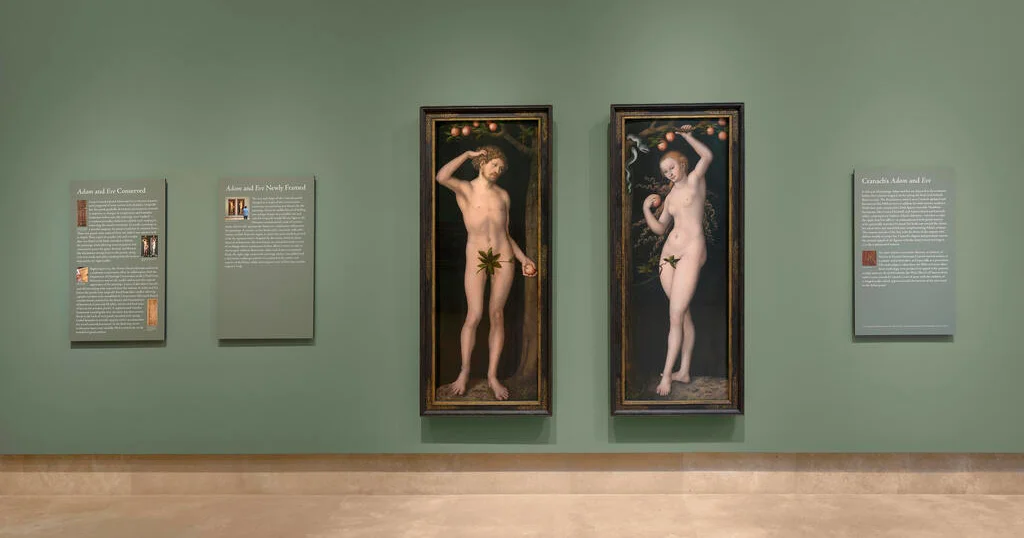
The Jewish Federation of Greater Los Angeles and its board chair, Daniel Gryczman, filed one claim in Los Angeles Superior Court against the Norton Simon Museum in Pasadena. It concerns Lucas Cranach the Elder’s 1530 paintings Adam and Eve, two life-size oil works on panel.
Marei von Saher, the sole heir of Dutch Jewish art dealer Jacques Goudstikker, has transferred her rights in the paintings to the federation. The organisation said it intends to use most of any net proceeds recovered to support about 2,500 Holocaust survivors living in the Los Angeles area.
Rabbi Noah Farkas, the federation’s president and chief executive, said the paintings had been taken from a Jewish family and used to enrich the Nazi regime.
“It’s our honour to take on this role on behalf of the community and use most of the proceeds to help these elderly survivors live out the last years of their lives in dignity, comfort and peace – something their family members were denied during the Holocaust,” he said.
Ms von Saher said the legal action was “a meaningful step toward justice for Holocaust survivors and victims of Nazi era atrocities”.
Disputed ownership of the Cranach paintings
The Norton Simon Museum said a federal court had unanimously ruled in 2018 that it held proper title to the Cranach works. The US Supreme Court declined to hear the case in May 2019, leaving the lower court decisions in place.
The museum said the paintings originally belonged to the Stroganoff family and were sold by the Soviet Union at an illicit auction in Berlin in 1931, where they were bought by Goudstikker. After changing hands several times, they were sold to the Pasadena Museum of Modern Art, which was later renamed the Norton Simon Museum.
“For nearly 50 years, they have been on view at the Norton Simon Museum and will continue to be accessible to the public for years to come,” the museum said. It added that the works had subsequently been restored and preserved.
The second lawsuit was filed in federal court in Los Angeles by the daughters of Dinah Gottliebova Babbitt, a Holocaust survivor and California-based animator who was imprisoned at Auschwitz.
It seeks the return of watercolours depicting fellow prisoners. Ms Babbitt was forced to paint the portraits for Josef Mengele, the Nazi doctor whose experiments at the camp earned him the nickname the “Angel of Death”.
Pawel Sawicki, a spokesman for the Auschwitz Memorial, said the works should remain in its collection as evidence of Mengele’s crimes. He rejected their description as Nazi-looted art, arguing that Ms Babbitt had created them under duress as a prisoner and had not owned the watercolours.
“While fully respecting the rights of people who created some of the documents here, we are of the opinion that any loss in the collections of the Memorial will constitute irreparable harm,” he said. “The loss of even the smallest part of the documentation is an irreparable loss and blemish on the memory of the victims of Auschwitz.”
The disputes reflect the continuing legal and ethical conflict over artworks taken during the Nazi era. Between 1933 and 1945, the regime seized more than 600,000 works from Jewish families, collectors and museums across Europe, with many later entering major museum collections.
California Assemblyman Jesse Gabriel, who helped write a state law signed by Governor Gavin Newsom in September 2024, said the legislation requires California law to apply in claims brought by residents or their heirs seeking art seized during the Holocaust or other acts of persecution.
Mr Gabriel introduced the measure after a federal court allowed Madrid’s Thyssen-Bornemisza National Museum to retain Camille Pissarro’s Rue St-Honoré, après-midi, effet de pluie, which had been taken from the Cassirer family in 1939. That case is expected to be heard in a California federal court next month.
Mr Gabriel said museums should consider whether they wanted to be “on the right side of history”. Both institutions involved in the new cases said they believed they had lawful title or compelling reasons to retain the works and continue displaying them to the public.
