


Newport is considering a ban on balaclavas and other face coverings in its city centre, amid concerns that masked young people are deterring shoppers and contributing to anti-social behaviour.
The proposal, put forward by Conservative councillor Matthew Evans, was backed in a vote on September 29 and will now be examined by officials as the city’s Public Space Protection Order is renewed.
Mr Evans said the measure would include exemptions for religious reasons. He said many residents were “anxious” about people wearing balaclavas and called for “tougher action” to “improve the lives of residents and traders”.
He said the proposed restrictions were aimed at people using face coverings to conceal their identities while committing offences, including robbery and drug dealing, rather than being “an attack on the human rights of young people”.
“Those who use face coverings when they rob people and deal drugs in our city centre” would be the focus of the proposal, he said.
The Labour-controlled Newport City Council is also considering measures targeting begging and public drinking as part of the renewed order.
Newport’s troubled high street
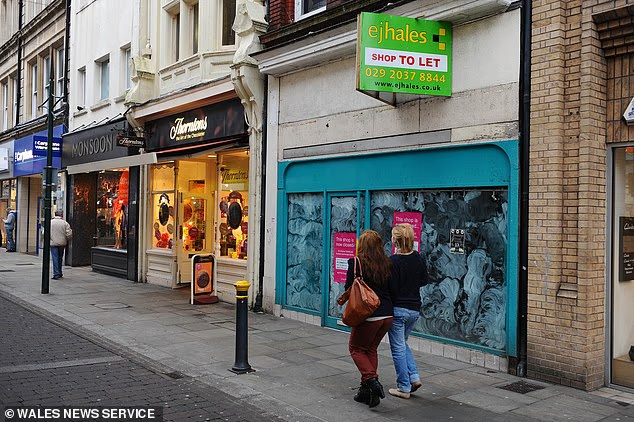
The proposal comes as Newport faces continuing problems in its city centre. A study by the Centre for Cities think tank last year identified it as having the largest proportion of empty shops in the UK, with one in five units vacant.
The city has since lost several major retailers, including Marks and Spencer and River Island, and has been described as a “ghost town” by some local residents.
Newport, which has a population of 159,000, was also recorded in Home Office figures last year as having the country’s highest crime rate, with 121 offences for every 1,000 people.
Councillor Dimitri Batrouni, leader of Newport City Council, said he wanted any face-covering ban to apply across the city rather than only in the centre. “It’s actually a big issue,” he said.
Supporters of the proposal say balaclavas are used by criminals and drug dealers to hide their identities. The raw source material also refers to reports of masked men throwing fireworks from roofs and intimidating members of the public, as well as an alleged incident in which balaclava-wearing teenagers raided a shop and frightened a pregnant woman.
Face-covering restrictions in other cities
Nottingham became the first major city to introduce a so-called balaclava ban last month, using similar powers to tackle crime and anti-social behaviour. Police and council officers can require a person to remove a face covering where they reasonably believe it is being used in connection with crime, anti-social behaviour or intimidating conduct.
The restrictions allow for £70 on-the-spot fines, the confiscation of face coverings and referrals to an immediate justice programme involving work such as litter picking or cleaning graffiti. Continued breaches could lead to a criminal behaviour order banning someone from the city centre indefinitely.
Exemptions cover legitimate reasons including religious, health, medical and work-related needs. In Nottingham, evidence gathered by police identified more than 180 city-centre incidents involving face coverings or balaclavas between June 2025 and June 2026.
Wolverhampton introduced similar powers under a public spaces protection order in 2024, while Stafford Borough Council approved plans for restrictions due to be introduced in December.
