


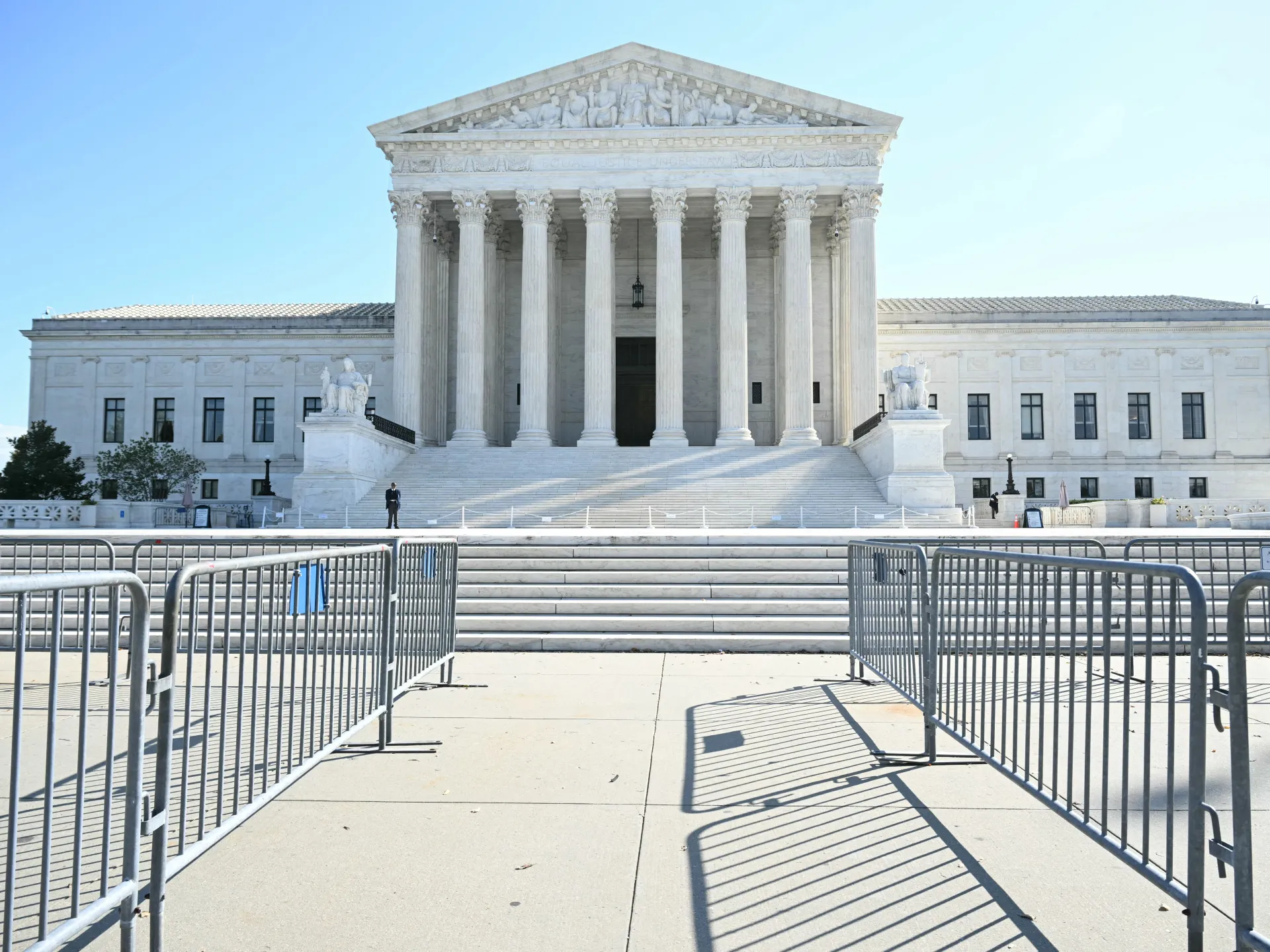
The US Supreme Court is set to hear a case that could determine whether university employees can bring sex discrimination claims under Title IX, as private rights of action face a wider challenge from the Trump administration and Republican-led states.
The justices will hear arguments on November 30 over whether staff at federally funded universities may sue over alleged workplace discrimination. The Trump administration has urged the court to rule that they cannot, arguing that Congress did not create a private right for university employees to bring such cases.
The dispute forms part of a broader legal effort to limit the ability of individuals and civil rights organisations to enforce protections in court. The central argument is that, unless Congress has expressly authorised private lawsuits, enforcement should largely be left to government agencies.
A private right of action allows individuals, or organisations acting on their behalf, to sue when rights protected by law are allegedly breached. Such cases can seek an order requiring compliance or compensation for earlier violations.
Federal and state laws do not automatically provide for private lawsuits. Legislatures may spell out that right, while courts have also had to decide whether it can be inferred from legislation or whether enforcement belongs exclusively to public authorities.
Supporters say private litigation is vital when agencies are unwilling or unable to act, particularly for vulnerable people and communities. Opponents, including the US Chamber of Commerce Institute for Legal Reform, argue that it can encourage weak or frivolous claims.
The Supreme Court has previously narrowed the scope for such cases. In 2001, in Alexander v Sandoval, a majority led by Justice Antonin Scalia ruled that Title VI did not allow individuals to sue to enforce regulations banning policies with a disparate impact on protected groups.
The issue has since extended into voting rights. In June, the court declined to hear a challenge brought by Arkansas United, an immigrant advocacy organisation that had sought to enforce protections for voters requiring language assistance at polling stations.
The decision left in place an Eighth Circuit ruling that Arkansas United could not sue on behalf of non-native English speakers under Section 208 of the Voting Rights Act of 1965. The appeals court had also adopted a broader position that private individuals and advocacy groups could not bring cases to enforce key parts of the voting rights legislation.
Voting rights and private enforcement
Republican-led governments have advanced a similar argument in two cases involving redistricting and alleged vote dilution: Board of Election Commissioners v NAACP in Mississippi and Turtle Mountain Band of Chippewa Indians v Howe in North Dakota.
In May, the Supreme Court sent both cases back for reconsideration following its ruling in Louisiana v Callais, without deciding the separate question of who could bring the claims. That ruling raised the legal threshold for some racial vote-dilution cases, with potential consequences for the voting power of Black, Hispanic and Native American communities.
At the same time, conservative-controlled governments have argued that members of those communities and organisations representing them should not be able to bring certain cases themselves, maintaining that only the Department of Justice can take action over the alleged violations.
The court’s approach has also affected claims beyond voting and discrimination. In June, it ruled against Falun Gong practitioners who alleged that Cisco Systems had helped the Chinese government develop surveillance technology used in their persecution. The justices concluded that the claimants could not pursue aiding-and-abetting allegations under the federal laws they had cited.
Justice Neil Gorsuch, joined by Justice Clarence Thomas, separately questioned in a 2021 voting rights case whether the Voting Rights Act provided an implied right of action, despite the issue not having been raised directly in that case.
The developing legal position could make enforcement of federal rights increasingly dependent on executive agencies. That has prompted concern because agencies have limited resources and are subject to political direction.
George Rutherglen, a University of Virginia law professor, wrote in a 2015 law review article that the history of civil rights made them “quintessentially private rights”, whose enforcement should depend primarily on the initiative of those who held them. Public enforcement remained necessary, he wrote, but could not entirely replace individual control.
The Trump administration is also seeking to restrict a private case where Congress expressly provided a right to sue. The Justice Department has intervened in proceedings against xAI over allegations that gas turbines at a facility in Southaven, Mississippi, breached federal environmental law and polluted surrounding communities.
The facility supplies power to xAI’s Colossus 2 data centre in nearby Memphis. In September, the Justice Department appealed to the Fifth Circuit and sought to halt the case, arguing that allowing it to continue would threaten national security and America’s pursuit of global leadership in artificial intelligence.
That dispute does not concern whether Congress created a private right to sue under the Clean Air Act. The legislation did so. Instead, it raises the question of whether the executive branch can intervene to stop a case when it conflicts with the administration’s priorities.
Critics of relying solely on the Justice Department point to the agency’s current direction under President Trump. Its Civil Rights Division has been shifted away from defending the rights of racial and ethnic minorities and towards cases brought by white plaintiffs alleging “reverse discrimination”.
The department’s policies could change under a future administration, but a continued erosion of private rights of action would still leave enforcement dependent on a politically directed federal agency. Of 216 active voting rights and redistricting cases tracked by Democracy Docket in 2024, only five had been brought by the Justice Department.
Private lawsuits are therefore being restricted across a series of cases, while the Supreme Court prepares to consider the Title IX dispute. The outcome could help determine whether individuals and civil rights groups retain a direct route to challenge alleged violations, or whether more of that power shifts to government authorities.
