


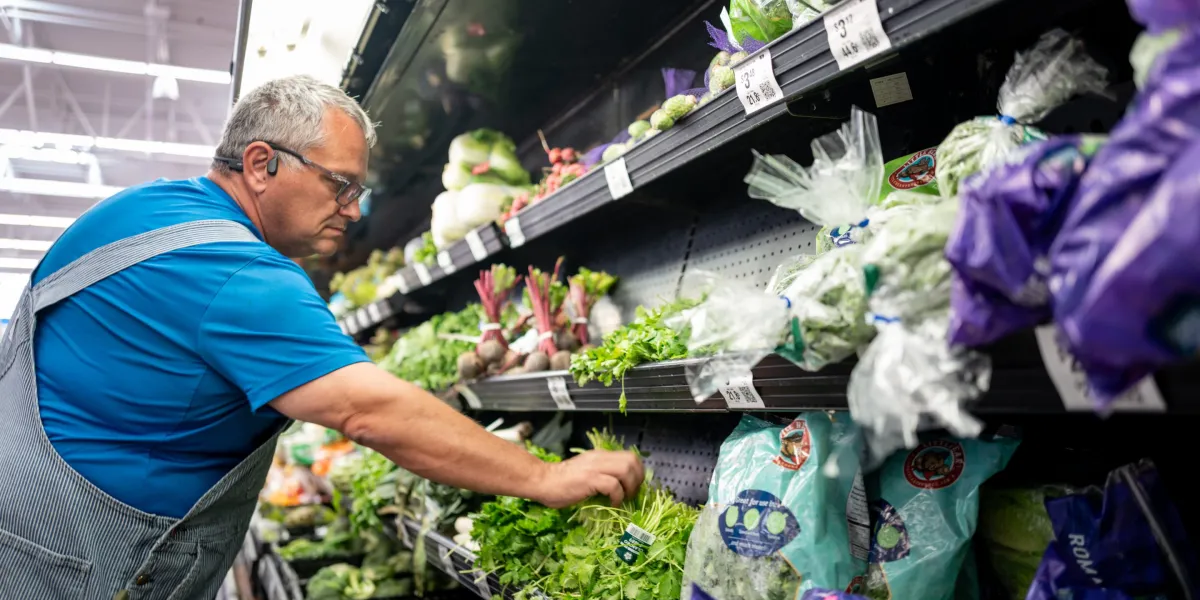
US food safety experts have warned that deep cuts to federal agencies are leaving the country less prepared to detect and contain foodborne illness, as a Cyclospora outbreak linked to recalled iceberg lettuce has spread to 20 states.
The Food and Drug Administration said on August 27 that 11,458 illnesses had been reported in the outbreak, which has been traced epidemiologically to shredded iceberg lettuce supplied by Taylor Farms de Mexico. More than 450 people have been hospitalised and two deaths have been reported.
The FDA has classified the lettuce recall as Class I, its most serious category, meaning there is a reasonable probability that eating the product could cause serious health consequences or death. The agency said it was confident the recalled lettuce had been removed from the market, while inspections and sampling at farms and processing facilities in Mexico continued.
The outbreak has unfolded alongside a series of other recalls, including Taylor Farms’ withdrawal of fresh jalapeños over Salmonella concerns, the removal of ice cream from Dairy Queen locations after metal shavings were found, and a recall of more than 75,000 packages of tofu over possible ink contamination.
Public health specialists say the increase in prominent food safety incidents has highlighted longstanding weaknesses in the US inspection and surveillance system, which they believe have been made worse by workforce reductions carried out under the Department of Government Efficiency, or DOGE.
Food safety agencies facing workforce cuts
Office of Personnel Management data shows that the US Department of Agriculture’s Food Safety and Inspection Service has more than 1,100 fewer roles than it did in 2024.
The USDA has insisted that mandatory inspections at federally regulated meat, poultry and egg establishments will continue. A department spokesperson said inspectors and frontline staff remained in place and that no products regulated by the service could enter commerce without inspection.
But food safety researchers say the wider system depends on more than inspections carried out inside processing plants. It also relies on laboratory testing, administrative staff, outbreak tracing, research and the routine collection of data from doctors and public health departments.
“None of it’s good for food safety,” said Don Schaffner, chair of the department of food science at Rutgers University. “I really worry more that we’re going to lose visibility into what’s going on. We already know that a significant number of illnesses go unreported, a significant number of outbreaks go undetected. This is only going to make that worse.”
The FDA has also carried out fewer inspections of foreign food facilities, despite imported products accounting for about a fifth of the US food supply. Agency data cited in an analysis showed 805 foreign human food inspections in fiscal year 2024, falling to 723 in 2025 and 214 during the first two quarters of fiscal year 2026.
The reduction has been linked by critics to the loss of support staff who arrange travel, organise testing and handle other administrative work needed to carry out inspections. The FDA has said no investigators were affected by its staffing changes and that the Trump administration was working with health departments in all 50 states to respond to outbreaks.
The agency’s proposed budget for 2027 is $7.2 billion, a 3.3 per cent increase on the previous year, and officials say expanding inspection capacity is a priority.
The FDA has also pushed back against the impression that recalls are increasing. It said there were 2,182 recalls in fiscal year 2024 and 2,160 in 2025, compared with 1,836 in fiscal 2026 up to the end of August.
Surveillance weakened as outbreak spreads
One of the most significant changes has involved FoodNet, the Foodborne Diseases Active Surveillance Network run by the Centers for Disease Control and Prevention in partnership with the FDA, the USDA and state health departments.
FoodNet has historically tracked infections caused by a range of pathogens, including Cyclospora. Since July 1 2025, however, reporting has been optional for most of the pathogens covered by the network, apart from Salmonella and Shiga toxin-producing E. coli.
That change has raised concern among experts because Cyclospora can be difficult to identify and trace. Symptoms can include prolonged diarrhoea, stomach cramps, nausea, fatigue and weight loss, while many people recover without seeking medical attention or are not tested for the parasite.
“This is probably a time that we might want to know more about Cyclospora incidents in general, rather than less,” Mr Schaffner said.
A Government Accountability Office report published in January 2025 found that the FDA had failed to meet its domestic and foreign inspection targets since 2018. The proportion of high-risk domestic facilities due for inspection but not inspected rose from 7 per cent in 2019 to 40 per cent in 2020 and 49 per cent in 2021.
The watchdog said workforce capacity was the main challenge identified by FDA officials. In July 2024, the agency had 432 investigators responsible for domestic and foreign food inspections, about 90 per cent of its full-time equivalent ceiling.
The FDA is responsible for overseeing nearly 80 per cent of the US food supply, including fruit, vegetables, processed foods and most seafood.
Experts warn of a loss of accountability
Marion Nestle, professor emerita of nutrition, food studies and public health at New York University, said staffing shortages had affected the food safety system for years, even before the latest cuts.
“They were stuck having to do more and more with less and less,” she said.
She warned that fewer inspections could affect how companies assess the risk of failing to maintain safety standards. “If the companies aren’t being inspected, if nobody’s minding the store, if nobody’s holding them accountable, they’re going to get sloppy,” she said.
Mr Schaffner said responsibility for food safety ultimately rested with industry, but argued that government agencies were needed to identify emerging threats and give researchers the information required to act early.
Plans to close or relocate programmes at the USDA’s Beltsville Agricultural Research Center in Maryland have added to concerns. The site houses two parasitology laboratories involved in research and co-ordination on Cyclospora.
Researchers could be reluctant to uproot their families and move to other facilities, Mr Schaffner said, potentially disrupting work on a parasite that is already difficult to study.
“None of this is efficiency,” he said. “This is all whatever the opposite of efficiency is.”
