


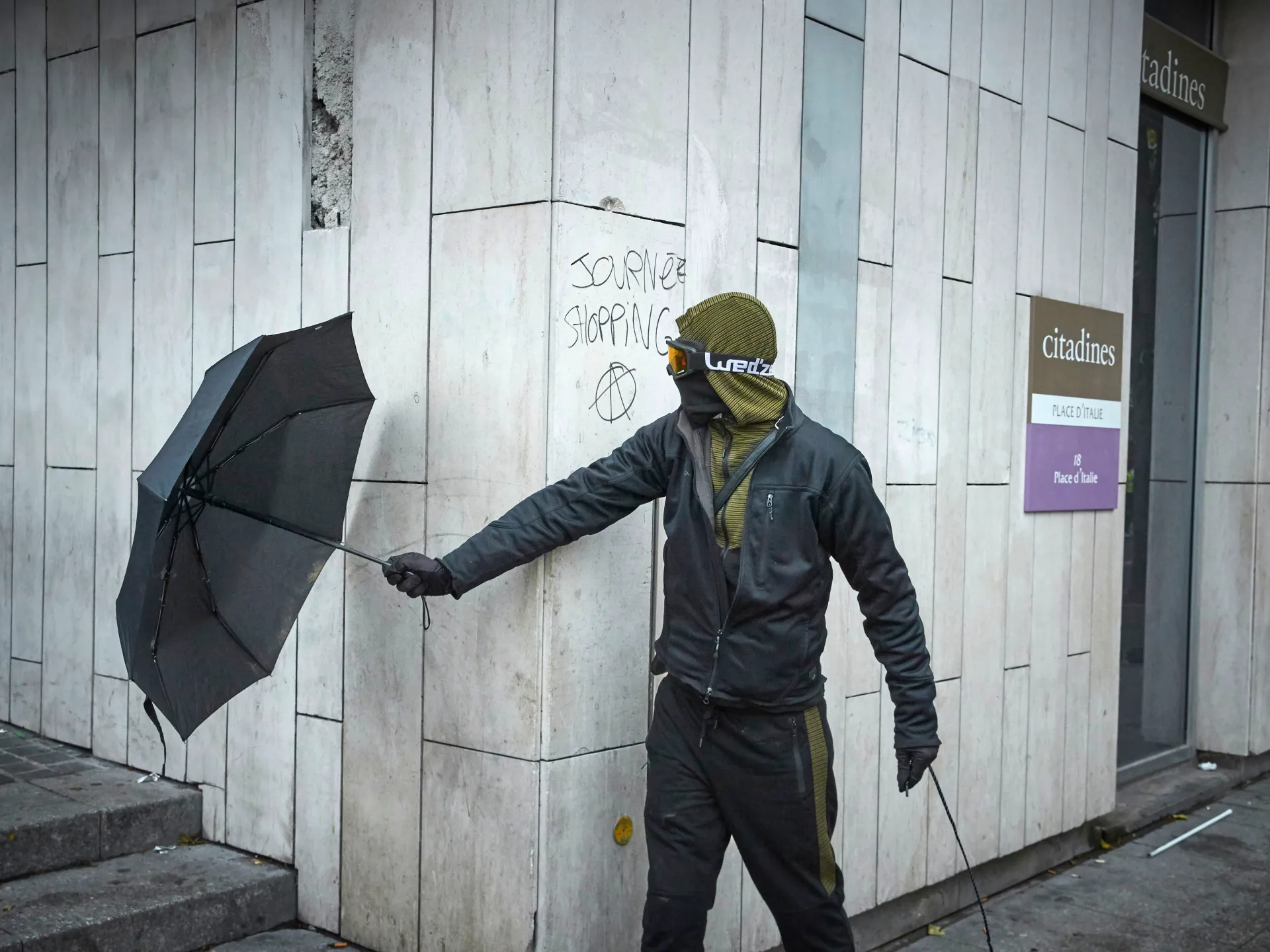
Black Bloc protesters in Europe are appearing in demonstrations from France and Italy to Spain and Albania, with groups of several hundred masked young people accused of attacking police, damaging property and setting fires.
The black-clad activists have repeatedly disrupted otherwise peaceful rallies organised by students and trade unions. Their presence has prompted debate over whether they draw attention to social and economic grievances or undermine those causes through violence.
The Black Bloc is not a formal organisation with a known leadership, membership list or hierarchy. Participants typically wear dark clothing, hoodies, leather jackets, helmets, sunglasses and face coverings, making them difficult for police to identify.
Francis Dupuis-Deri, a political science professor at the University of Quebec in Montreal who has written about Black Blocs, said the movement developed in Germany during the 1980s from the autonomia, or autonomy, movement.
Its early followers opposed the state, capitalism, political parties and established unions, and were broadly anarchist in outlook. But Professor Dupuis-Deri warned against treating the Black Bloc as exclusively left-wing, noting that right-wing nationalist and neo-Nazi groups in Poland and Germany had also used similar clothing and tactics in the past.
Black Bloc protests and clashes with police
France has experienced weeks of large student and trade union demonstrations alongside significant violence and damage to property. A left-wing French member of the European Parliament whose party has supported nationwide rallies declined to discuss the black-clad protesters, saying the issue was too sensitive.
A person speaking on the MEP’s behalf said: “A few cases of violence are used by the government to criminalise our movement and our party, so we don’t want to enter the strategy of speaking about it.”
Italy has also seen clashes in Rome, Milan and Turin, including fires involving bins and cars, injuries and extensive damage. Mario Furore, an Italian MEP from the Five Star Movement, said he was not aware of a movement directly inspired by the Black Blocs.
“In Milan, there have been incidents of looting and vandalism, and those responsible appear to have been very young, many of them minors,” he said. “To me, this looks more like copycat behaviour and the influence of bad role models than the work of an organised network. However, it will be up to the judicial authorities investigating the incidents to establish the facts.”
French Interior Minister Laurent Nunez told Parliament in January that Black Blocs were now found at every sizeable social demonstration, claiming they came “to smash things and attack the internal security forces”.
An Italian government document on police training described the Black Bloc as a persistent anarcho-insurrectionist tactic involving small, loosely organised groups. It said members could study locations in advance, divide areas between teams and use diversions to draw police away from acts of destruction.
The document also identified mobility as a central feature, allowing participants to maximise damage while reducing the likelihood of arrest. Black Bloc activists have previously crossed national borders to join demonstrations in other countries.
Professor Dupuis-Deri said intelligence services estimated that between 5,000 and 7,000 people formed part of the wider European phenomenon, although only a few hundred typically appeared at any one demonstration.
Without a formal structure, participants can identify one another through their clothing, word of mouth and relationships built over several protests. “Nobody can stop them,” Professor Dupuis-Deri said.
Among the best-known confrontations involving Black Blocs were protests at the World Trade Organisation ministerial meeting in Seattle in 1999 and nationwide demonstrations in France in June 2016 against the Loi Travail labour law. Both events involved clashes with police, with hundreds of people injured and arrested.
