


Rising shipping costs are squeezing small retailers in the US as they head into the holiday season, forcing some to absorb losses, raise delivery charges or reconsider free shipping.
Jenni Shields, who runs Evie Pearl Handmade from her spare bedroom in Kansas City, Kansas, said the average cost of sending one of her parcels had risen to nearly $6 last month. Eight years ago, she paid $2.93 for a typical shipment, equivalent to close to $4 in today’s money after inflation.
Last year, the average shipping label for her handmade bows, quilted headbands and other accessories cost about $4.50. Shields charges customers $6 for delivery, including roughly $1.50 for packaging, but said the latest increases meant she was no longer breaking even.
“I am losing money at this point, and I’ve really taken a huge hit this year,” said Shields, the owner of Evie Pearl Handmade. “I feel like it’s just been this slow increase up [in shipping costs], and I feel horrible.”
Small retailers rethink free shipping
Fuel prices have risen since the US and Israel attacked Iran in February, increasing the cost of transporting goods by sea, air, rail and road. Amazon reported that its shipping expenses rose by 11% year on year in the third quarter, to $X billion.
Global air cargo is now costing about $3.37 per kilogram, up 43% from the comparable period last year, according to transportation marketplace Freightos. Judah Levine, the company’s head of research, said demand for rapid delivery of hardware used to build data centres was also lifting air freight rates ahead of the busiest period for holiday parcels.
Jason Seidl, managing director and transport analyst at TD Cowen, said the increases would “squeeze their margins in the near-term”. Larger companies were less exposed because they had negotiated dedicated shipping agreements, he added.
Smaller firms have fewer options, particularly after years in which customers have come to expect free delivery. Shields said she could not match Amazon’s offer without sacrificing money that would otherwise go to her family.
“I can’t compete with Amazon on the free shipping. I can’t do that. I can’t afford that,” she said. “I’m seeing so much of my percentage that’s supposed to come back to me and my family being put towards the shipping costs.”
She is considering increasing her delivery charge for the first time in six years. Shipping fees have already contributed to a slowdown in sales during what is normally one of her busiest periods.
Todd Shelton, founder of a 23-year-old New Jersey clothing company producing high-end men’s jeans, T-shirts and button-up shirts locally, has taken a different step. He began charging customers for return shipping for the first time this week, deducting the cost from refunds.
Shelton said the business was still profitable, but rising delivery and material costs had reduced its margins. The company uses imported Japanese denim and fabric from Portugal, and he is considering either raising prices or passing shipping costs on to customers.
Holiday surcharges add to pressure
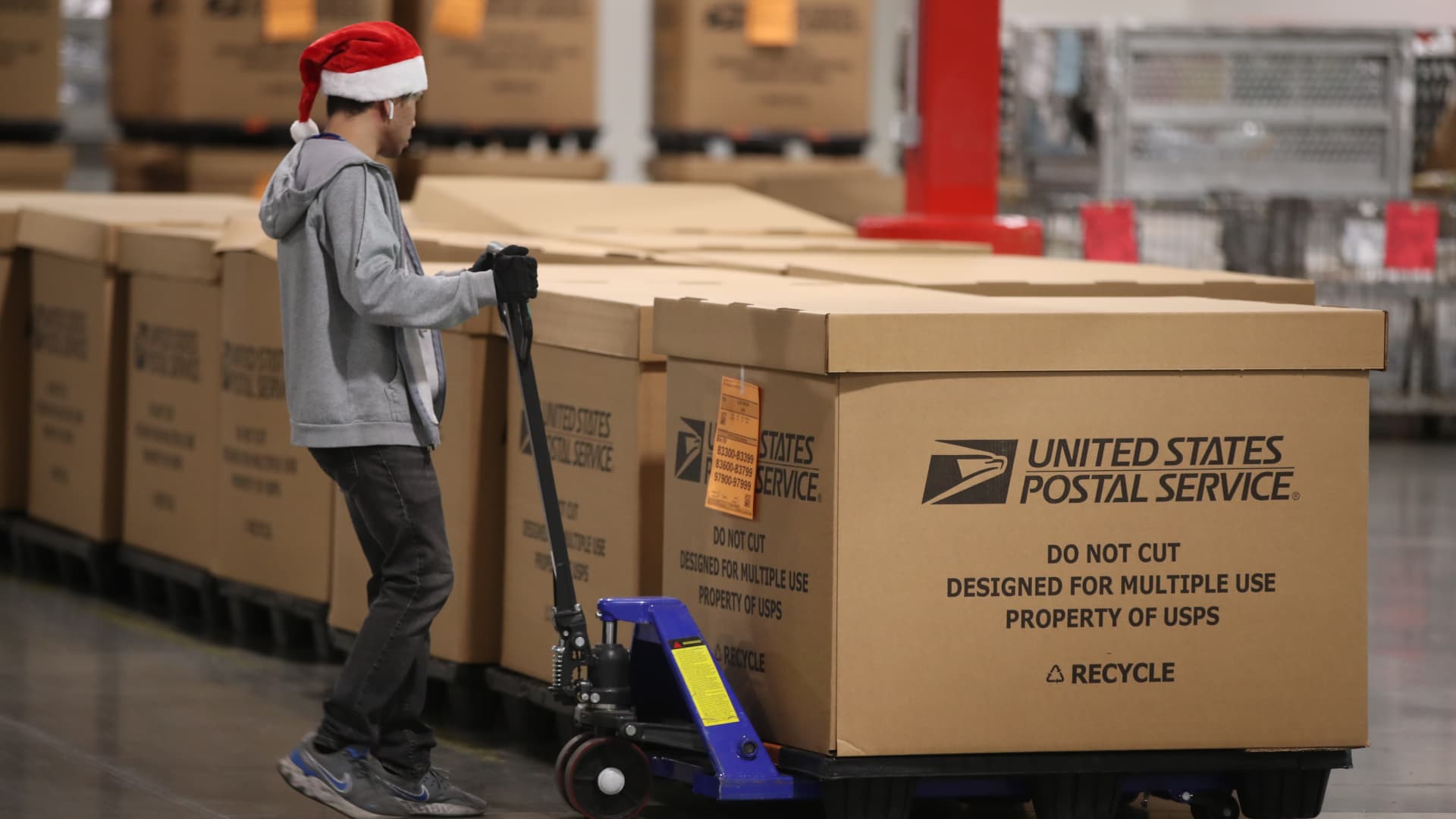
UPS, FedEx and the United States Postal Service have all introduced seasonal surcharges, with the amount varying according to the type of package. Although such charges are common during the holiday peak, they have increased over recent years.
The pressure comes as consumer spending remains strong. The National Retail Federation expects retail sales through the end of the year to grow by 4.2% to $1.01 trillion, compared with $972 billion last year and growth of 3.1%.
Some of that increase reflects inflation rather than shoppers buying more goods. Aaron Cheris, global retail practice head at Bain & Company, said consumers expected to spend more partly because prices were higher, leaving less money for discretionary purchases after essential spending.
Cheris said the period was shaping up to be a record year for shipping costs, placing particular strain on smaller retailers. Some could face financial distress in the first quarter of next year if they struggle to get through the holiday season.
Large retailers will also face higher costs, but contracts agreed in advance and company-owned delivery fleets may delay the impact. “If anything, it benefits the scale players over the little players, but it’s kind of a little bit bad for everybody,” Cheris said.
For Shields, however, the immediate concern is whether her home-based business can withstand another increase. With no significant fall in fuel prices in sight, she said she was unsure whether small businesses would be able to emerge from the holiday period intact.
