


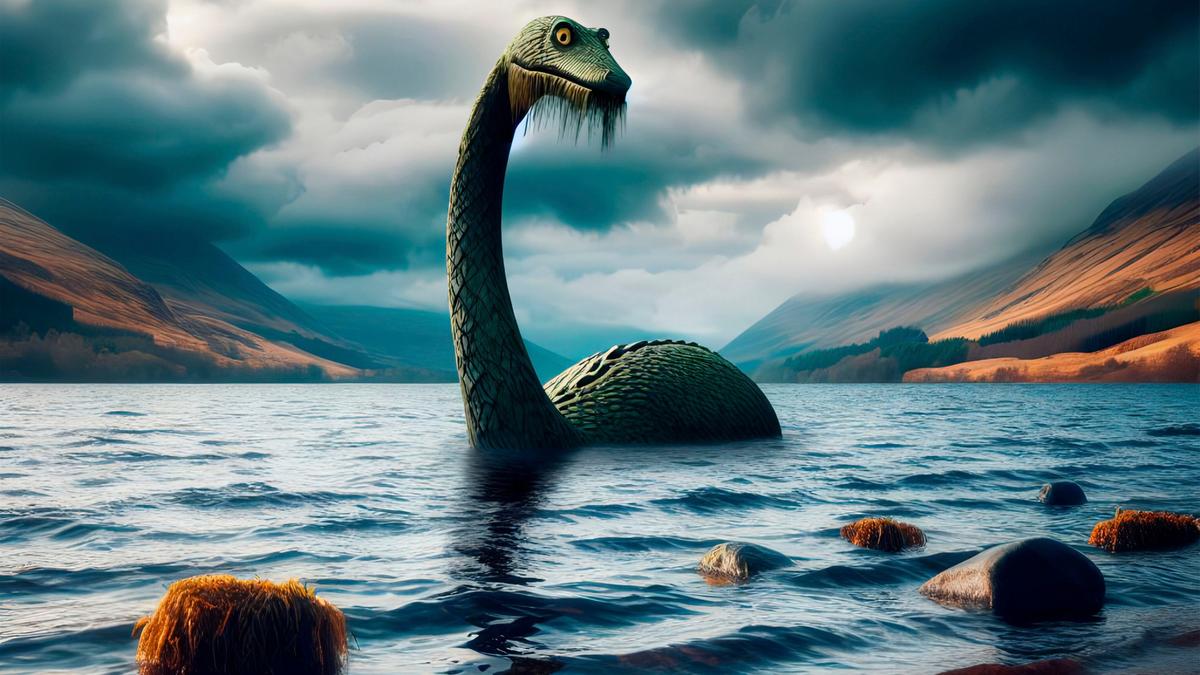
Most people who report Loch Ness Monster sightings are telling the truth about what they believe they saw, according to expert Adrian Shine, who says the phenomenon can be explained without dismissing eyewitnesses.
Shine, founder of the Loch Ness Project and leader of the 1987 Operation Deepscan search, has set out his views in a new book, A Naturalist’s View of the Loch Ness Enigma.
He argues that sightings have rational explanations, while maintaining that witnesses are often accurately describing their perceptions. “I say the Loch Ness Monster does exist. I’ve just written a manual on how it can be seen, the various forms and manifestations of it,” he told the Inverness Courier.
“It doesn’t denigrate the eyewitnesses, it vindicates them because those forms of illusion truly happen,” he added. “The people are describing, very accurately often, what they are seeing or what they are perceiving.”
Shine said his work was intended to explain the Loch Ness phenomenon rather than disprove the existence of a creature. “I have not killed the Loch Ness Monster! I’ve written a manual. That’s it,” he said.
He believes many reported sightings are caused by wakes from large boats travelling across the loch. The construction of the Caledonian Canal in the early 19th century, which connected waterways through the Great Glen, brought larger vessels and helped create the persistent wakes that may have inspired the familiar multi-humped image of Nessie.
Speaking to Robson Green for the series World’s Most Amazing Walks, Shine said: “The persistence of boat wakes is one of the things that has created the multi-humped stereotype of the Loch Ness Monster and there the Caledonian Canal is the crucial factor because of course it runs through all the lochs of the great glen.”
“But it is that canal which brought large vessels making big wakes and therefore big monsters,” he said.
Shine also rejected the suggestion that his conclusions could damage tourism around Loch Ness. He said the area retained distinctive geographical and human-created features, including the canal and the vessels it brought to the loch.
“My plea to everyone is to remember this book is not going to harm the economy, although I realise that not everybody’s going to like it because it does provide explanations,” he said.
Green said the discussion had not settled whether Nessie exists. He said the Deepscan expedition could neither prove that a creature lived beneath the loch nor disprove it.
