


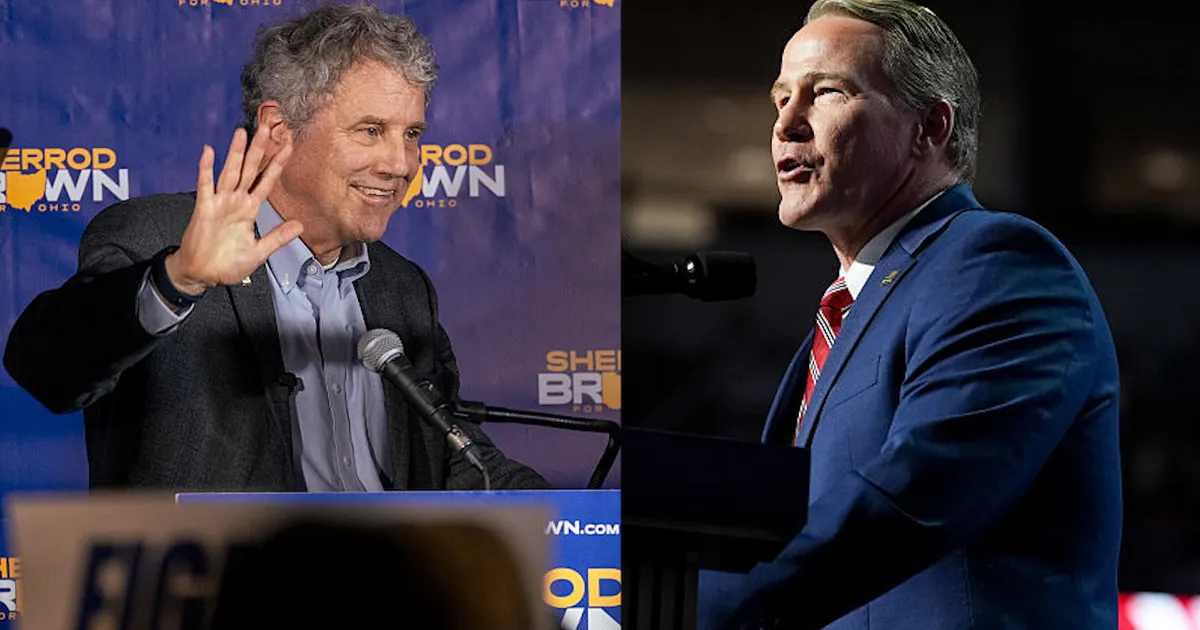
The Ohio Senate race has become one of the most closely watched contests of the 2026 US elections, with former Democratic senator Sherrod Brown challenging Republican senator Jon Husted in a battle that could help decide control of the chamber.
Brown secured the Democratic nomination in May, setting up a rematch with the state’s Republican establishment after he lost his Senate seat to Bernie Moreno in 2024. Husted, who was unopposed for the Republican nomination, is seeking election to the remainder of the term originally won by JD Vance.
Vance resigned from the Senate after becoming vice-president, and Husted was appointed to replace him in January 2025. The US Senate lists Husted as Ohio’s sitting Republican senator, while Brown represented the state in the chamber from 2007 until January 2025. ([senate.gov](https://www.senate.gov/states/OH/senators.htm))
Ohio Senate race remains finely balanced
The latest Marist University poll, conducted from 15 to 18 October, put Brown ahead of Husted by 48% to 44% among likely voters. The four-point margin was within the survey’s 4.5-point margin of error, underlining the uncertainty surrounding the contest. ([maristpoll.marist.edu](https://maristpoll.marist.edu/polls/midterm-elections-in-ohio-october-2026/))
Brown held a larger advantage among independent voters, leading Husted by 50% to 35%. The poll also found that half of likely voters believed Brown would win, compared with 45% who expected Husted to retain the seat. ([maristpoll.marist.edu](https://maristpoll.marist.edu/polls/midterm-elections-in-ohio-october-2026/))
The race is expected to attract heavy spending. The Senate Leadership Fund, a leading Republican super political action committee, has pledged $79 million to defend Husted as Republicans seek to protect their majority. ([apnews.com](https://apnews.com/article/1b29bfc5cd8cacd7d71d7b550ac894ee))
For Democrats, Brown offers a rare opportunity to compete in a state that has shifted decisively towards the Republican Party in recent presidential elections. His long record in Ohio politics and support among some working-class voters are central to the Democratic effort to make the contest competitive.
Brown served three terms in the Senate and previously represented Ohio in the House of Representatives. His campaign has focused on the cost of living, healthcare and prescription medicines, as well as criticism of large corporations and the influence of money in Washington.
At his primary-night event in Cleveland, Brown argued that Ohio voters needed a senator prepared to challenge powerful companies and special interests. He also proposed restricting health insurers from denying care, limiting utility-rate increases and banning members of Congress and their spouses from trading individual shares.
Husted has presented himself as a candidate focused on jobs, investment and the state’s economic performance. Before joining the Senate, he served as Ohio’s lieutenant governor, secretary of state, a state senator and speaker of the Ohio House.
“In Ohio, it’s always about the economy,” Husted said during a campaign appearance, pointing to what he described as record employment and a historically low unemployment rate.
Economic pressure is expected to remain a defining issue before the 3 November election, with voters particularly focused on fuel, groceries, energy bills and other household costs. Ohio’s trade relationship with Canada is also significant: the state exported $17.5 billion in goods there in 2025, accounting for roughly 31% of its total goods exports.
Those concerns have made suburbs such as Parma, near Cleveland, an important political testing ground. The community backed both Donald Trump and Brown in 2024, illustrating the combination of Republican presidential support and continuing personal loyalty to the former senator that Democrats hope to reproduce statewide.
The contest also carries national consequences. Democrats would need to gain four Senate seats to take control of the chamber, according to the Associated Press, making Ohio a central target as the party attempts to rebuild support in states that have moved to the right. ([apnews.com](https://apnews.com/article/1b29bfc5cd8cacd7d71d7b550ac894ee))
Brown has sought to distance the race from a straightforward party contest by emphasising his record on labour and consumer issues. Husted, meanwhile, has argued that Brown’s decades in Washington make him responsible for the problems he now promises to address.
With the latest polling showing a contest within the margin of error, the outcome is likely to depend on turnout among independents, working-class voters and Republicans who are uneasy about Husted’s close association with President Trump. The winner on 3 November will serve the final two years of Vance’s Senate term.
