


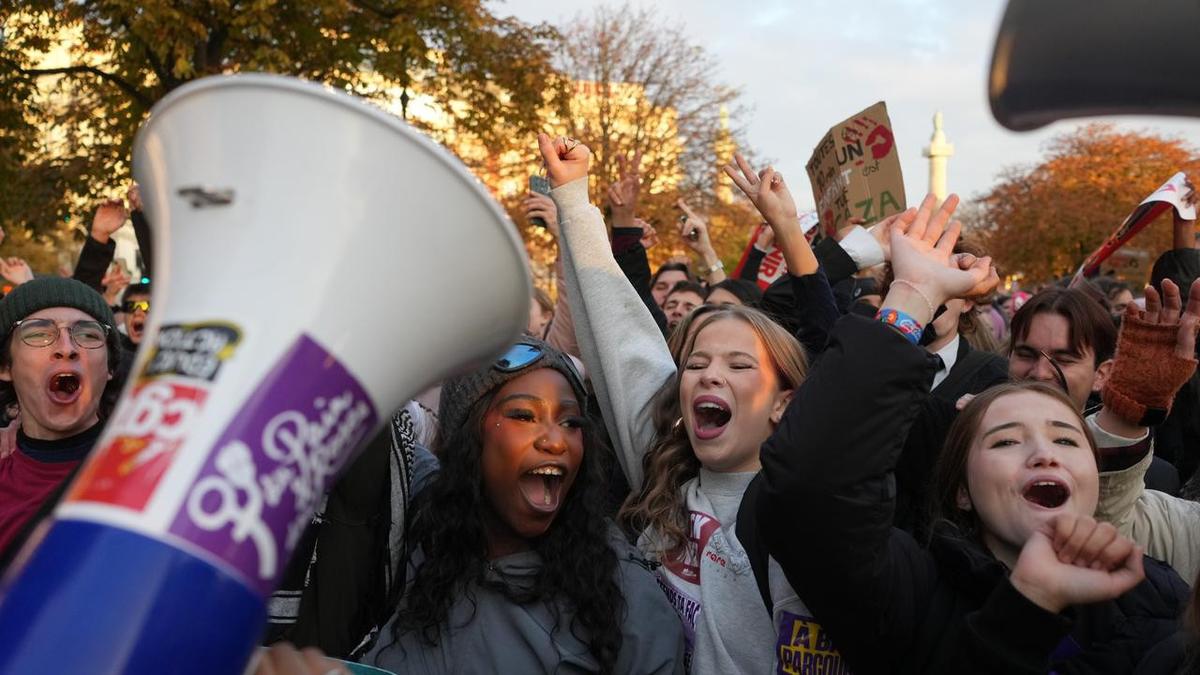
More than 600,000 people joined demonstrations across France as unions backed student protests demanding higher wages, putting fresh pressure on the government. The CGT union gave a far higher estimate of almost 1.6 million people taking part in more than 200 marches nationwide.
The turnout exceeded that recorded on October 17, when protests were accompanied by rioting and looting. In Paris, the march passed peacefully, bringing together students, workers and retirees.
Some young demonstrators carried placards reading: “Inequalities seriously jeopardise our future” and “We can’t spend our whole lives just trying to make a living.”
The CGT estimated that 350,000 people took part in the Paris demonstration, describing the turnout as a new phase in the movement. It said it would “continue its fight for as long as necessary to force the government and employers to give in to its demands”.
Disruption spreads across France
Around one-third of France’s high schools were closed or unable to operate. Some were affected by student blockades, while others were hit by teacher strikes.
Public transport was disrupted in some areas and the Eiffel Tower was closed as the protests continued.
Interior Minister Laurent Nuñez said 70,000 police officers had been deployed, supported by armoured vehicles, drones and helicopters. Police have faced criticism over allegations of heavy-handed tactics that injured protesters.
Authorities in Brittany said masked individuals attempted to block roads in Rennes. They reported that young people, often accompanied by adults, had committed “serious acts of violence”, including throwing steel balls at police.
Tensions, scuffles and other incidents were also reported in Lyon, Nantes, Pau, Orléans, Rennes and Toulouse. Recent protests have repeatedly been marred by violence, which authorities blamed on masked far-left radicals seeking to incite insurrection and on others intent on looting.
France’s main unions said the country was at risk of recession and warned that lay-off plans were multiplying. In a joint statement, they said: “Fuel, food products, rent, gas, electricity … everything’s going up except wages and pensions.”
The movement began in September after a protest over staff shortages at a high school south-east of Paris. It spread across the country, initially drawing students seeking increased education funding before expanding to workers demanding better pensions and help with rising fuel and other living costs.
