


Global stocks tumbled as concern over the future of the artificial intelligence boom swept through markets following the Democrats’ landslide midterm victory, while Donald Trump blamed voters for the sharp falls.
Japan’s Nikkei dropped 6 per cent, putting it on course for its steepest one-day decline since April 2025. Share indices in South Korea and Taiwan plunged by more than 8 per cent after trading began, although both later recovered some ground.
On Wall Street, the Nasdaq fell 5.5 per cent and about $3 trillion was wiped off companies listed on the S&P 500. The market’s volatility “fear gauge” also surged as investors assessed whether a Democrat-dominated political landscape could slow spending on AI technology.
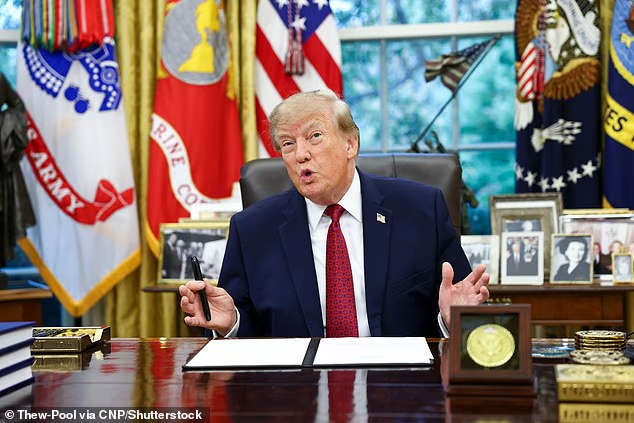
Trump blamed the market turmoil on the election result in posts on Truth Social. “The Stock Market crashed today because the Dumocrats had a big Tuesday — So sad to see, you only have yourselves to blame!” he wrote.
In a separate post, he said the market had suffered “one of the Worst Days in History based on the results of the Election”. He added: “Your 401(k)s have, therefore, dropped. Remember, it wasn’t Republicans, it was Dumocrats.”
The sell-off has struck an AI trade that was already facing questions over whether companies can generate sufficient returns from their enormous investment in data centres, chips and other infrastructure.
Chipmakers were among the worst hit. Nvidia shares fell 9.3 per cent, Broadcom dropped 10.5 per cent and Qualcomm ended the session 9.5 per cent lower.
The tech-heavy Nasdaq has now entered correction territory after four weeks of gradual declines, while the S&P 500 fell 4.3 per cent.
In Asia, Samsung Electronics fell almost 10 per cent and SK Hynix dropped 12 per cent. Japan’s Kioxia lost 14 per cent, while Taiwan Semiconductor Manufacturing Company fell as much as 8.5 per cent.
SoftBank Group, a major AI investor, slid 11 per cent. The cost of insuring against a default by the Japanese company also rose to its highest level in four years.
Investors have also become increasingly concerned about smaller companies that depend on borrowing to fund AI expansion. CoreWeave, a so-called neocloud firm viewed as a barometer of sentiment towards heavy AI spending and debt, fell 10 per cent, while the cost of insuring against its default reached a record level.
Michael McCarthy, chief executive for Australia and New Zealand at brokerage Moomoo, said: “It’s pretty clear there’s been a real shift in sentiment.”
The selling has raised concerns that opposition to data centres is growing in local communities, with analysts warning that the costs imposed by such facilities may not yet be fully reflected by markets. Texas governor-elect Gina Hinojosa said the state would introduce laws to protect residents, citing the impact of data centres on rural communities.
Markets showed signs of stabilising later in Asia as authorities attempted to calm investors. South Korea temporarily eased rules covering leveraged investments by retail investors, while Taiwan’s finance ministry instructed senior executives at state-owned banks to support the market.
Taiwan’s benchmark index eventually closed 4.5 per cent lower, having fallen much further earlier in the session. Nasdaq futures were up 0.6 per cent, although European stock futures remained 0.9 per cent lower, suggesting that nervousness persisted.
Some analysts said the falls may have gone too far. Allen Huang, vice-president of equities trading at Mega Financial Holding, said further forced selling of margin accounts could signal that the market was approaching the final stage of its decline.
Bonds gained across Asia as investors sought safer assets. US Treasuries, along with government bonds in Japan and China, rose, while the US dollar weakened against the yen and Swiss franc.
Masahiko Loo, chief fixed income strategist at State Street Investment Management, said bonds were “increasingly behaving like bonds again”, with income once more becoming the main driver of returns.
He added: “This looks more like a reassessment of AI policy risk than a reassessment of the AI cycle.”
