


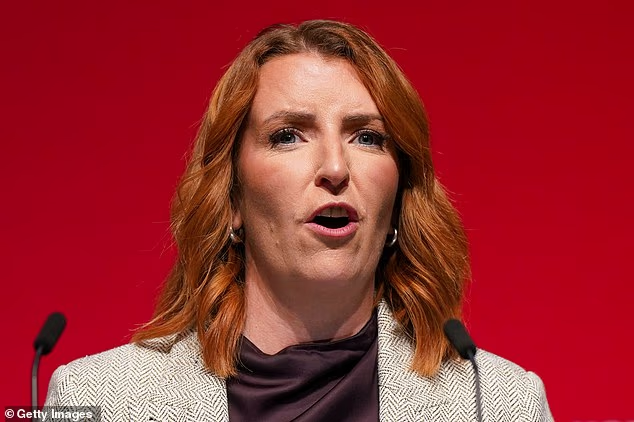
The Government is considering a cap on political donations from wealthy UK-based individuals, Louise Haigh has said, amid mounting scrutiny of Reform UK’s £72 million funding windfall.
Ms Haigh, the First Secretary of State, said ministers could amend the Representation of the People’s Bill, which is currently passing through Parliament, before bringing forward broader legislation ahead of the next general election.
Her comments came after Reform received two record-breaking £36 million donations from crypto-billionaires Ben Delo and Christopher Harborne earlier this month. The payments have prompted calls from MPs and peers for tighter controls on political funding.
Asked at a fringe event at Labour’s conference in Liverpool whether ministers would introduce a cap on domestic donations, Ms Haigh said: “The Representation of the People’s Bill is passing through Parliament. We will consider amendments and how we can tackle it through there.”
She added that the Government would need to address what she described as the ability of donors to move money around and exploit loopholes.
“We’ll consider amendments through that but then we’re going to have to come back to a much bigger piece of legislation in the Parliament to look at everything in the round, including foreign interference in our politics more generally not just through cash of course,” she said.
“So it’s under consideration. But we need to make sure we get it right and that we don’t allow foreign billionaires to buy access and buy democratic change in this country.”
The Government has already proposed a £100,000 limit on donations to political parties from British citizens overseas. The restriction would also apply for the first 12 months after expatriates return to Britain.
Reform leader Nigel Farage has criticised plans to apply the overseas donation cap retrospectively. The party has said Mr Delo and Mr Harborne’s contributions comply with existing rules and planned restrictions, while accusing Labour of hypocrisy over the large sums it receives from trade unions.
Ms Haigh said a Whitehall “task and finish” group was examining political funding rules and wider issues affecting democracy. The group includes the Home Office and other departments with policy responsibility in the area.
She cited activity by Russian bots during the Makerfield by-election, saying they had been active on Facebook pages and influenced opinions locally.
“That’s equally as important as cleaning up money in politics. So it’s all under active consideration,” she said.
Asked whether she was as concerned about large donations from wealthy UK citizens as she was about money from overseas millionaires and billionaires, Ms Haigh replied: “Any individual having outsized influence – which of course they will have if that’s the kind of money they’re donating – is pernicious to a democracy, of course it is.”
The Electoral Commission is also reviewing whether existing political spending rules remain “fit for purpose”. Its chief executive, Vijay Rangarajan, said the review would consider spending limits, donation reporting requirements and spending between designated election periods.
The Government commissioned the review in July. Ms Haigh and Communities Secretary Angela Rayner subsequently told Mr Rangarajan that current spending limits were “too high” and should be reduced.
Under the existing rules, parties standing candidates in Britain cannot spend more than £34 million in the year before a general election.
