


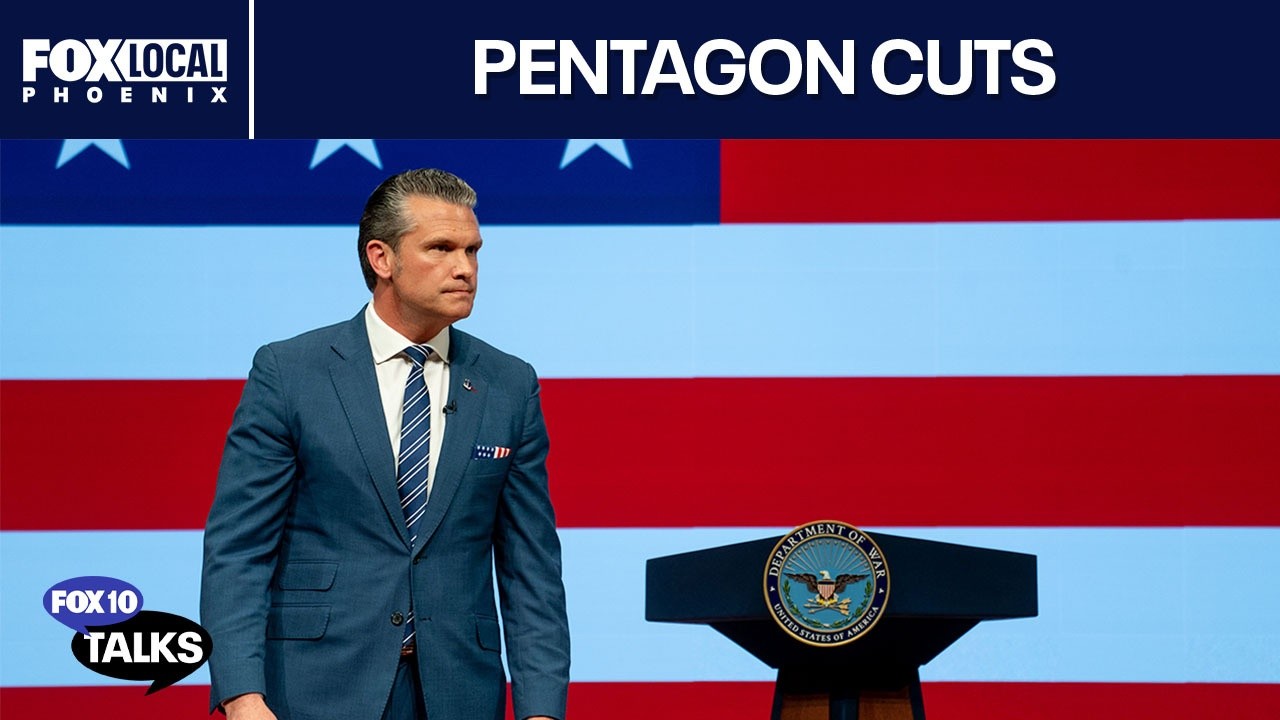
US defence secretary Pete Hegseth has ordered the Pentagon to cut 20% of positions held by generals and admirals, in a major shake-up of the military’s senior leadership.
Announcing the measure during a “State of the Force” address at Marine Corps Base Quantico in Virginia on Wednesday, Hegseth said the reduction would be completed by January 1, 2027. He described the move as “accountability and long overdue”.
The plan applies to roughly 800 general and flag officer positions across the Army, Navy and Air Force, including joint commands. It would remove about 170 posts from the military’s chain of command, with some roles downgraded to colonel or Navy captain level and others abolished altogether.
The move builds on a 10% reduction ordered by Hegseth last spring. The Pentagon has also previously been directed to reduce the number of four-star officers on active duty and cut senior positions in the National Guard.
The cuts do not necessarily mean that 20% of serving generals and admirals will be dismissed immediately. Some positions could be left vacant, while others may be eliminated or filled by officers of a lower rank.
Hegseth has argued that the US military has become too top-heavy and that its leadership should be streamlined. But the proposal has drawn criticism from members of Congress, who warned that removing experienced officers could weaken continuity and oversight at a time of heightened military activity overseas.
Senator Mark Kelly, a Democrat and former Navy combat pilot, accused Hegseth of “purging a generation of great leaders”, while Republican senator Mike Rounds said he wanted to see the reasoning behind the reductions before judging them.
Rhode Island senator Jack Reed, the senior Democrat on the Senate Armed Services Committee, said changes to the structure of the senior officer corps required consultation with Congress. He warned that reshaping the military’s top ranks could disrupt command at a time when continuity was especially important.
Hegseth also announced plans for a new four-star command overseeing autonomous and robotic warfare, as the Pentagon seeks to expand its use of drones and other uncrewed systems. The changes form part of his wider effort to refocus the US military on what he calls lethality, readiness and merit.
