


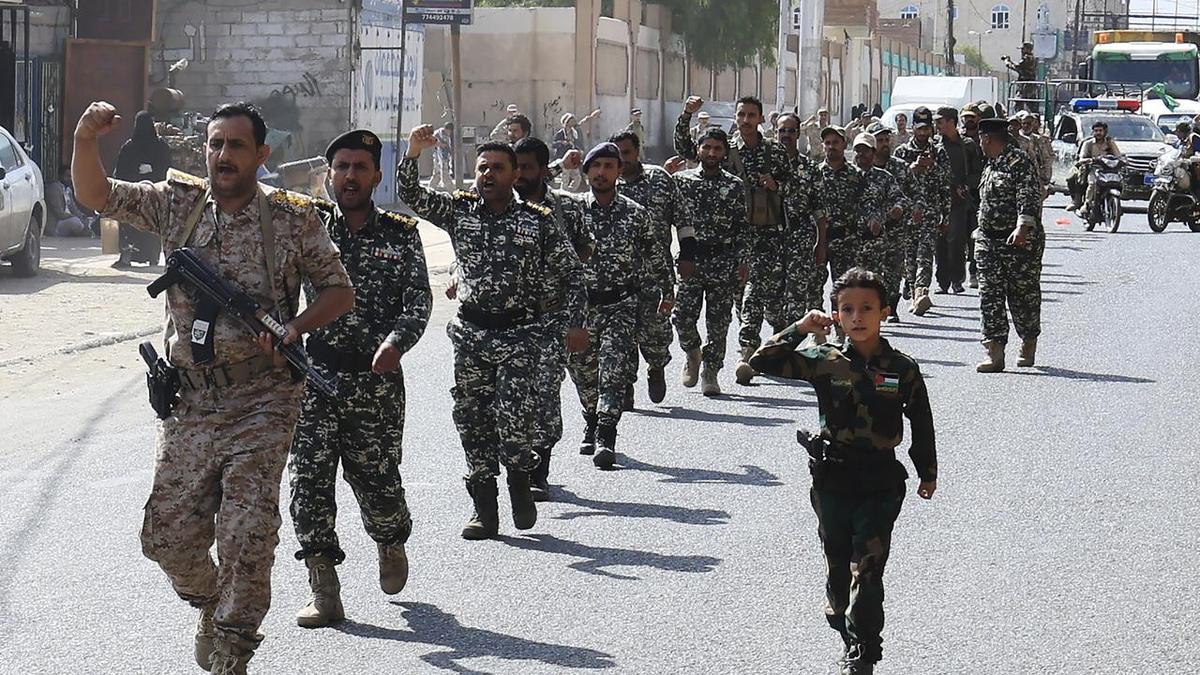
A Houthi advance in Yemen has brought the Iran-aligned militants closer to controlling the Bab el-Mandeb Strait, creating a fresh strategic dilemma for US President Donald Trump as the conflict with Iran enters its seventh month.
Houthi fighters reached Perim, an island in the middle of the narrow waterway between Yemen and Africa, on Friday after moving south along Yemen’s coast. Their position could enable them to disrupt shipping through the strait, known as the “Gate of Tears”.
The development threatens to give Tehran influence over both of the region’s major oil-shipping routes. Iran has already disrupted the Strait of Hormuz, the passage from the Gulf through which about a fifth of global oil supplies travelled before the war.
A closure of Bab el-Mandeb would put a further 7 per cent of global petroleum supplies and about 12 per cent of global trade under pressure.
The threat is particularly serious for Saudi Arabia, which has been sending much of its oil from Red Sea ports since the conflict effectively shut the Strait of Hormuz. Saudi Arabia’s de facto ruler, Crown Prince Mohammed bin Salman, asked Mr Trump for military assistance during a phone call on Thursday, according to three sources.
Washington told him it would not intervene directly for now, but would provide intelligence, the sources said. Mr Trump later confirmed that he had spoken to the Crown Prince and said the Houthis had also contacted his administration to ask that the US not become directly involved.
The US faces a choice over the Bab el-Mandeb Strait
A senior Trump administration official said the US was focused on protecting national security interests, including freedom of navigation in the Red Sea, while enabling regional partners to take the lead in dealing with security challenges.
The administration faces pressure to prevent the Houthis from closing the strait, which could drive up energy prices and disrupt global trade. But deploying forces against a group that has withstood previous attacks by Saudi Arabia and the US would create a dangerous new mission for an American military already committed to fighting in Iran.
“Just weeks ago, Trump adopted a strategy of squeezing Iran’s economy while keeping military conflict at levels too low to squeeze the American economy,” said Stephen Wertheim, a senior fellow at the Carnegie Endowment for International Peace.
“The Houthis have shattered Trump’s plan.”
The advance comes as Mr Trump faces record-low approval ratings and seeks a way out of the conflict. His administration has most recently announced an economic pressure campaign intended to force concessions from Iran’s government.
Higher petrol prices linked to the conflict have also threatened the Republican Party’s prospects of retaining control of Congress in November’s midterm elections. Iran, despite military and economic setbacks, remains defiant.
Iran’s foreign ministry said on Thursday that the conflict in Yemen could not be resolved through a blockade or military action against the Houthis, and called for dialogue. The statement did not address Iran’s own role in the crisis.
David Schenker, who served as assistant secretary of state for Near East affairs during Mr Trump’s first term, said control of both maritime chokepoints would give Iran significant leverage.
“This was always the worst-case scenario, that the Iranians exert control not only over the Strait of Hormuz but Bab el-Mandeb, two of the leading energy choke points in the world,” he said. “It’s an enormous amount of leverage that (the Iranians) have in hand.”
Analysts and former officials say Mr Trump must now decide whether to commit US forces and limited air-defence ammunition to pushing back the Houthis, or leave Saudi Arabia, its allies and Yemen’s southern-based government to confront the militants alone.
