


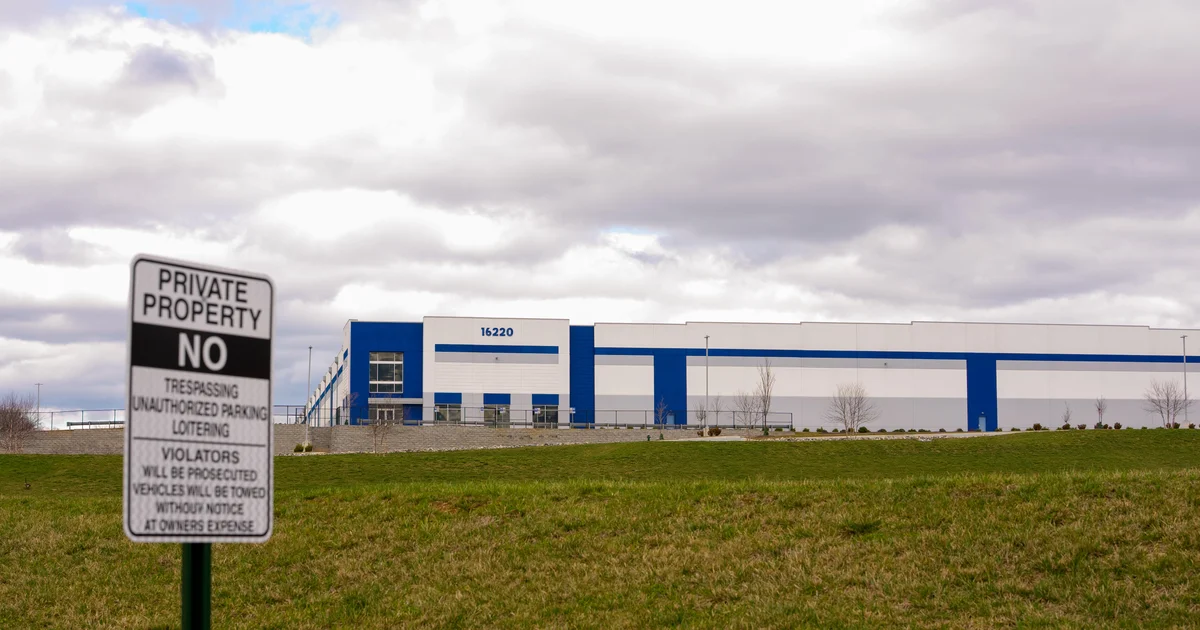
US Immigration and Customs Enforcement wasted millions of dollars in a rushed expansion of detention capacity, a government watchdog has found, after purchasing warehouses it no longer plans to use and paying above-average rates for other facilities.
The Government Accountability Office said ICE failed to assess the long-term costs of acquiring and operating detention centres. It identified at least $20 million in unrecoverable costs from the purchase of 11 warehouses, with further losses possible if the properties are sold for less than their purchase price.
ICE acquired the warehouses over two months after transferring billions of dollars into an escrow account held by Chicago Title Insurance. Seven are now expected to be sold, while plans to convert the remaining sites into detention centres face legal challenges.
More than $1.5 billion remains with Chicago Title for the acquisition of detention facilities, according to the material reviewed by the watchdog. ICE has also awarded contracts that could be worth a combined $10 billion for the expansion and construction of new sites.
ICE detention spending under scrutiny
The agency’s spending peaked on a day in January, when it used more money than on any other single day during either of Donald Trump’s terms as president, according to federal spending records.
After abandoning much of the warehouse plan, ICE spent $1.47 billion in July on two detention facilities in California operated by private prison company CoreCivic. The following month, it bought two more CoreCivic facilities, in Kansas and Minnesota, for a combined $734 million.
CoreCivic is separately paid by ICE to operate the facilities. The company has said it is in talks with the agency over the sale of additional sites, while company filings indicate that proceeds from the transactions are being used to reduce its debts.
The GAO said ICE had forecast operating costs for only three years. It had not set out how the centres and proposed warehouse conversions would be funded after money allocated by Congress through 2029 runs out.
Heather MacLeod, the GAO’s director of Homeland Security and Justice, said: “We just saw a real lack of planning overall. The lack of planning has really led to stops and starts which have ultimately resulted in waste.”
The watchdog said ICE should carry out “urgent planning” to prevent further waste. The agency has agreed to produce a strategic plan by 31 August 2027, although the GAO said that timetable was not soon enough.
ICE has nearly doubled its spending this year after Congress provided $75 billion through President Trump’s One Big Beautiful Bill Act, including $45 billion for detention capacity. It spent $19 billion between October and July, compared with $11 billion during the previous full financial year.
A Department of Homeland Security spokesperson said ICE was working at “turbo speed on cost-effective and innovative ways” to carry out the American people’s mandate for mass deportations of criminal illegal aliens. The spokesperson described the legislation as providing “historic funding” for that work.
Kevin McNellis, a policy and budget analyst who previously worked at the Congressional Budget Office and Congressional Research Service, said the way the money had been appropriated had reduced established oversight processes. He said an unprecedented amount of funding had been provided outside the usual annual arrangements and was being spent quickly.
The GAO also found that ICE paid Florida almost three times its typical rate per detention bed through Federal Emergency Management Agency reimbursements for two state-operated facilities, including the now-closed site known as “Alligator Alcatraz”. FEMA paid Florida $608.4 million for that facility, the report said.
ICE also paid more than its usual rate to house detainees in facilities run by the Bureau of Prisons. Officials told the GAO that overtime and temporary staff assignments required to meet ICE’s demand had pushed the rate to twice the agency’s median.
Other abandoned plans included detention sites on military bases in Indiana and New Jersey. At Camp East Montana in El Paso, ICE spent $7.1 million on meals for detainees that were not needed, while $2.85 million was spent on unused tents at Guantanamo Bay.
The Department of Homeland Security’s inspector general is conducting separate audits into ICE’s acquisition of detention space, air charter services and its reporting on the use of funding from the legislation.
