


IKEA’s affordability strategy is being presented as a potential model for an American economy increasingly split between wealthy households and a financially squeezed middle class.
The analysis comes as the richest 20% of US households account for about 60% of consumer spending, supported by rising asset values, while many middle-income families face a sharp reduction in the gap between their earnings and living costs.
In July, annual wage growth stood at 3.2%, compared with consumer price growth of 3.4%. That left households with a negative 0.20 percentage-point wage-price spread, compared with a pre-war baseline of 1.34 percentage points.
The squeeze is also being reflected in household borrowing. Buy Now, Pay Later use at grocery shops has doubled over the past two years, meaning some consumers are spreading the cost of everyday necessities across four instalments.
The argument is that companies and policymakers risk worsening the divide by concentrating on affluent customers, passing higher costs on to consumers and using artificial intelligence to protect corporate margins.
Hiring has been frozen or reduced, with the sharpest falls affecting middle- and entry-level positions. At the same time, the “One Big Beautiful Bill Act” was promoted as offering broad tax relief, although households in the 95th to 99th income percentiles are expected to receive about 1.9 times as much relief as middle-income households.
IKEA’s affordability strategy
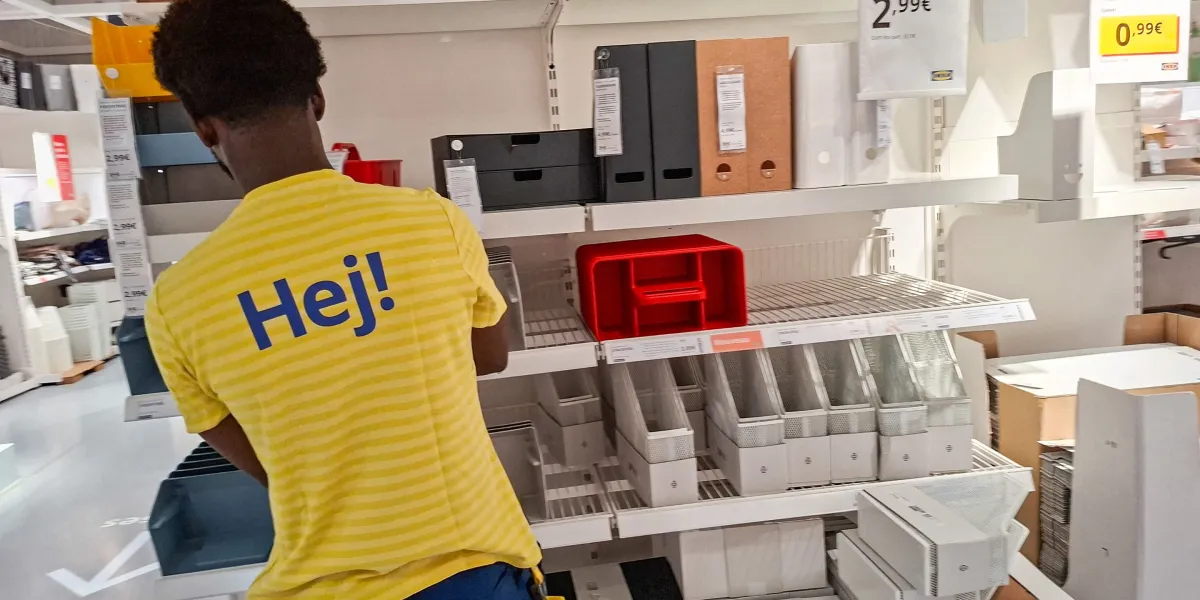
IKEA has taken a different approach, choosing to lower prices and pursue volume rather than focus exclusively on wealthier customers.
Juvencio Maeztu, chief executive of Ingka Group, said the company measured success by the number of homes in which it was present, rather than simply by revenue. “I like to say that for us, the big KPI is not top line in revenue… The big KPI is in how many homes we are present,” he said.
He added: “We have a say normally that we sell umbrellas in IKEA, and we normally reduce the price of the umbrella when it’s actually raining.”
Ingka Group’s revenue fell 0.9% to €41.5 billion in its 2025 financial year, but visits to its stores rose to 736 million and operating income increased by 16.8% to €1.46 billion.
The approach starts with the price customers can afford and works backwards through the company’s cost structure. That has involved deliberate price reductions at a time when many other businesses have increased prices.
IKEA has also sought to reduce its exposure to disruption in global shipping and tariffs. Supplier SBA Home invested $70 million in an automated plant in Mocksville, North Carolina, with support from Inter IKEA, to produce high-volume products closer to the US market.
Ingka Investments has committed €7.5 billion by 2030 to utility-scale renewable energy. The group already owns 49 wind farms and 26 solar parks, which the analysis says will help reduce exposure to volatile fossil fuel prices.
The company has used automation alongside investment in its workforce. Its Billie customer-service bot now assists 74% of customers who use it, while 8,500 employees have been retrained for more complex customer-service and interior-design sales roles.
Remote sales centres became IKEA’s fastest-growing channel during the last financial year, generating €1.25 billion in revenue. Customer satisfaction rose from 60% to 89% over the same period.
A wider economic warning
The analysis argues that a consumer economy built around affluent households is vulnerable if markets fall and high-income customers reduce discretionary spending. A weaker middle class would leave less demand to support the wider economy.
It also says the financial pressure is falling disproportionately on women and people of colour. Native American women are described as earning 53 cents for every dollar paid to white, non-Hispanic men, while 510,000 Black women left the labour force over five months.
Closing such gaps, the analysis estimates, could add $3.1 trillion to the US economy. It argues that narrowing the pay gap alone could expand the payroll tax base enough to cover one-third of the Social Security funding shortfall.
Maeztu said IKEA’s founder had instructed the company to “think 200 years out”. The broader argument is that long-term economic resilience depends less on extracting more from households with little spare income and more on keeping products affordable, investing in supply chains and widening participation in the labour market.
