


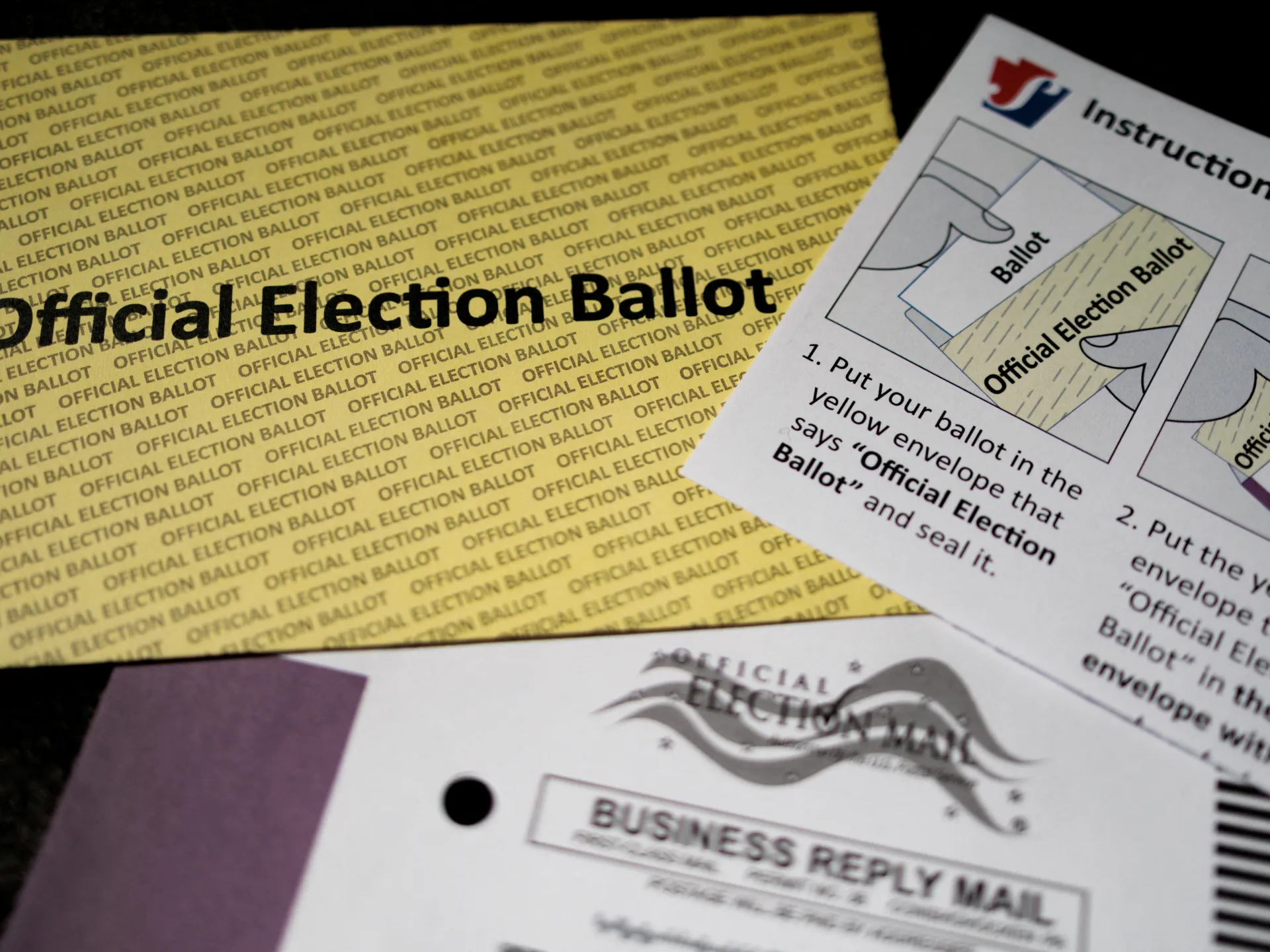
The US Supreme Court has rejected Donald Trump’s attempt to restrict postal voting before November’s midterm elections, allowing states to continue sending mail ballots under existing rules.
The decision is a setback for the president’s efforts to give the federal government greater control over election procedures, and limits the prospect of last-minute changes as voting gets under way in some states.
In a brief order, the conservative-majority court refused to lift an injunction blocking Mr Trump’s policy. The justices indicated that his administration was likely to fail in its attempt to impose the restrictions before the midterms.
Justice Brett Kavanaugh, who was appointed by Mr Trump, joined the majority, although he suggested he could support the policy at a later stage. Justices Samuel Alito and Clarence Thomas dissented.
How Trump sought to change postal voting
Mr Trump signed an executive order in March directing the US Postal Service to take control of mail voting arrangements. It called for new envelopes carrying special barcodes, which would allow the federal government to check whether ballots came from eligible voters.
The order would have required every state to adopt a uniform envelope design within a short period. States would also have had to provide the postal service with lists of eligible voters before elections.
The postal agency would have been able to reject mailed ballots that did not meet the new requirements or could not be linked to registered voters on state lists. Several federal departments, including the Department of Homeland Security and US Citizenship and Immigration Services, would also have access to the voter information.
Democrats and activists challenged the policy in several courts, leading to conflicting rulings between May and August. US District Judge Indira Talwani issued an injunction against it in June, finding that the order was likely to breach the US Constitution and would be impossible to implement so close to the midterms.
The Supreme Court temporarily overturned that ruling in late August, but did not decide whether Mr Trump’s policy was constitutional. Instead, it sided with his administration on procedural grounds after lawyers argued that the challenge had been brought too early.
Why the ruling matters for mail-in votes
The latest decision leaves Judge Talwani’s injunction in place and means states can continue issuing postal ballots as they have done for years.
Eight states – California, Colorado, Hawaii, Nevada, Oregon, Utah, Vermont and Washington – and the District of Columbia conduct all elections entirely by mail. Other states allow postal voting for smaller elections.
Mail ballots account for about a third of all votes cast in the US and have been credited with increasing turnout. Cases involving forged or duplicate voting are rare, amounting to four in every 10 million mailed votes, according to the Brookings Institution.
Mr Trump has repeatedly questioned the security of postal voting and falsely blamed mail-in ballot fraud for his defeat in the 2020 presidential election. He has continued to oppose expanded mail voting, despite having voted by post himself, including in the 2024 election.
Critics of the executive order warned that new restrictions could disenfranchise voters who rely on postal ballots and disrupt their delivery. The concern is particularly immediate in states including Alabama, North Carolina and Wisconsin, which have already begun sending out midterm ballots.
