


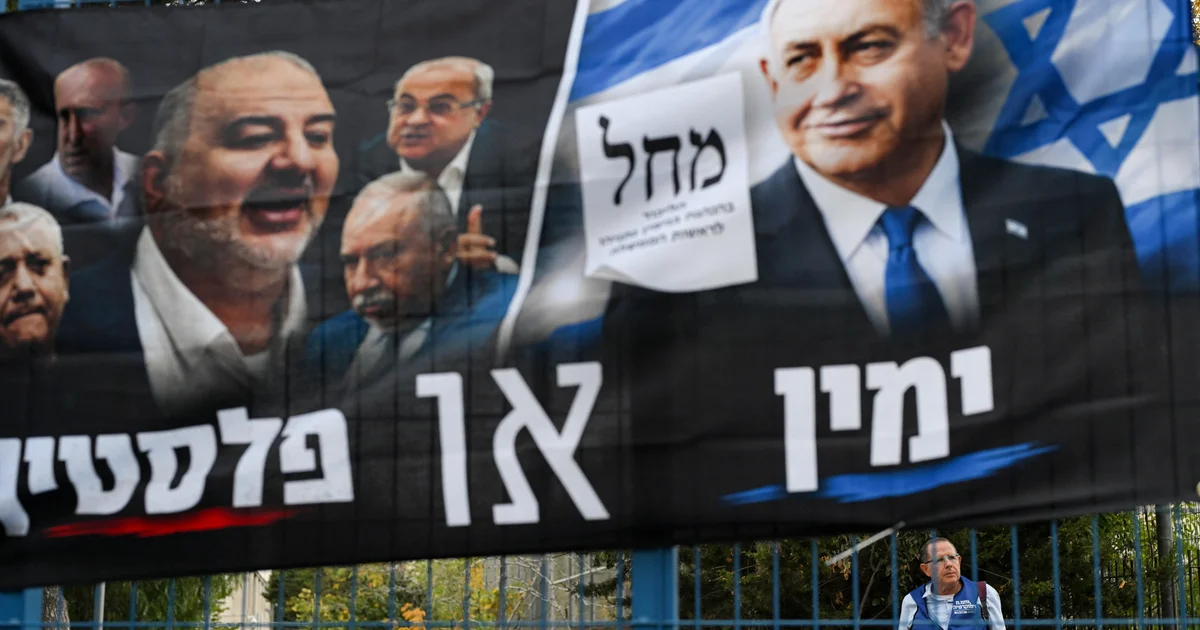
Israel’s election has ended in stalemate, with neither Prime Minister Benjamin Netanyahu’s coalition nor the opposition bloc led by Gadi Eisenkot securing a clear majority in the 120-seat Knesset, according to exit polls and early results.
With 60% of ballots counted, Netanyahu’s Likud party had won 21.4% of the vote, while Eisenkot’s Yashar party stood at 16.2%, official election data showed. Neither side can form a government without securing support from additional parties or lawmakers.
The result sets the stage for potentially protracted coalition negotiations in the first Israeli election since the Hamas attacks of October 7, 2023. Israel remains engaged in a multifront war involving Gaza, Lebanon and Syria, following two direct rounds of conflict with Iran.
Opposition seeks Arab party support
Yair Golan, leader of Israel’s main left-wing party, urged opposition groups to work with Arab parties to remove Mr Netanyahu from office.
“We must no longer accept Netanyahu’s racist division between Jewish votes and Arab votes,” Mr Golan said. “We have a responsibility. And we have an opportunity to form a government of change in partnership with Israel’s Arab citizens.”
Mr Netanyahu rejected any such arrangement and called on his allies to create a “right-wing, nationalist government”.
“We must not endanger Israel and establish a government that relies on anti-Zionist Arab parties,” he said.
Israel’s two Arab parties won more seats than in any previous election, following a surge in turnout among the country’s Arab minority. Arab citizens make up about 20% of Israel’s population.
Both Mr Netanyahu’s camp and his opponents had previously pledged not to form a government dependent on Arab parties. However, political alliances have shifted after previous Israeli elections, meaning the opposition could still seek their support.
If the opposition bloc breaks that pledge and gains enough backing, it could take power and end Mr Netanyahu’s tenure. The prime minister’s campaign had centred on keeping Arab parties outside government.
Netanyahu and the change bloc
Mr Netanyahu, Israel’s longest-serving prime minister and leader of Likud, is seeking another coalition built around ultranationalist and Jewish religious parties. He has argued that Israel’s military operations in Gaza, Lebanon and Iran remain unfinished and that he needs more time to complete the work begun by his government.
Donald Trump endorsed Mr Netanyahu during the campaign and warned that American support could be affected if he lost power.
“If Israel has the wrong Leader, which would be anyone other than Bibi, America will have to do this work ourselves, and I am not inclined to do so,” Mr Trump wrote on Truth Social.
The opposition is made up of parties with differing ideologies but a shared aim of removing Mr Netanyahu. Its leading potential candidate for prime minister is Mr Eisenkot, a former military chief who heads the centrist Yashar party.
Mr Eisenkot, who lost his son and two nephews while they were serving in Gaza, served alongside Mr Netanyahu in Israel’s war cabinet during much of the first year of the Gaza conflict. About half of Yashar’s candidates in the election were women.
Addressing supporters at a rally, Mr Eisenkot said: “The Israeli public has voted against Netanyahu’s service as Israel’s prime minister.” He added that a “worthy leader” would have accepted the public’s lack of confidence and announced his retirement from politics.
What happens after the Israel election stalemate?
Parties or individual lawmakers could switch sides during negotiations, potentially allowing one bloc to assemble a coalition. Such talks could last for weeks.
The opposition could also attempt to form a minority government if it wins more seats collectively than the governing bloc, even without reaching the 61 seats needed for a majority. Arab parties could help by supporting such a government or abstaining from a vote against it.
If neither side can build a coalition, Israel may have to hold another election. The country held five elections between 2019 and 2022 because of similar political deadlock.
