


A federal judge has questioned whether the Trump administration could still channel taxpayer money to political allies, despite the Justice Department’s repeated assurances that a proposed $1.8 billion compensation fund has been abandoned.
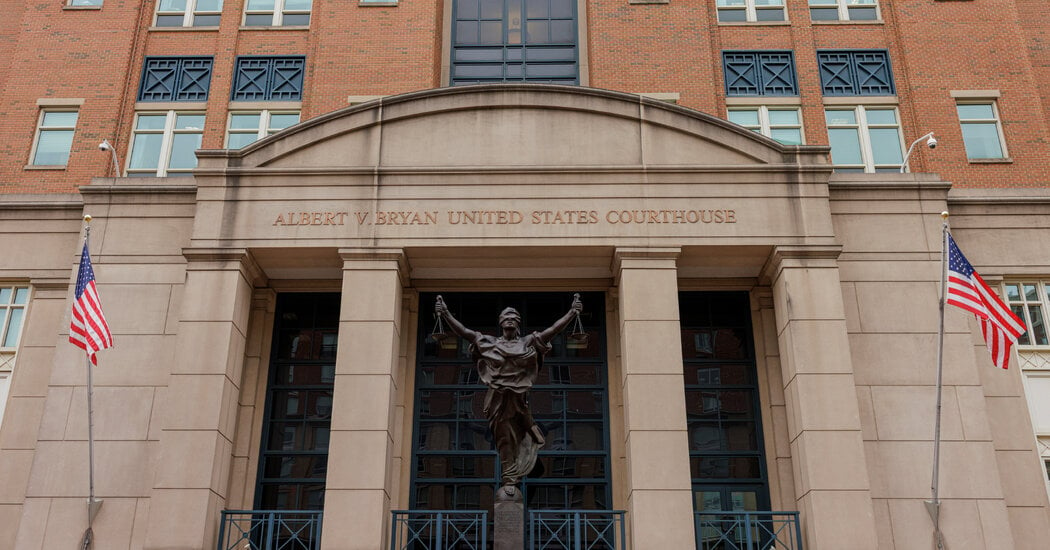
Leonie M Brinkema raised the possibility of alternative payments during a hearing in Alexandria, Virginia, where she was considering a government request to dismiss a legal challenge to the fund and a separate measure protecting Donald Trump, his family and his businesses from past tax investigations.
“I think the anti-weaponization fund — that entity — is gone,” Judge Brinkema said. “But is there a functional equivalent of that going on now?”
She added: “The issues underlying this case are alive and kicking.”
The Justice Department has argued that the challenge to the Trump compensation fund is now moot because Attorney General Todd Blanche has said several times that it will not proceed. It has also said the tax-related challenge should be dismissed because the union representing Internal Revenue Service workers lacks the legal standing to bring it.
Judge Brinkema, who was appointed by Bill Clinton, appeared receptive to parts of the government’s position. She acknowledged that the fund effectively no longer existed and noted that there was no evidence IRS workers had been ordered to stop an audit of Mr Trump’s taxes.
However, she remained concerned about the possibility of officials finding other ways to compensate people who believe they were politically prosecuted, including hundreds of rioters charged over the attack on the US Capitol on January 6, 2021.
Several January 6 defendants have filed lawsuits alleging that they were wrongly prosecuted and seeking financial damages. Judge Brinkema said the Justice Department was currently “properly opposing” those claims, but questioned whether the administration might later change position and settle them.
The administration has already agreed to settle claims brought by allies of Mr Trump. In March, it agreed to pay $1.25 million to Michael T Flynn, the former national security adviser, over allegations that he was wrongfully prosecuted for making false statements to federal agents investigating links between Russia and Mr Trump’s 2016 presidential campaign.
Around the same time, officials offered a similar sum to settle a lawsuit brought by Carter Page, a former Trump campaign adviser who was wiretapped during the Russia investigation.
The Virginia case arose from a separate lawsuit filed by Mr Trump against the Internal Revenue Service, alleging that the agency had allowed some of his tax returns to be leaked to reporters. A backroom agreement between Justice Department officials and Mr Trump’s personal lawyers ended that case and produced both the proposed compensation fund and the tax protections.
That agreement was condemned in July by Kathleen M Williams, a federal judge in Florida, who described the attempt to obtain money from an agency effectively controlled by Mr Trump as an improper exercise in self-dealing. She also accused the president and senior Justice Department officials, including Mr Blanche, of trying to use the court system to give legitimacy to secret negotiations.
Judge Brinkema separately questioned whether the tax protections could be enforced. She said a Florida ruling had not formally eliminated the provision but had effectively “castrated” it, while pointing to a law that prevents the president from directly or indirectly ordering tax audits to be opened or closed.
Although the law generally permits the attorney general to begin or end audits, she questioned whether that exception remained valid if the attorney general was not independent of the president.
“You have the president able to control the very people who are supposed to be independent actors here,” Judge Brinkema said, describing the situation as “very problematic”.
She did not rule immediately on the Justice Department’s request to dismiss the case.
