


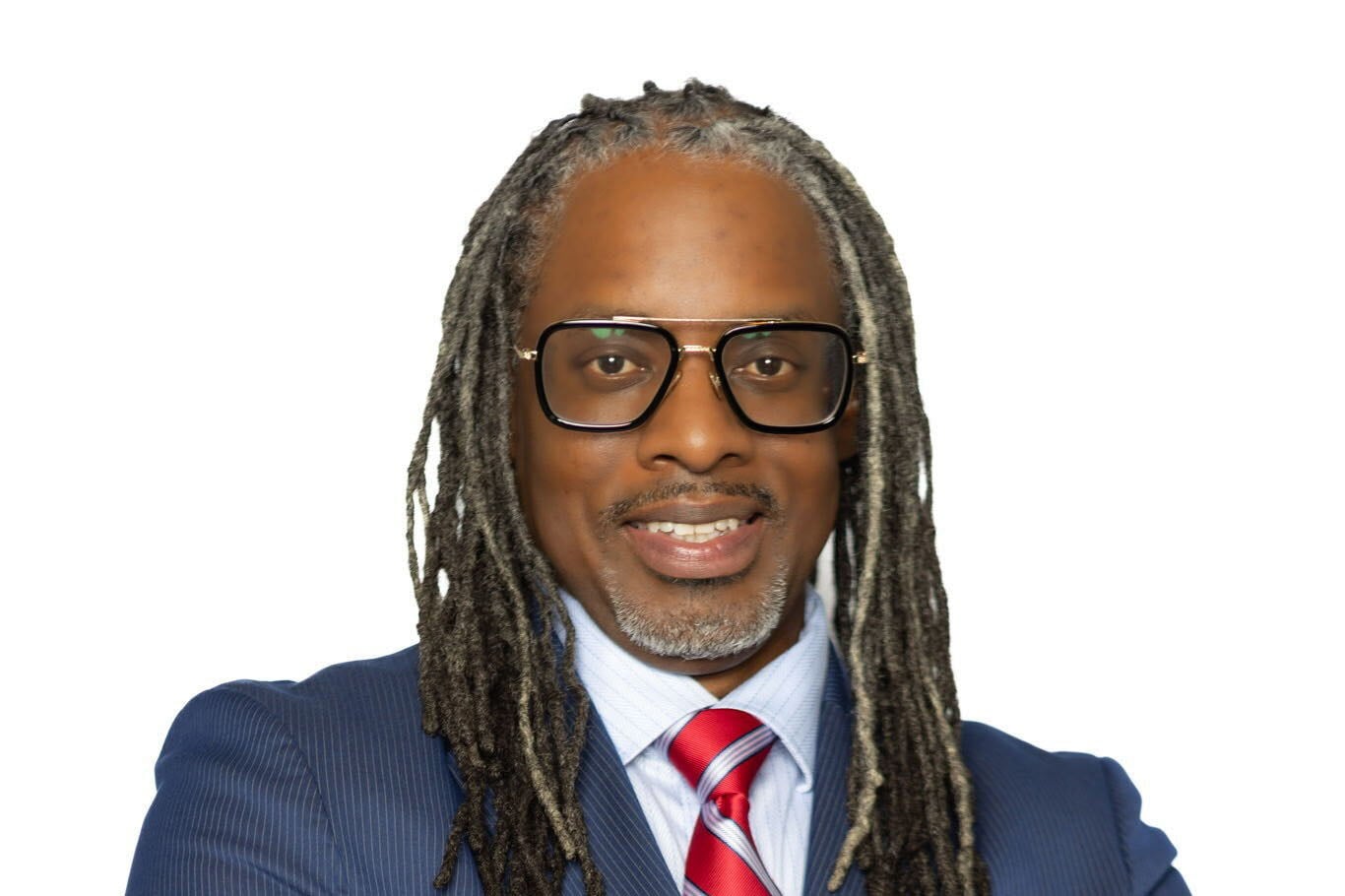
Justice Democrats has appointed Rev. Hodari Williams as its new executive director, placing a civil rights campaigner at the helm of the progressive political action committee as it prepares for the 2028 election cycle.
Williams, 46, takes over from co-founder Alexandra Rojas, who will become president of the organisation’s board and remain involved as a senior adviser.
His appointment follows the group’s most successful election cycle, in which seven candidates, including Donavan McKinney in Michigan, Melat Kiros in Colorado and Darializa Avila Chevalier in New York, defeated incumbents in primary contests.
Those candidates are heavily favoured to win on election day, although the prospects of three other Justice Democrats candidates, including Tennessee state representative Justin Pearson, are less certain going into November.
Williams was previously encouraged by Justice Democrats to run for office but declined. He said he now wanted to help force political change from within the organisation.
“America and its present-day politicians, from my experience, have a high blood pressure of promises and anemia of political courage,” Williams said. “Right now, JD is producing candidates who have the political courage to deal with the crises that are existing in marginalized and disenfranchised communities, and I want to be a part of that.”
Justice Democrats’ civil rights focus
Born and raised in Lakewood, New Jersey, Williams grew up in a family of activists and community organisers. He joined the NAACP as a field organiser focused on voting rights and empowerment after graduating from Francis Marion University in South Carolina, while studying for a Master’s of Divinity at the Interdenominational Theological Center.
During his time with the NAACP, he travelled across the Black Belt, where he said he saw poverty and inequality at close quarters. He later worked in Kenya as a programme co-ordinator with the Presbyterian Church USA, supporting the Green Belt Movement’s campaign against deforestation and its work on environmental justice.
“Civil rights traditionally has been something that people have tried to separate from progressivism … but these movements are inseparable,” Williams said.
He said his experience working with communities affected by inequality had shaped his decision to move beyond what he called “triage work” and pursue broader structural change.
“Black communities have become destinations for environmental hazards and data centers. Unemployment has risen. Black federal employees have been targeted. The list goes on,” Williams said. “I’ve pastored these people. I’ve prayed with them. I’ve listened to them as they’ve shed tears. Now I’ve decided I want to move from triage work to really transformational work.”
Williams also said his role would involve challenging some Black political leaders, arguing that many had become too closely tied to corporate interests. He said Justice Democrats’ candidates were free to take bolder positions on issues affecting marginalised communities.
With the 2026 election cycle nearing its end, Justice Democrats is beginning work on a progressive coalition for the 2028 presidential election. Williams said the organisation wanted to demonstrate to the wider Democratic Party how its base could be mobilised around issues including affordability, healthcare, civil rights, housing and living wages.
“It’s not enough for us just to have a call to defeat a fascist president. We don’t want a fascist president. We want him out, but we also want a vision of what America could look like when affordability, healthcare, civil rights, housing, and livable wages — all of those things are at the top of the political agenda,” he said.
