


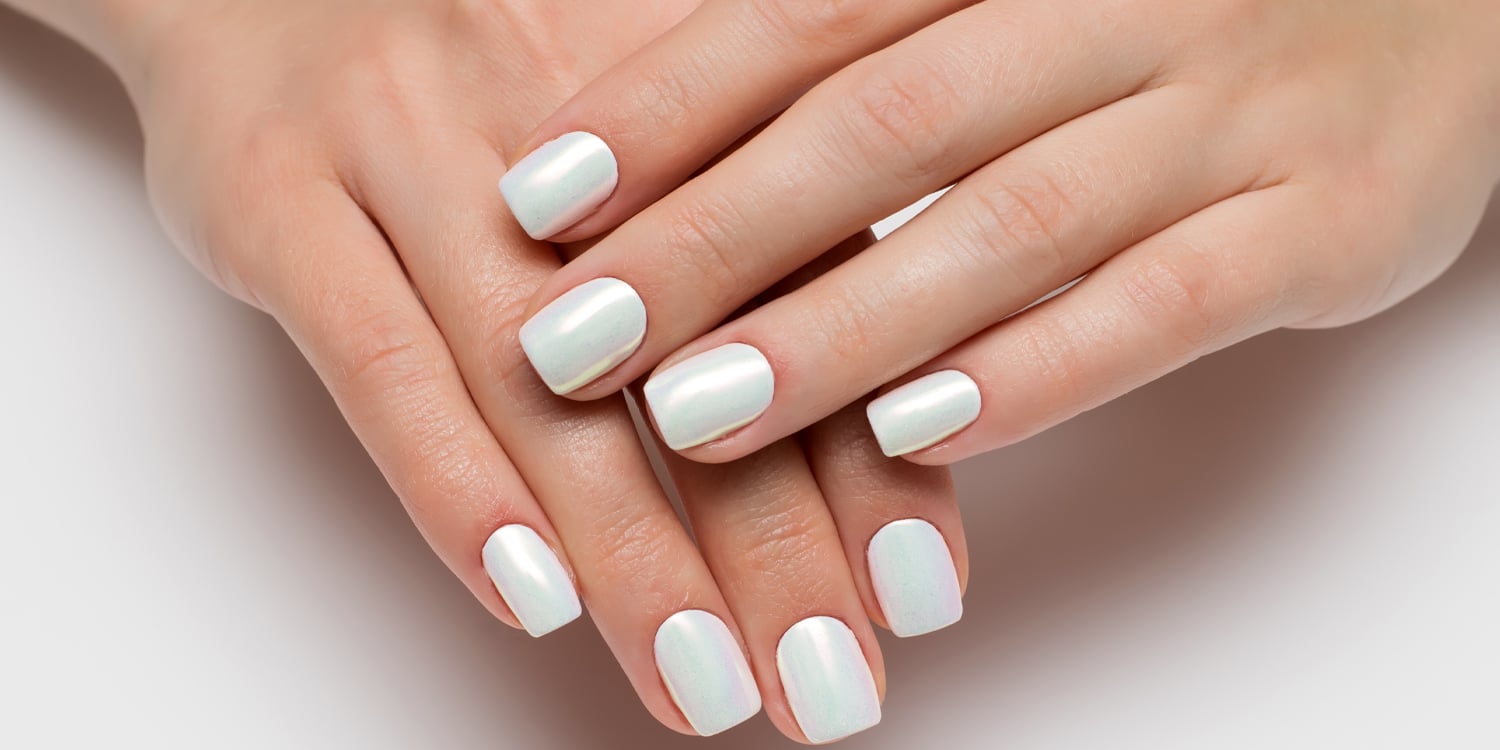
A new study suggests that subtle grooming choices, such as the length and colour of a person’s fingernails, can shape how others judge their physical appeal and romantic desirability. The research, published in EvoS Journal: Evolutionary Studies and Higher Education, finds that medium-length nails and white nail polish were rated most attractive, while long nails and darker shades drew less favourable marks. The project was led by Sara DeMichele, a Bucknell University alumna now pursuing a doctorate at Liberty University, alongside Bucknell psychology professor T. Joel Wade.
Nail adornment involves altering the length, shape, or colour of the hard protective plates on the tips of human fingers using cosmetic tools, lacquers, and polishes. While people in the United States alone spend billions on manicures and professional salon treatments, scientists know relatively little about how these cosmetic changes influence everyday social impressions. Evolutionary perspectives suggest that personal grooming acts as a nonverbal cue, communicating clues about a person’s health, hygiene, and investment in their appearance.
Past research has examined how different physical traits influence attraction. For instance, a 2011 study on hand attractiveness indicated that overall grooming and the condition of the skin around the nails influence how appealing people find someone’s hands. In addition, a 2008 study found that the color red can make women appear more sexually appealing to men, suggesting that colour choices carry social meaning.
“My interest in the social psychology of nail adornments began with campus observations of how ‘getting your nails done’ functioned as a ritual far greater than just grooming,” DeMichele said. “Specifically, the practice appeared to serve as a practice for self-expression and social presentation.”
“Despite mainstream recognition of the nail care industry, there was surprisingly limited psychological research examining how specific nail characteristics influence social perception, or why individuals select particular colors and designs. This gap motivated me to investigate whether nail length and color systematically affect perceptions of physical attractiveness and seek to understand how subtle dimensions of appearance shape interpersonal judgments.”
“There is a dearth of research examining hand attractiveness,” Wade explained. “This research adds to the literature on hand attractiveness, and adds to the literature on ornamentation and attractiveness showing that hand ornamentation can also affect perceptions of attractiveness.”
The researchers collected responses from 342 adults through an online survey shared across social media and email platforms. The participant group included 214 women, 98 men, and 4 nonbinary individuals, with an average age of 30 years. Most participants identified as White (262 individuals), with smaller numbers identifying as Asian (26), Hispanic (13), Black (9), or other racial backgrounds (8). A majority of 275 participants identified as heterosexual, while the rest identified with various non-heterosexual orientations.
Each participant viewed digital illustrations depicting hands with identical skin tone and shape, ensuring that only the nails varied between pictures. In the first phase, participants evaluated three different nail lengths: short, medium, and long. In the second phase, they looked at four different polish colours applied to the nails: red, white, black, and blue.
Participants rated each image using an eight-point scale ranging from zero, meaning not at all, to seven, meaning very much. The questions measured physical attractiveness, cuteness, sexual appeal, and how desirable the person seemed as a casual date, a romantic partner, or a marriage partner. The researchers then analysed the scores to see how changes in length and colour influenced these ratings.
The results indicated that nail length affected social impressions, with medium-length nails consistently scoring highest. On a scale from 0 to 7, participants gave medium nails an average physical attractiveness score of 5.10, compared to 3.20 for short nails and 2.50 for long nails. Medium nails also led the ratings for cuteness at 4.80, sexual appeal at 4.30, and partner desirability at 4.20, while long nails received the lowest scores across every measured category.
Nail colour also swayed evaluations, though the pattern differed from traditional expectations regarding the allure of red. White nails earned the highest average marks across the board, scoring 4.60 for physical attractiveness and 4.70 for sexual appeal. Red polish followed with an average attractiveness score of 3.80, whereas darker shades scored lower, with blue receiving an average of 2.50 and black receiving 2.30. The paper reports an overall effect of colour but does not report statistical comparisons between individual colours, so the ranking reflects average scores.
The lower standing of red polish came as an unexpected outcome for the team. “One finding that surprised our team was the relatively lower attractiveness ratings associated with red nails,” DeMichele said. “Red is frequently discussed in colour theory literature as leading to initial attraction and sex signalling, which made me expect it to receive strong ratings.”
The researchers also looked at whether preferences varied by participant background. Medium-length nails received the highest ratings in every racial group, though some groups were very small, such as the 9 Black and 13 Hispanic participants. When it came to colour, heterosexual participants rated white nails highest, whereas non-heterosexual participants, who were combined into a single group because each orientation had few members, gave higher ratings to black polish.
The preference for intermediate nail lengths aligns with research covered by PsyPost in 2025, which examined eyelash length rather than fingernails and similarly observed that moderate feature lengths were judged as most attractive compared to short or long extremes.
The authors suggested that medium-length nails may strike an appealing balance between routine grooming and functional practicality. Extremely long nails may be viewed as impractical or exaggerated for daily life, while very short nails might be perceived as lacking grooming effort. Similarly, the high ratings for white polish may stem from cultural associations between lighter colours, cleanliness, and simplicity. The authors describe the overall effects as modest.
“The primary ‘takeaway’ was that nail presentation may influence how people perceive others, although the effects should not be interpreted as universal rules about what is or is not attractive,” DeMichele told PsyPost. “Importantly, these findings suggest that seemingly minor aspects of appearance can contribute to broader social judgments. They do not mean that one particular nail length or colour is objectively more attractive, instead highlighting that aesthetic tweaks can influence perceptions within certain social contexts.”
Regarding how strongly these features guide human perception, DeMichele cautioned against overstating the findings. “I would characterise this as an introductory investigation of an understudied form of appearance-based social perception,” she explained. “The findings are useful for identifying patterns and generating hypotheses, but they should not be interpreted as evidence that one nail length or colour determines overall ‘attractiveness’. Replication with larger and more diverse samples would be important for determining the robustness and practical magnitude of these effects in larger populations.”
There are a few things to keep in mind when interpreting these findings. The study used digitally edited drawings of hands rather than actual photographs of human hands in real-world settings. This controlled design allowed the researchers to isolate specific traits, but it may not fully capture how people respond to real hands during everyday social interactions.
DeMichele also pointed to the sample itself. “I would emphasise that this was an introductory study and that the sample was predominantly WEIRD (Western, Educated, Industrialised, Rich, and Democratic) which limits how broadly the findings can be applied,” she noted. “Preferences surrounding appearance and adornment are likely shaped by cultural norms, gender, sexuality, age, and other nuanced experiences.”
In addition, the researchers focused strictly on length and a small selection of four solid colours. Other common styling elements, such as intricate nail art, artificial textures, or varying nail shapes like almond or stiletto, were not assessed and could influence attractiveness differently.
Looking ahead, DeMichele has already begun investigating how these cosmetic choices affect the individuals wearing them. “My master’s thesis at Florida Southern College extended this line of study by examining whether nail length and colour influence confidence and self-efficacy,” she stated. “The preliminary findings suggested that short- and medium-length nails, along with particular nail colours, were associated with higher levels of confidence and self-efficacy. Longer term, I will continue to expand on how and why nail adornments influence self-perception, interpersonal communication, and even professional judgment.”
Self-efficacy refers to a person’s belief in their ability to succeed at tasks. Those thesis findings have not yet been published.
“I think one of the most interesting aspects of this research is that it examines something people encounter every day but rarely consider from a psychological perspective,” DeMichele reflected. “Nail presentation is a relatively small component of appearance, yet it may communicate meaningful information about individual identity. I hope this research encourages further examination of the subtle ways appearance-related behaviours influence both how we see ourselves and how others perceive us.”
The study, “The Power of Polish: Effects of Nail Length and Color on Perceptions of Attractiveness,” was authored by Sara DeMichele and T. Joel Wade.
