


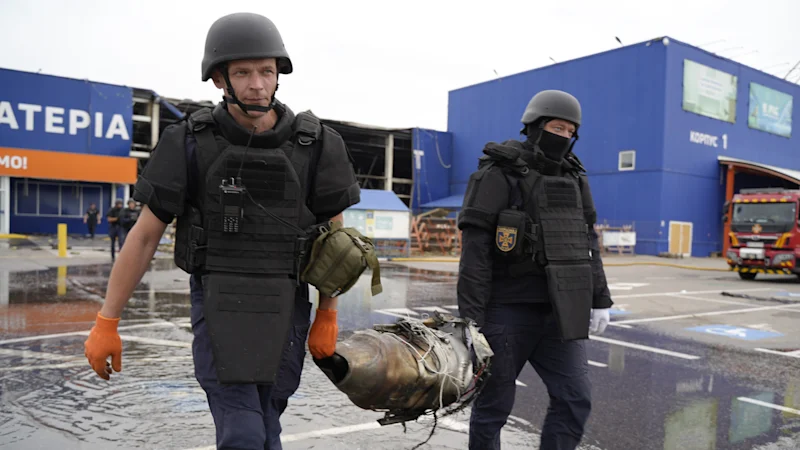
Jet-powered Russian drones are intensifying the threat to Kyiv, flying at speeds that can exceed some of the interceptors used by Ukraine’s air defences and forcing residents to live with air-raid warnings throughout the day.
Colonel Artem Skurativskyi, chief of the air defence directorate of Ukraine’s 7th Rapid Response Corps, said the new weapons were being used against the capital day and night.
“Kyiv is being terrorised day and night with the jet-powered drones from Russia,” he told the Yalta European Strategy conference in Kyiv.
The drones can reach about 600km/h, compared with roughly 180km/h for earlier Shahed-type aircraft fitted with propeller engines. Ukrainian officers say the faster designs are creating new gaps in the country’s air defences.
Russia’s use of the weapons has expanded sharply. The Ukrainian armed forces told the BBC that attacks involving jet-powered drones rose from 350 in June to 1,600 in July and 2,800 in August.
The change has altered the rhythm of the war, with alerts sounding during the daytime as well as overnight. In Kyiv, some residents have continued meeting in cafes, bars and parks while monitoring social media and assessing whether an incoming attack involves drones or ballistic missiles.
The risks have nevertheless been deadly. Russian drones struck two petrol stations in Kyiv on Friday, killing two people and injuring six. A strike on an apartment building in Zaporizhzhia wounded two civilians, including a child, while an attack in Dnipro left about a dozen people injured.
On Saturday, two people were killed when a Russian strike hit a grocery shop in Zvyahel, west of Kyiv. The governor of Odesa said 37 people were injured in overnight attacks in the southern city.
Ukraine faces an air-defence shortage
Ukraine has developed drones of its own to counter Russian attacks, but remains short of Patriot systems needed to intercept ballistic missiles. Yuriy Fedorenko, commander of the Achilles drone unit, said the country urgently needed more air-defence equipment.
“Ukraine badly needs air defence,” he said. “Ukraine lives on the brink. Please help us to survive.”
President Volodymyr Zelensky said Ukraine was working with European governments on air-defence systems that could enter testing as soon as December. A separate interception project, called Freyja, is being developed by Ukrainian company Fire Point with European partners, although its first test interception is not expected until the end of next year.
Mr Zelensky said Russia was producing 140 ballistic missiles a month and that, under Nato standards, 280 interceptors would be needed to destroy them. He said securing even 100 to 120 Patriot interceptors for the coming winter would be a major challenge.
International supplies are constrained by the wars in Ukraine and Iran. Lockheed Martin produces about 600 Patriot interceptors a year and is increasing planned output to 2,000 over the next seven years.
Colonel Skurativskyi warned that the faster drones posed a concern beyond Ukraine, pointing to recent incursions into Romania, Poland and Moldova. German authorities also identified Russia as the source of an explosive drone that struck a transport aircraft at Leipzig airport on August 4 without detonating.
The shift to jet propulsion is linked to Russia’s reported purchase of large quantities of small turbojet engines from Chinese suppliers. One supplier is said to be Telefly Telecommunications Equipment, based in Shenzhen.
With immediate protection still limited, Ukraine is continuing long-range strikes against Russian facilities involved in producing weapons, as well as oil refineries. Kyrylo Budanov, a senior aide to Mr Zelensky and a participant in peace negotiations, said the attacks would continue in an effort to pressure Vladimir Putin towards accepting a peace agreement.
For now, Ukrainian cities remain exposed to the high-speed drones and the air-raid alerts that accompany them.
