


Labour is facing mounting pressure to abandon planned fuel duty rises that would increase petrol and diesel costs by up to 7.2p a litre, as campaigners warn the measures will deepen the strain on family finances this winter.
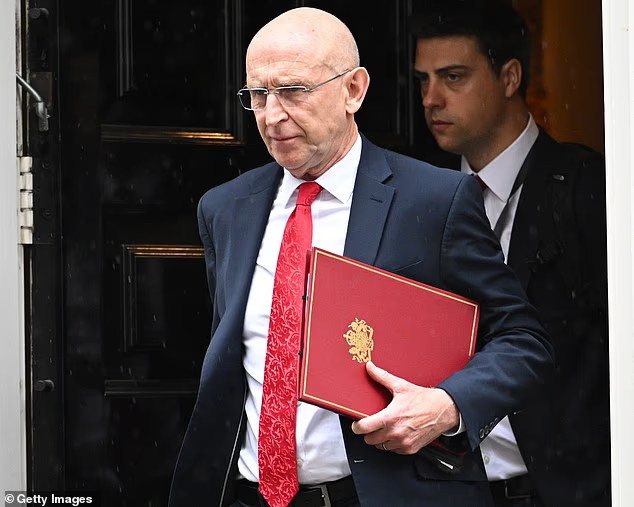
Chancellor John Healey is being urged to use next month’s Budget to retain the temporary fuel duty relief introduced after Russia’s invasion of Ukraine sent prices sharply higher in 2022.
Average forecourt prices have already climbed to levels not seen since the start of the war in Ukraine, amid intensifying tensions in the Middle East. RAC Fuel Watch puts unleaded at 172p a litre and diesel at 195.3p, with some forecourts charging more than £2 for diesel.
Howard Cox, of campaign group Fair Fuel UK, said the increases were “not just numbers on a chart… they are a direct blow to household budgets, people’s ability to work and their freedom to drive”.
He said 40 countries had reduced fuel duty in response to the Middle East crisis and called on the Treasury to take similar action in Britain.
“If ministers want a policy that delivers real, tangible benefits within weeks, not years, they should start with the lever that works – cut fuel duty,” Mr Cox said. “It is time to stop taxing the engine of the economy and start powering it instead.”
Fuel duty rises could add almost £4 to a family car
The temporary 5p-a-litre reduction was due to be phased out this month under plans drawn up by former chancellor Rachel Reeves. The change was postponed after President Donald Trump’s attack on Iran.
Under the current timetable, fuel duty will rise by 3p a litre on January 1, followed by a further 2p increase on March 1. The Treasury is also expected to end its 16-year freeze on fuel duty next year, adding another 1p in April.
VAT would add a further 1.2p a litre, taking the total increase to 7.2p. The combined measures would add almost £4 to the cost of filling a family car.
Robert Jenrick, Reform UK’s Treasury spokesman, said rising petrol and diesel prices were “a big part of why inflation is now up to 3.1 per cent”.
Richard Holden, the Conservative transport spokesman, described the planned increases as “completely untenable in the middle of a cost-of-living crisis”.
Treasury insiders said no decision had been taken on whether to proceed with the rises. However, keeping the 5p reduction alone would cost the Treasury £2.4 billion a year as Mr Healey attempts to balance the public finances.
