


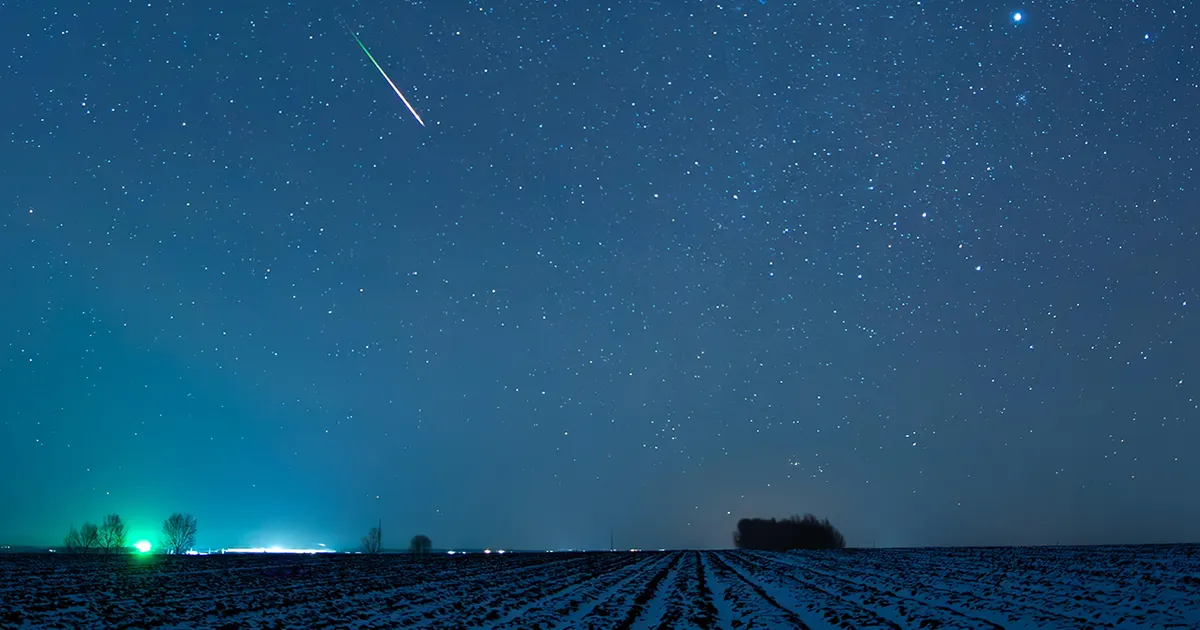
The Leonid meteor shower is expected to reach its peak on Tuesday and Wednesday night, offering stargazers the chance to see meteors streak across the sky.
NASA advises that the best viewing conditions should come around midnight local time. Despite being classed as a major meteor shower, the display may produce as few as three meteors an hour.
How to watch the Leonid meteor shower
Viewers should travel away from cities and streetlights to find the darkest possible location. NASA recommends facing east, lying flat on your back and taking in as much of the sky as possible.
It can take less than 30 minutes for the eyes to adjust to the darkness, after which the meteors should become easier to spot.
The Leonids form when Earth moves through dusty trails left by comets and broken asteroids. Small particles entering the atmosphere burn up and disintegrate, creating the bright streaks visible from the ground.
In the case of the Leonids, the debris comes from Comet 55P/Tempel-Tuttle, which completes an orbit of the Sun every 33 years.
When Earth passes through a particularly dense section of the comet’s trail, the shower can become a rare Leonid storm, producing hundreds or even thousands of meteors per hour. The last such storm was seen in 2002, but the next major event is not expected until 2099, despite the comet’s return in 2031 and 2064.
