


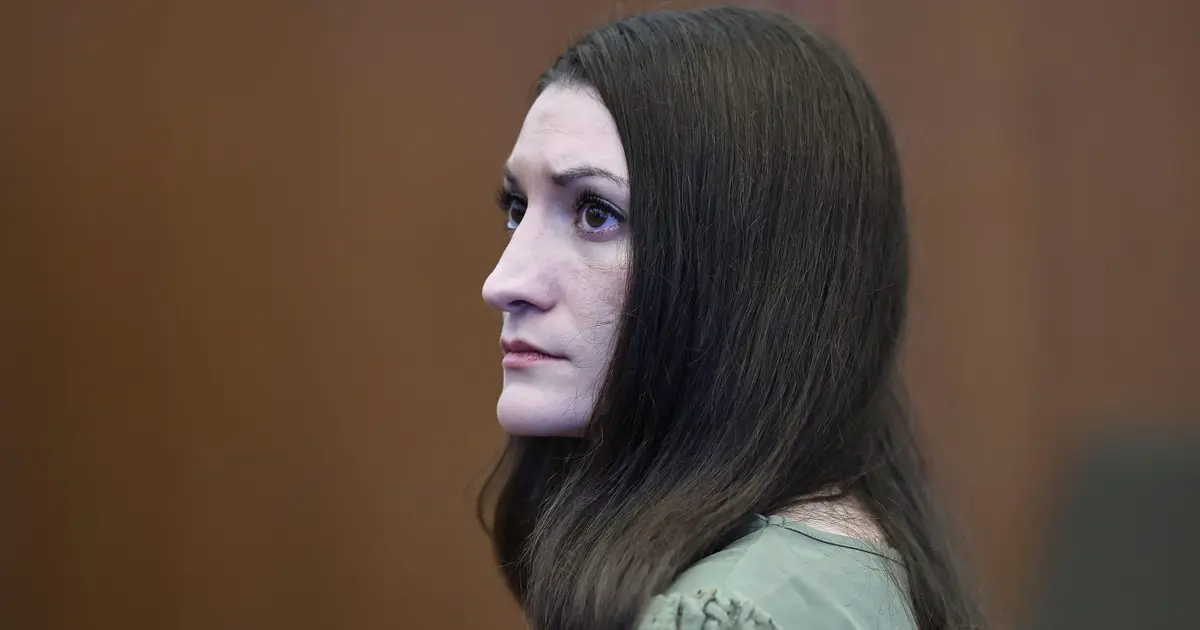
Three jurors who deliberated in Lindsay Clancy’s murder trial have spoken publicly about the single holdout who prevented them from reaching a verdict in the case, which ended in a mistrial in Plymouth, Massachusetts, last week.
The 12-person jury spent 36 hours deliberating over seven days before becoming deadlocked on whether Ms Clancy was criminally responsible for the deaths of her three children in 2023. The jury foreperson, Ronni Carlson, said 11 members were prepared to find her not guilty by reason of insanity, while one juror refused to do so.
Speaking to NBC10 Boston, Ms Carlson said the holdout appeared to acknowledge that there was reasonable doubt but still declined to support an acquittal on the grounds of insanity.
“He admitted he had reasonable doubt,” she said. “I started filling out the forms, I was so excited. There were three forms I had to fill out, and I started filling them out. I wrote my signature on each one.
“And then he said, ‘But I’m still not going to say that she’s not guilty by reason of insanity.’”
The jury first told Judge William Sullivan that it could not agree on the fourth day of deliberations. It reported a second impasse two days later, prompting the judge to issue a Tuey-Rodriguez instruction, the Massachusetts equivalent of an Allen or “dynamite” charge urging jurors to continue working towards a unanimous decision.
Clancy’s defence lawyer, Kevin Reddington, subsequently asked the court to pause proceedings while he sought an emergency appeal over the holdout juror. Massachusetts’ Supreme Judicial Court declined to intervene, and Judge Sullivan declared a mistrial on September 4.
Mr Reddington had argued that the juror appeared to be taking an “intractable” position regardless of the evidence. The judge has temporarily sealed the jurors’ names, and the holdout has not publicly explained his position.
Jurors describe divisions over Lindsay Clancy case
Paula Devlin, another member of the panel, described the holdout as “arrogant” and said he “really did not take anything that anybody said”.
Ms Carlson said she believed the evidence showed that Clancy had been a loving and nurturing mother before the killings, and that she must have experienced a severe mental-health crisis and not understood what she was doing.
“So she had to have snapped, and not known what she was doing,” Ms Carlson said. “To me, it was proof that she didn’t know what she was doing.”
A third juror, Kellie Farina, criticised what she regarded as the prosecution team’s cold tone during the trial.
“I know it’s their job, but in a case like this, you expect a little bit,” she said.
Clancy remains charged with murder and is being held at Tewksbury State Hospital. The case has returned to the position it occupied before the trial, with prosecutors now deciding whether to seek a retrial.
A status hearing has been scheduled for September 29. Prosecutors told the court that they would ideally like to bring the case back before a new jury later this autumn, although no firm timetable has been announced. The district attorney’s office said after the mistrial that the case remained focused on seeking justice for the three children.
